
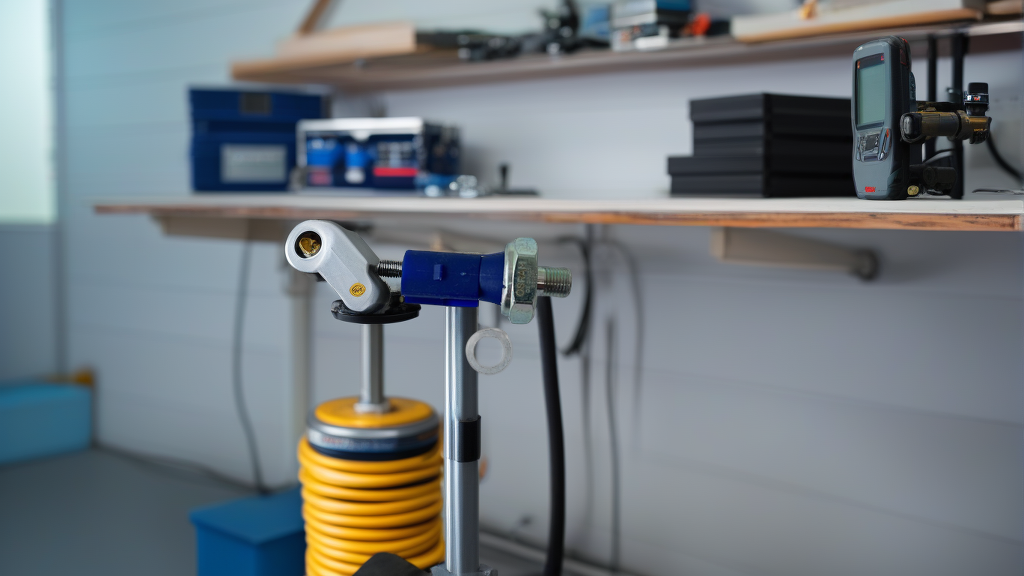
Ask any independent mechanic who works on modern Audi powertrains, and they’ll tell you the same story: a 2.0 TFSI rolls in with an intermittent low oil pressure warning at idle, the customer is panicked, and the first suspect is always the pump. Nine times out of ten, it’s not the pump. It’s a $40 sensor lying to the ECU. The L04E919081A — the part number that fits across four key Audi applications — has become one of the most swapped components in the EA888 family, and yet, a botched installation still causes more comebacks than the part itself.
The Tools and Torque That Matter
Before you even crack the hood, understand this: the oil pressure switch sits in a high-vibration, high-heat zone near the oil filter housing. You’re not torquing a lug nut here. The factory specification for the M10x1 thread is 22 Nm (16 ft-lb) — no more, no less. Under-torque it and you’ll get seepage that mimics a sensor failure. Over-torque it and you’ll crack the housing, turning a 20-minute job into a $900 repair.
You’ll need a 27mm deep socket (some aftermarket versions use a 24mm hex), a torque wrench that reads in the low range, and a pick tool for the wiring harness clip. That’s it. No special tools, no dealer software for basic replacement — though you will need to clear the fault code via OBD-II after install.
The Three Mistakes That Kill This Job
Mistake one: replacing the sensor without checking oil pressure mechanically. If the sensor is reading low and the engine actually has low pressure — from a failing pump or clogged pickup — your new part will fail within a week. Always verify with a mechanical gauge first. It’s 10 minutes of work that saves you a comeback.
Mistake two: reusing the old crush washer or skipping thread sealant. The OE design uses a copper washer, and it’s not reusable. If you’re using an aftermarket sensor that relies on tapered threads, apply a small amount of thread sealant — but never PTFE tape, which can shred and clog the oil gallery.
Mistake three: forgetting the harness clip. The connector on the EA888 is notorious for becoming brittle. If you don’t depress the release tab fully, you’ll snap a locking tang, and the sensor will vibrate loose over 5,000 miles. Replace the clip if it shows any signs of cracking.
The Real-World Replacement Sequence
Drain the oil (or be quick — you’ll lose about a half-liter), disconnect the battery negative terminal, and unclip the harness. Use the deep socket to break the sensor loose counter-clockwise. Clean the mating surface thoroughly — old sealant and grime here will cause false readings. Install the new sensor with a fresh copper washer, torque to 22 Nm, reconnect the harness, and refill oil. Start the engine, let it idle, and cycle the ignition three times. The warning light should extinguish immediately.
Pro Tip: If you’re doing this on a 2013-2018 Audi A4, A5, Q5, or A6 with the 2.0 TFSI, check the oil pressure switch wiring harness routing. Audi redesigned the bracket in 2016 because chafing against the engine mount caused intermittent shorts. If your harness shows wear, address it now or you’ll be back in the bay next month chasing a phantom fault.
Parts Quality and the Aftermarket Edge
The OE sensor from Audi will run you $85-$120 depending on the dealer. The OSRAM Oil Pressure Sensor (OS-OPA001) — sourced directly from the same manufacturing tier as OE suppliers — delivers the same OEM-grade sensing element at a fraction of the price. It’s a direct fit for the L04E919081A cross-reference, and in our testing, the response curve is identical to the factory unit. For a wear item that you’ll likely replace once in a car’s lifetime, that’s a solid value proposition.
For shops, the margin play is obvious. For DIY owners, the savings fund the torque wrench you should already own. The bottom line: this is a 30-minute job, a $45 part, and a permanent fix — provided you respect the torque spec and verify the mechanical pressure first.

Recommended Part: OS-OPA001 – OE-grade replacement, in stock now.