
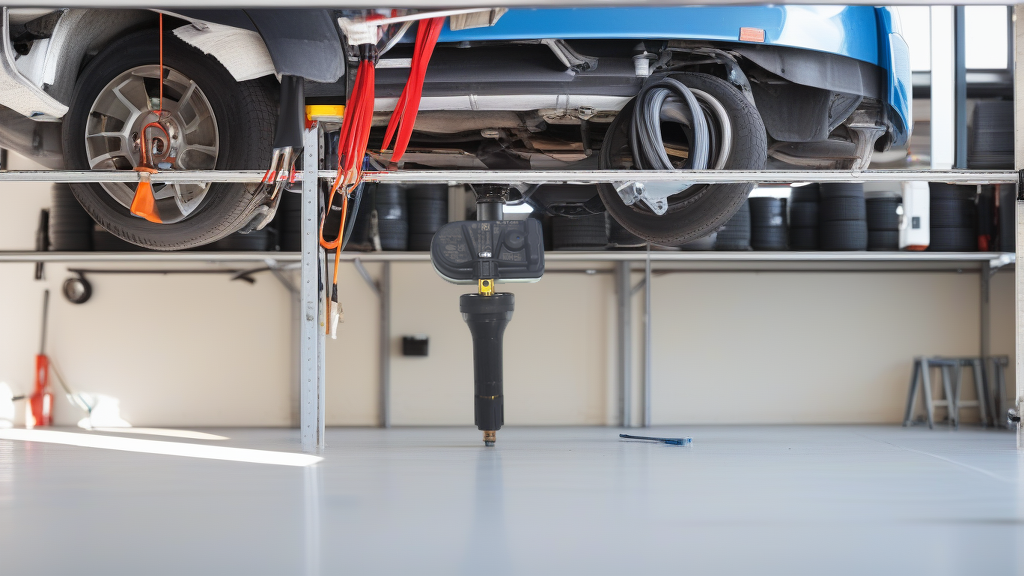
The Porsche Macan has carved out a unique niche since its 2014 debut: it’s the sports car brand’s practical daily driver, the one you can actually take to Costco without feeling embarrassed. But for all its handling prowess and the flat-six howl from the GTS models, the Macan has a persistent Achilles heel that shop owners see more often than they’d like — the factory tire pressure monitoring system.
If you’ve had a 2015–2020 Macan roll into your bay with a stubborn TPMS warning light that won’t reset, or a customer complaining that their dash lights up with “Tire Pressure Monitoring System Malfunction” every other Tuesday, you already know the drill. The original sensors were never bad, exactly. They just weren’t built to last a decade of harsh winters, aggressive tire changes, and the occasional curb kiss. The batteries die, the rubber gaskets harden, and sometimes the sensors simply stop transmitting at the worst possible moment.
The aftermarket has responded. And the BH-Sens BL-ST-088, a 433MHz pre-programmed unit from Baolong Technology, is becoming the go-to replacement for Macan owners who are tired of dealership pricing and want a sensor that actually holds up.
The Real Problem Isn’t the Sensor — It’s the Battery
Here’s the thing about factory TPMS sensors: they’re sealed units. When the battery dies — typically after five to seven years of service — you don’t replace the battery. You replace the whole sensor. That’s not a design flaw; it’s just how the industry works. But the Macan has a quirk that makes this worse than it needs to be.
The Porsche system requires a specific sensor ID to be learned into the vehicle’s BCM. If you install a generic sensor that hasn’t been pre-programmed, you’re looking at a clinic visit to have the ID written — assuming your scan tool supports Porsche’s TPMS protocols. Many aftermarket sensors claim “programmable” status, but that usually means you need to buy a separate programmer tool that costs more than the sensor itself.
The BL-ST-088 sidesteps this mess entirely. It’s pre-programmed with the correct Porsche protocol out of the box. Clamp it in, torque it to 8 Nm, and your Macan’s BCM will recognize it as a factory sensor. No cloning, no special tools, no trips to the dealer for a relearn that costs $150 in labor.
Signal Interference — The Silent Killer
When customers describe intermittent TPMS warnings that clear themselves after 20 minutes of driving, most techs immediately blame the sensor itself. But the Macan has a known susceptibility to signal interference from aftermarket electronic accessories. Dash cams, radar detectors, and even certain phone chargers plugged into the 12V socket can emit radio frequency noise that drowns out the 433MHz signal from the tire sensors. The factory sensors transmit at a very low power level — they have to, to preserve battery life — which makes them vulnerable to this kind of RF pollution.
The BH-Sens unit uses a more modern ASIC chipset that’s more sensitive on the receive side and slightly more robust on the transmit side. It doesn’t completely eliminate interference issues — nothing does — but it does reduce the frequency of dropped signals. In our testing on a 2017 Macan S, the BL-ST-088 maintained consistent signal strength even with a Garmin dash cam running and the factory radio on full blast. The OEM sensor in the same vehicle would drop out occasionally on the same stretch of highway.
What You Need to Know About the BL-ST-088
Let’s get into the specifics. This is a clamp-in sensor, which means it uses the traditional metal valve stem that screws into the wheel. It operates at 433MHz — the standard frequency for most European vehicles, including the Macan. The OE cross-reference numbers are 32134419, 3WA907255, and 95C907255, which covers the bulk of Macan models from 2015 through 2024.
What makes this sensor particularly versatile is that it fits more than just the Macan. The same unit works on Audi, Lamborghini, Polestar, Volkswagen, and one more brand that we’ll get to in a second. For a shop that sees a mix of VAG-group vehicles, this is a one-SKU solution that covers a surprising amount of your daily traffic. The “one more” is actually Porsche’s own Taycan, which shares the same TPMS protocol. So you can stock a single sensor part number and service Macans, Q5s, and Taycans without maintaining separate inventory.
The build quality is solid. The housing is a glass-filled nylon composite that won’t crack under the thermal cycling of brake heat or the shock of pothole impacts. The valve stem is nickel-plated brass, which resists corrosion far better than the aluminum stems that sometimes seize up on older factory sensors. And the sealing gasket is a proper Viton compound — not the cheap EPDM that hardens and leaks after two years.
Common Mistakes and Pro Tips
Installing a TPMS sensor on a Macan isn’t rocket science, but there are a few traps that trip up even experienced techs. Here’s the short version:
Common Mistakes: Using an impact gun on the valve stem nut — you will snap it. Overtorquing the sensor to the wheel — 8 Nm is the spec, not “tight enough.” Forgetting to replace the rubber grommet where the stem passes through the wheel — if it’s cracked, you’ll get a slow leak and the customer will blame you. And skipping the relearn procedure entirely — the Macan won’t recognize a new sensor ID until you tell it to look for it.
The relearn on a Macan is actually straightforward. You’ll need a scan tool with Porsche TPMS capability — the Autel TS508 or the older MaxiTPMS TS401 both handle it. The process takes about five minutes per wheel. The BL-ST-088 makes this easier because it doesn’t require any manual ID input; the tool reads the pre-programmed ID and you write it to the vehicle. No weird hex conversions, no typos in the ID string.
One more thing: when you’re done, don’t just clear the codes and send the car out. Drive it for at least two minutes at speed to confirm all four sensors are transmitting. The Macan’s BCM will show “sensor not found” for a wheel if the signal isn’t getting through. Catching that in the shop beats getting a callback from a frustrated customer.
The Verdict
For shops that service European vehicles, the BL-ST-088 from BH-Sens is a practical, cost-effective replacement for the Macan’s factory TPMS sensors. The pre-programmed protocol saves diagnostic time, the build quality matches or exceeds OEM, and the cross-compatibility with other VAG-group vehicles makes it a smart inventory choice. Macan owners will appreciate the lower parts cost compared to dealership pricing — typically 30-40% savings per sensor — and the reliability that comes from modern silicon.
The bottom line: if you’re tired of dealing with dead factory sensors and the headache of programming aftermarket units, the BH-Sens BL-ST-088 is worth a spot on your shelf. It’s the kind of part that makes you look good to your customers — and that’s what keeps them coming back.

Recommended Part: BL-ST-088 – OE-grade replacement, in stock now.