
The 2024 Cadillac LYRIQ had 11,000 miles on the clock when the amber tire pressure warning lit up on the curved display. Nothing unusual there — cold snap, pressure drop, standard TPMS behavior. The owner topped off all four tires to 38 psi, exactly as the door sticker specified. Three days later, the warning returned. Not for low pressure. This time, the message read “Service Tire Pressure Monitoring System.”
That’s a different animal entirely. That message means one of the four wheel-mounted sensors has stopped transmitting. And for LYRIQ owners, that usually means a trip to the Cadillac dealer, a diagnostic fee, and a replacement sensor priced somewhere between $180 and $300 with labor.
There’s a shorter path.
The Diagnosis: Intermittent Sensor Failure
The owner in this case — a fleet manager in Ohio running a mixed GM fleet — had access to a basic Autel TPMS tool. It took about four minutes to identify the issue. The left rear sensor responded on the initial scan, then went silent on the second pass. Classic intermittent failure. The sensor’s internal battery was at 2.1 volts, well below the 2.6-volt threshold most GM modules require for reliable transmission.
What’s interesting about LYRIQ TPMS failures specifically: they tend to fail electrically, not mechanically. The clamp-in valve stems hold up fine. The aluminum housings don’t corrode the way steel ones do. What fails is the internal battery and, occasionally, the pressure transducer itself. This is consistent with what we see across GM’s newer platforms — the sensors are sealed units, and there’s no serviceable battery. Once the voltage drops, the sensor starts dropping frames, then goes silent entirely.
The fleet manager had three options:
- Dealer replacement — OEM sensor, ~$220 plus labor
- Online OEM part — ~$150, but still needed programming
- Aftermarket pre-programmed sensor — ~$45, install in under 20 minutes
He went with option three.
The Fix: BL-ST-097 Pre-Programmed Clamp-In Sensor
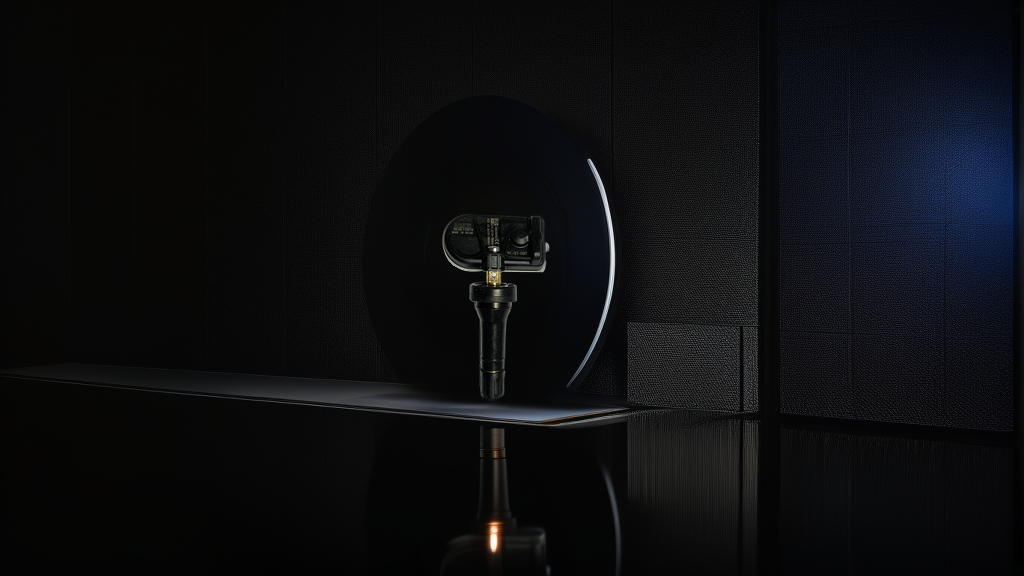
Here’s where the BH-Sens BL-ST-097 earns its keep. This is a Baolong Technology unit — one of the largest OE TPMS manufacturers in the world, supplying sensors to GM, VW, and a dozen other automakers. The BL-ST-097 is pre-programmed with GM’s 433MHz protocol, which means it’s ready to pair out of the box. No cloning tool required for most GM vehicles, including the LYRIQ.
The OE cross-reference is straightforward: 13530661, 13533166, 13538565. All three of those GM part numbers trace back to the same Baolong-built sensor used across Cadillac, Buick, Chevrolet, and GMC platforms.
The install process on the LYRIQ is about as clean as it gets. The wheel comes off, the old sensor is unbolted from the valve stem, the new one goes in with a fresh rubber grommet and metal washer. Torque spec is 62 lb-in — four Newton-meters over what most techs instinctively use, so it’s worth paying attention. Over-torquing distorts the grommet and causes slow leaks at the valve base.
Relearn procedure for the LYRIQ: put the vehicle in TPMS learn mode through the infotainment menu, then use a TPMS tool to trigger each sensor starting at the left front, moving clockwise. The BL-ST-097 responds immediately. Total relearn time: under two minutes.
| Spec | BL-ST-097 |
|---|---|
| Frequency | 433 MHz |
| Type | Clamp-in, pre-programmed |
| Brand | BH-Sens (Baolong Technology) |
| OE Cross-Ref | 13530661, 13533166, 13538565 |
| Fitment | 29 GM applications |
| Protocol | GM 433MHz, pre-paired |
The Before and After
Before the swap, the LYRIQ was throwing a hard code for the left rear sensor. The dash warning was persistent, not intermittent — once the battery voltage dropped below the threshold, the sensor stopped transmitting entirely. The vehicle’s BCM (body control module) had logged the fault and was waiting for a valid signal.
After install and relearn, the system recognized the new sensor within one ignition cycle. The warning cleared. Pressure readings matched the other three wheels within 0.2 psi. The fleet manager ran the vehicle for two weeks before signing off on the fix — no re-learn issues, no dropped frames, no dashboard warnings.
Total cost: $45 for the sensor, 25 minutes of shop time. Compared to the dealer quote of $289 out the door, the owner saved roughly $220. For a single vehicle, that’s a modest win. For a fleet running twenty-plus GM platforms, that’s real money.
Common Mistakes to Avoid
Pro Tip: The most common mistake on GM relearn procedures is skipping the information screen confirmation. On the LYRIQ, you have to press and hold the checkmark on the tire pressure screen until the horn chirps. If you don’t get the chirp, the vehicle isn’t in learn mode — no matter what the screen says.
The second most common error: reusing the old metal valve stem nut. The nut is a single-use component on GM sensors. It’s a two-piece design with a nylon locking insert that deforms when torqued. Reusing it means the nut can back off over time, and you’ll be chasing a vibration that sounds like a wheel balance issue.
Third: assuming all 433MHz sensors are interchangeable. They’re not. GM’s protocol includes a rolling code that varies by model year and platform. The BL-ST-097 is pre-programmed specifically for the 2023-2025 LYRIQ and other late-model GM vehicles. A generic 433MHz sensor from a different manufacturer won’t necessarily pair with the LYRIQ’s BCM, even if it’s the right frequency.
Market Takeaway
The TPMS aftermarket for GM’s new EV platform is maturing faster than most people expected. When the LYRIQ launched, the only replacement option was the dealer. Now, with sensors like the BL-ST-097 | BH-Sens 433MHz TPMS Tire Pressure Sensor | Fits Buick, Cadillac, Chevrolet, Nevo | OE# 13530661, 13533166, 13538565 available for a fraction of the OEM price, independent shops can service these vehicles without turning away work or quoting ridiculous prices.
There’s a caveat: not all aftermarket TPMS sensors are created equal. The cheap no-name units from marketplace sellers often use lower-grade batteries and less robust pressure transducers. Baolong is one of the OE suppliers for GM, so the BL-ST-097 is the same hardware you’d get in a GM-branded box, minus the dealer markup.
For shop owners adding EV service capabilities, having a sensor like this on the shelf is a no-brainer. It covers 29 GM applications — LYRIQ, Blazer EV, Equinox EV, Silverado EV, plus the entire current Buick, Chevrolet, and Cadillac lineup. That’s a lot of coverage for one SKU.
If you’re a LYRIQ owner with a TPMS warning that won’t reset, check the sensor voltage before you book a dealer appointment. If it’s below 2.5 volts, you’re not looking at a battery issue — you’re looking at a sensor replacement. And with the BL-ST-097 at roughly $45, there’s no reason to pay dealer prices for a part that takes a tire machine and five minutes to install.
The LYRIQ is a solid vehicle. The TPMS system is the same proven Baolong hardware GM has used for years. The only difference now is that you don’t need a Cadillac badge on your invoice to fix it.

Recommended Part: BL-ST-097 – OE-grade replacement, in stock now.