
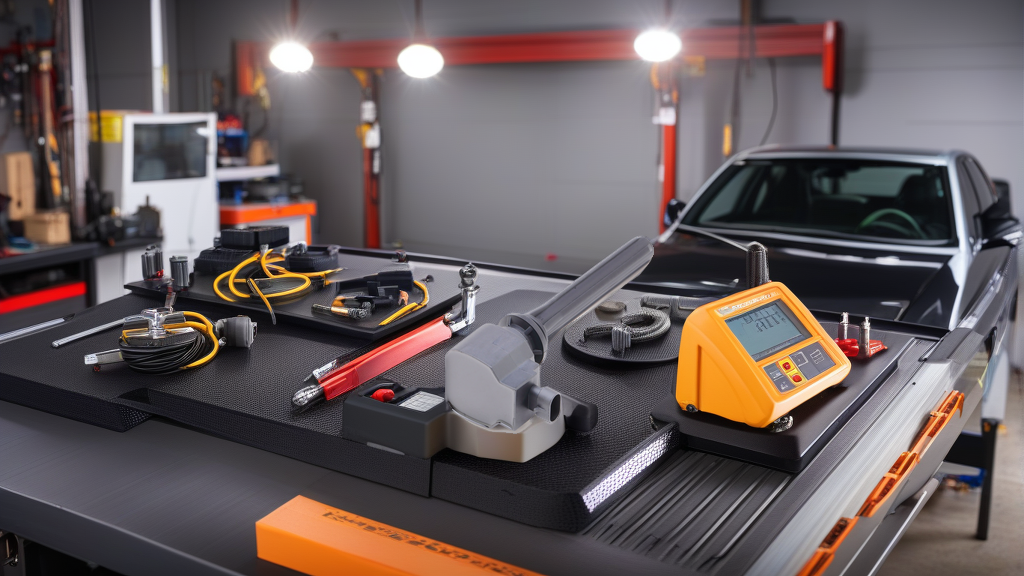
Walk into any shop handling a Great Wall Haval H6 or Wingle with a P0300 random misfire, and the first instinct is to throw coils at it. That’s expensive, and it’s usually wrong. The coil-on-plug design on Great Wall’s 4G63 and GW4C20 engines is robust, but the failure modes are specific — and most of them show up in a resistance check before they ever show up on a scan tool.
The aftermarket has noticed. A decade ago, sourcing a reliable coil for these trucks meant waiting on a dealer shipment from Hebei. Now, brands like OSRAM have stepped in with direct replacements at a fraction of the OEM price. The OS1218, which crosses to OE# BDMIN107 / 3705100XEC01 / 3705100XEC15, is one of the more interesting options on the shelf. But before you buy anything, you need to know what you’re actually testing.
The Real-World Diagnostic Flow
Let’s set the scene. A 2018 Great Wall H6 rolls in with a rough idle and a flashing check engine light. Codes: P0301 and P0304 — cylinders one and four. The customer says they already replaced the spark plugs last week. Classic setup for a coil diagnosis.
First thing you do is swap the suspect coils with known-good cylinders. If the misfire follows the coil, you’ve got your answer. But if it stays put, you’re looking at a fuel injector, a compression issue, or a wiring harness that’s chafed against the valve cover — which happens more often than Great Wall owners want to admit.
Here’s the thing: coil swaps are quick, but they’re not diagnostic. They tell you where the problem is, not why. And when you’re dealing with a coil that fails intermittently — when it’s hot, or under load — a swap test might not catch it at all. That’s where the multimeter and the oscilloscope come in.
Primary and Secondary Resistance: What the Numbers Mean
Most technicians know the basic spec: primary resistance on a Great Wall coil should read around 0.5 to 0.8 ohms, and secondary resistance should be in the ballpark of 8,000 to 12,000 ohms. But here’s the problem — those numbers vary with temperature, and a coil that reads perfectly cold can still fail when it heats up.
| Test | Good Range | What Failure Looks Like |
|---|---|---|
| Primary (pins 1 & 2) | 0.4–0.8 Ω | Open circuit, or reading above 1.5 Ω |
| Secondary (pin 2 & plug boot) | 8–12 kΩ | Short (below 2 kΩ) or open (infinite) |
| Insulation (case to ground) | >10 MΩ | Reading drops when you flex the body |
A coil that reads 0.6 ohms on the primary but jumps to 2.0 ohms after ten minutes of engine heat is failing — you just haven’t caught it yet. Heat cycling breaks down the copper winding insulation, and the resistance climbs as the winding expands. This is why we always recommend running the resistance test on a warm engine, not a cold one.
Pro Tip: Don’t trust a single reading. Take three readings — cold, warm, and after a hard pull. If the resistance drifts more than 0.2 ohms on the primary side between hot and cold, the coil is on its way out, even if it hasn’t thrown a code yet.
Scope Waveform Analysis: The Real Answer
Here’s where I’m going to get a little opinionated. Resistance testing is necessary, but it’s not sufficient. A coil can pass every resistance spec and still produce a weak spark. The only way to see that is on a scope.
Hook up your low-current clamp around the coil’s ground wire, or use a secondary ignition probe. You’re looking for the burn time — the duration of the spark event. On a healthy Great Wall coil, you want to see burn time between 1.0 and 1.5 milliseconds. If it’s shorter than that, you’re not getting enough energy into the spark plug. If it’s longer, the plug gap is too wide or the fuel mixture is lean.
The other thing to watch is the “ring” after the spark event. That’s the oscillating waveform that follows the burn line. It should have at least three clear oscillations. If it’s flat — no ring at all — the coil is saturated with energy it can’t discharge, which points to internal shorting.
The kicker? On the GW4C20 engine, the ECM monitors the primary side for dwell and can throw a P2301 or P2303 (coil circuit malfunction) when the coil’s internal driver fails. But those codes show up late. The waveform shows up early.
Why the OS1218 Makes Sense
When the diagnosis is done and you’ve confirmed a bad coil, the replacement question comes up. OEM coils from the Great Wall dealer run anywhere from $80 to $120 per unit, and on a four-cylinder, that’s a four-figure repair bill before labor. The OSRAM OS1218 comes in at roughly half that, and it’s built to the same electrical specs.
Here’s what you’re getting:
- Direct fitment for Great Wall models using OE# BDMIN107, 3705100XEC01, 3705100XEC15
- E-core laminated construction — same design as the OEM unit, not a cheap epoxy-filled knockoff
- Heat-resistant casing rated for continuous operation at 105°C, which matters in a turbocharged 4C20 application
- Tested dwell compatibility with both the Delphi and Bosch ECU variants Great Wall used across model years
The only time I’d tell you to skip this coil is if you’re working on a heavily modified engine — a built bottom end with a big turbo pushing 30 psi. At that point, you want an ignition system upgrade with a dedicated igniter, not a stock-replacement coil. For 95% of Great Wall owners, the OS1218 is a straightforward drop-in.
Market Outlook
The Great Wall parts ecosystem is maturing. It used to be that aftermarket support meant sketchy unbranded coils from internet marketplaces with zero quality control. That’s changing. The entry of established brands like OSRAM into this fitment space signals that the volume is there, and more importantly, that the quality bar is rising.
For shops, this is good news. You can quote a fixed price, use a reputable part, and not worry about comebacks. For DIY owners, it means you’re not shuttling between the dealer and bargain-basement sellers.
OS1218 | OSRAM Ignition Coil | Fits Great Wall | OE# BDMIN107 3705100XEC01 3705100XEC15 — if your diagnosis points to a coil failure, this is the part to order. It carries the OE cross-reference, it’s priced right, and it comes from a brand that’s been making ignition components for decades. Compare that to the unknown-origin coils flooding the market, and the choice is pretty clean.

Recommended Part: OS1218 – OE-grade replacement, in stock now.