
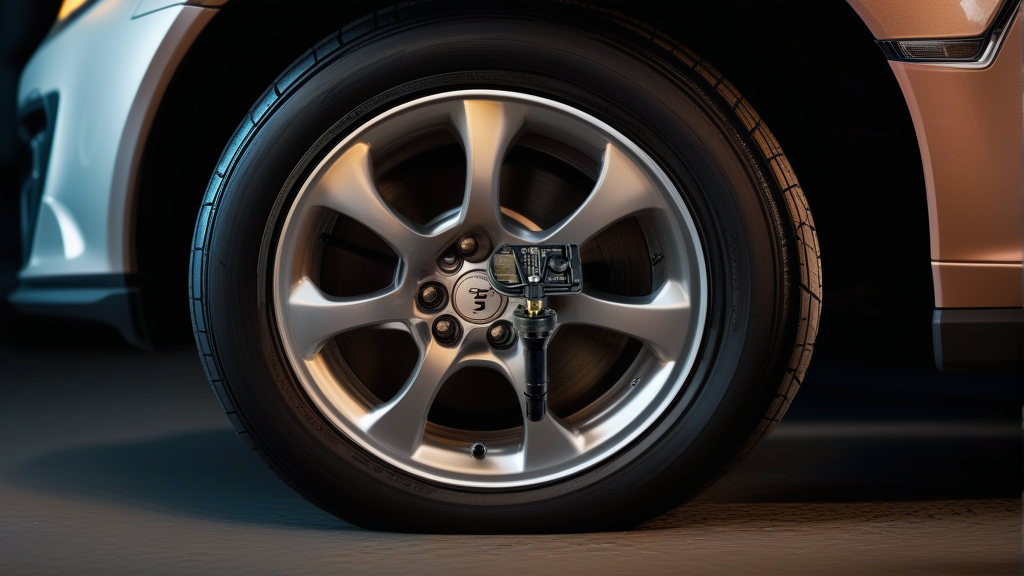
The aftermarket TPMS landscape is shifting quietly but decisively, and the SONG PRO DM-I sits right at the center of that change. For years, BYD owners looking to replace a failing tire pressure sensor faced a narrow path: dealer-only parts with long lead times and inflated markups. That’s no longer the case. With the arrival of pre-programmed, cross-compatible sensors like the BH-Sens BL-ST-096, the economics of TPMS replacement for the SONG PRO DM-I just got significantly more interesting.
The catalyst is a familiar one in the automotive world: platform sharing. BYD’s DM-i architecture—the plug-in hybrid system underpinning the SONG PRO—uses a standardized TPMS protocol across a growing family of models. This means a single sensor, properly cross-referenced, can serve not just one trim level but an entire generation of vehicles built on the same electronics backbone. For independent shops and fleet operators, that’s not a convenience; it’s a business model.
Why the BL-ST-096 Fits More Than the Name Suggests
Let’s get specific about the part in question. The BL-ST-096 is a 433MHz clamp-in sensor manufactured by BH-Sens, which is the aftermarket division of Baolong Technology—one of the largest OE TPMS suppliers globally. That pedigree matters. Baolong isn’t a knock-off house reverse-engineering signals in a garage; they’re a tier-one supplier whose sensors ship on new vehicles from multiple manufacturers. The BL-ST-096 leverages that engineering base but packages it for the aftermarket.
The OE cross-reference here is EUEA3609200B, which is the BYD factory part number. But here’s where the cross-brand compatibility angle kicks in: the BL-ST-096 is pre-programmed, meaning it comes out of the box ready to pair with the SONG PRO DM-I’s receiver without any cloning tools or manual ID copying. You install it, drive the car, and the system re-learns the sensor within a few minutes. This is a significant workflow improvement over blank sensors that require a programming step before installation—a step that often trips up less experienced techs.
According to the fitment data, the BL-ST-096 covers 34 vehicle applications. That’s not just the SONG PRO DM-I. It spans multiple BYD models sharing the same TPMS frequency and protocol. For a shop that sees a mix of BYD vehicles—and given the brand’s explosive growth in export markets, that’s increasingly likely—stocking one SKU instead of a dozen is a genuine inventory simplification.
The 433MHz Standard: Not All Sensors Are Created Equal
Frequency is the first compatibility filter, and 433MHz is the dominant standard in Asian-market vehicles. But frequency alone doesn’t guarantee functionality. The sensor’s communication protocol, the way it handles sleep/wake cycles, and its response to the vehicle’s LF (low-frequency) trigger signals all need to align. This is where cheaper generic sensors fail. They might transmit at the right frequency but respond sluggishly to the vehicle’s activation commands, causing intermittent “sensor not found” errors.
The BL-ST-096 avoids these issues through its OE pedigree. The internal ASIC (application-specific integrated circuit) is designed to mimic the behavior of the factory sensor, not just broadcast a similar signal. In practical terms, this means the SONG PRO DM-I’s TPMS module sees the BH-Sens unit as a native component. The tire pressure display updates in real-time, and the low-pressure warning triggers at the correct threshold. No false alarms, no delayed readings.
What Shops Should Know Before Installing
The clamp-in design is straightforward—it replaces the existing sensor in the wheel and requires a standard valve core tool and torque wrench. The recommended torque is typically 4.0 Nm, but here’s a pro tip: always check the fitment notes for the specific wheel type on the SONG PRO DM-I. The sensor’s seating surface needs to be clean and the sealing gasket replaced if it shows any signs of deformation.
One common mistake we see in the field is reusing the old nut and gasket. These are designed as single-use components in most cases. The BL-ST-096 ships with new hardware, and using it is non-negotiable. A reused gasket can leak slowly, causing a mysterious 5-psi drop every few weeks that nobody can trace. The second mistake is over-torquing. Clamp-in sensors are aluminum-bodied; overtightening can crack the housing or distort the thread, ruining the sensor before it’s even installed.
Another point worth noting: the BL-ST-096 is pre-programmed, but that doesn’t mean it’s locked to a single vehicle. If a sensor is removed from a SONG PRO DM-I and installed on another compatible BYD model, it can be re-learned without issue. This is particularly useful for shops that maintain used wheels or swap seasonal tire sets.
Market Outlook: The Case for Stocking Up
As BYD continues its global expansion—particularly in Southeast Asia, Latin America, and parts of Europe—the installed base of SONG PRO DM-I vehicles is growing at a pace that parts distributors are still catching up to. The OE channel remains slow and expensive for TPMS service, and the gap is being filled by aftermarket sensors that match OE quality at a fraction of the price.
For independent shops, the decision logic is simple: the BL-ST-096 covers a wide swath of BYD vehicles with a single SKU, it installs without programming tools, and it comes from a manufacturer with genuine OE credentials. That combination is rare in the aftermarket. Most “universal” sensors are neither truly universal nor backed by a tier-one supplier. This one is both.
If you’re a shop owner or a fleet manager dealing with multiple BYD platforms, the BL-ST-096 deserves a slot in your inventory. It’s a low-risk, high-utility part that solves a recurring problem without requiring additional tooling investment. And for the SONG PRO DM-I owner who wants a reliable replacement without the dealer markup, it’s the most straightforward option available right now.
We recommend keeping a few units in stock—especially if your service bay sees any of the 34 BYD applications this sensor covers. The part number to remember is BL-ST-096, and it’s ready to ship.

Recommended Part: BL-ST-096 – OE-grade replacement, in stock now.