
Walk into any independent shop that’s started servicing BYD’s budget-friendly SEAGULL model, and you’ll hear the same complaint: the TPMS relearn procedure is nothing like the Big Three. It’s not GM’s 15-minute key cycle dance. It’s not Ford‘s brake-pedal-and-hazard-light choreography. The SEAGULL operates on a different logic entirely, and techs who guess their way through it are burning diagnostic time they’ll never bill back.
The good news? The procedure is actually simpler than most techs assume—once you understand which generation of the system you’re working with. The SEAGULL, along with most 2025+ BYD platforms, uses a 433MHz direct-scan system that supports both OBD and stationary (magnet-based) relearn methods. You don’t need factory-level diagnostic tools for the OBD path, but you do need to know the exact protocol sequence. Here’s what’s working in the field right now.
The Two-Path Relearn System
BYD’s TPMS architecture on the SEAGULL splits into two relearn paths: an OBD-driven method that requires a bidirectional scan tool, and a stationary method that uses a low-frequency (LF) trigger tool—commonly a magnetic or RF activator—to force each sensor into learn mode sequentially. Both paths end with the same result: the ECU stores the sensor IDs in its memory map, clears fault codes, and extinguishes the TPMS warning light.
The critical detail most techs miss is the order of operations. Unlike many Japanese systems where you can relearn sensors in any corner order, the SEAGULL expects a specific sequence: left-front, right-front, right-rear, left-rear (counterclockwise from the driver’s perspective). If you trigger sensors out of order, the system will accept the first ID, then reject subsequent ones, and you’ll end up with a partial learn and a warning light that cycles back on after 10-15 minutes of driving.
OBD Relearn: What Actually Works
For shops with access to a capable bidirectional scanner—Autel’s MX-Sensor series, Launch X431, or ThinkCar’s Pro series all handle this—the OBD path is the cleanest method. Here’s the sequence that’s been confirmed across multiple SEAGULL trims in 2025 and 2026 production runs:
- Verify tire pressures are all set to the door placard spec (typically 36-38 psi cold on the SEAGULL). The system will abort the learn if any sensor reports under 25 psi.
- Connect your scan tool, navigate to TPMS, and select “Relearn” or “Program Sensor IDs.”
- Select the “OBD Relearn” option (not “Automatic” or “Stationary”).
- The system will prompt you to trigger each sensor in the LF sequence. Place your trigger tool over the valve stem area—the sensor’s antenna sits within 2 inches of the stem on the clamp-in unit.
- Wait for the horn chirp (or, on some builds, a single headlight flash) between each sensor. The SEAGULL typically gives you a 6-second window between successful triggers.
- After the fourth sensor, the ECU confirms the learn. Disconnect, verify with a pressure check at each wheel, and road test.
Here’s the catch: the OBD path only works if the vehicle’s battery voltage stays above 12.2V during the procedure. On SEAGULLs that have been sitting on a dealer lot or in a port yard, the 12V accessory battery is frequently depleted below that threshold. If the learn aborts mid-sequence, don’t blame the sensor—put the vehicle on a charger, wait 15 minutes, and try again.
The Stationary (Magnet) Method — When You Need It
The OBD method fails in one common scenario: when the vehicle has been in a collision or the ECU has been replaced with a used unit that retains old sensor IDs. In those cases, the SEAGULL locks out OBD writes and forces you into stationary mode. This is where the LF trigger tools earn their keep.
Stationary relearn on the SEAGULL requires a 433MHz-capable LF activator—the same tool you’d use for a 2020+ Toyota or a current-generation Nissan. You can’t use the older 125kHz magnetic wands that worked on 2015-2019 GM platforms; they won’t communicate with the BH-Sens sensors at all.
The procedure:
- Enter the vehicle, close all doors. The SEAGULL requires the key fob to be within the cabin—it won’t enter stationary mode with the fob outside the vehicle.
- Turn the ignition to the “ON” position (press the start button twice without touching the brake pedal). The TPMS light will blink twice to confirm the system is in learn mode.
- Starting at the left-front tire, place the LF activator against the sidewall directly behind the valve stem. Press and hold the trigger until the horn chirps. This confirms the sensor was read.
- Move counterclockwise: right-front, right-rear, left-rear. Each sensor must be triggered within 60 seconds of the previous one, or the system times out and you restart from step 1.
- After the fourth sensor, the horn will chirp twice. Turn the ignition off, then start the vehicle. The TPMS light should be off after 30 seconds of driving.
The stationary method is also the only path that works when the SEAGULL is equipped with a trailer or aftermarket wheels that have sensors from different brands. The ECU doesn’t care about sensor brand—it reads the ID and frequency—but it does require all four sensors to transmit at 433MHz. Mixing 315MHz sensors into the system will cause an intermittent no-signal fault that’s maddening to diagnose.
Common Mistakes That Waste Time
Pro Tip: The single most common failure point we see at Longwei Parts customer support isn’t the sensor or the procedure—it’s the technician using an LF trigger tool set to the wrong frequency. The BH-Sens BL-ST-096 operates at 433MHz. If your tool defaults to 315MHz (common on older Autel and Bartec units), the trigger will appear to work—the LED lights up, you get a false confirmation—but the sensor never actually transmits. Always verify your tool’s frequency setting before starting a SEAGULL relearn.
Two other mistakes consistently cost shops a half-hour or more:
Skipping the battery voltage check. The SEAGULL’s TPMS ECU is sensitive to voltage sag. During a relearn, the system monitors both the accessory battery and the sensor transmissions. If the battery dips below 11.8V, the ECU will drop the RF link mid-sequence and shut down the learn mode. This presents as a “sensor not detected” fault on the scan tool, which sends techs chasing sensor failures that don’t exist.
Triggering the sensor too far from the valve stem. The BH-Sens clamp-in unit’s antenna is oriented along the valve stem axis. Placing the LF activator on the tire tread or the center of the wheel cap—where it worked on some Nissan models—won’t reach the sensor’s receiver. The activator needs to be within about 1.5 inches of the stem base, perpendicular to the stem.
The Sensor Landscape for SEAGULL Owners
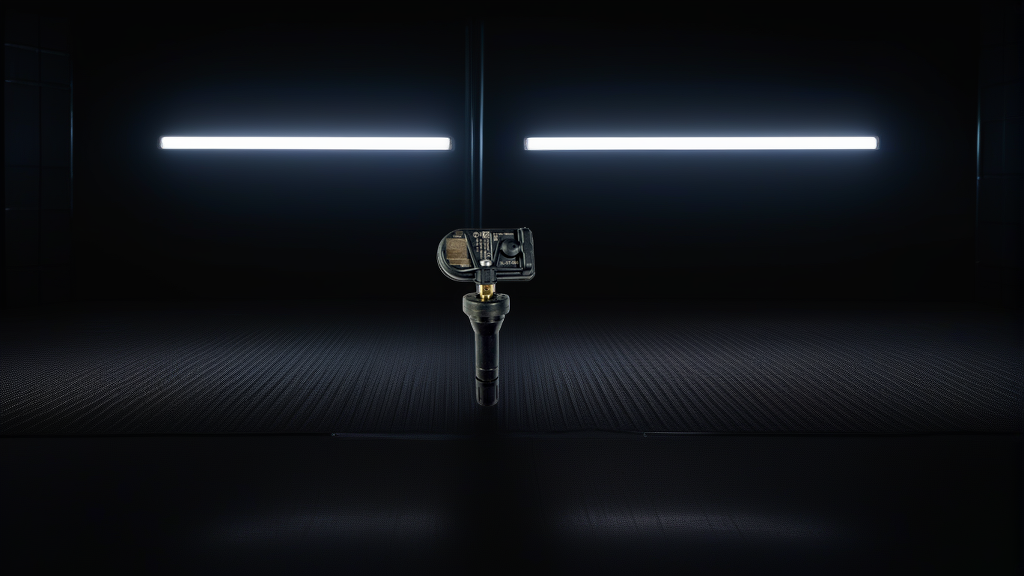
The factory sensor on 2025+ SEAGULL models is a Baolong Technology unit—which is exactly what the BH-Sens 433MHz TPMS Tire Pressure Sensor (BL-ST-096) is, under a dedicated aftermarket SKU. Baolong’s OE manufacturing relationship with BYD means the BL-ST-096 is functionally identical to the factory part, right down to the internal antenna design and the 433MHz frequency tolerance.
What makes the BL-ST-096 particularly useful in the independent aftermarket is its pre-programmed compatibility. It ships with the correct protocol and ID format pre-loaded for 34 distinct BYD vehicle applications, so there’s no programming step at the bench. You install, trigger the relearn, and the ECU accepts the ID without needing to know the sensor’s serial number in advance. For shops that have had to program blank sensors with a TPMS tool before every install, this saves about 10 minutes per corner.
The one caveat: the BL-ST-096 is a clamp-in design. If you’re working on a SEAGULL that someone has converted to snap-in valves—which happens with some aftermarket wheel packages—you’ll need a different part number. The clamp-in body is built to the OE spec, and forcing it into a non-OEM wheel bore can damage the seal.
Service Life and Replacement Timing
Baolong’s sensors are rated for roughly 5-7 years or 50,000-60,000 miles of battery life, whichever comes first. On a SEAGULL that’s been serviced at a dealership since delivery, you’ll typically see sensor battery depletion warnings start around the 4-year mark because the system’s continuous monitoring cycle runs more frequently than the competition’s. The warning presents as an intermittent “Sensor Not Found” fault that clears on its own after a few minutes of driving—then returns on the next cold start.
When you see that pattern, don’t bother with a battery replacement. The BH-Sens unit is sealed; the only fix is a new sensor. And because the SEAGULL’s system stores sensor IDs by valve position, you can replace one wheel’s sensor without relearning the others—the ECU will accept the new ID during the next ignition cycle and continue using the stored IDs for the remaining three wheels.
For shops stocking a single SKU that covers the SEAGULL and the broader BYD lineup, the BL-ST-096 is a sensible hedge. It’s the same sensor that ships in BYD’s 2025-2026 production vehicles, so you’re not gambling on protocol compatibility. And at the aftermarket price point, it’s competitive with the OE part while giving you the flexibility to service multiple BYD models without a separate parts bin.
The SEAGULL’s TPMS system isn’t hostile to independent service—it just demands precision. Learn the two relearn paths, verify your tools are set to 433MHz, and respect the battery voltage check. Do that, and you’ll turn a job that stumps most shops into a 20-minute ticket.

Recommended Part: BL-ST-096 – OE-grade replacement, in stock now.