
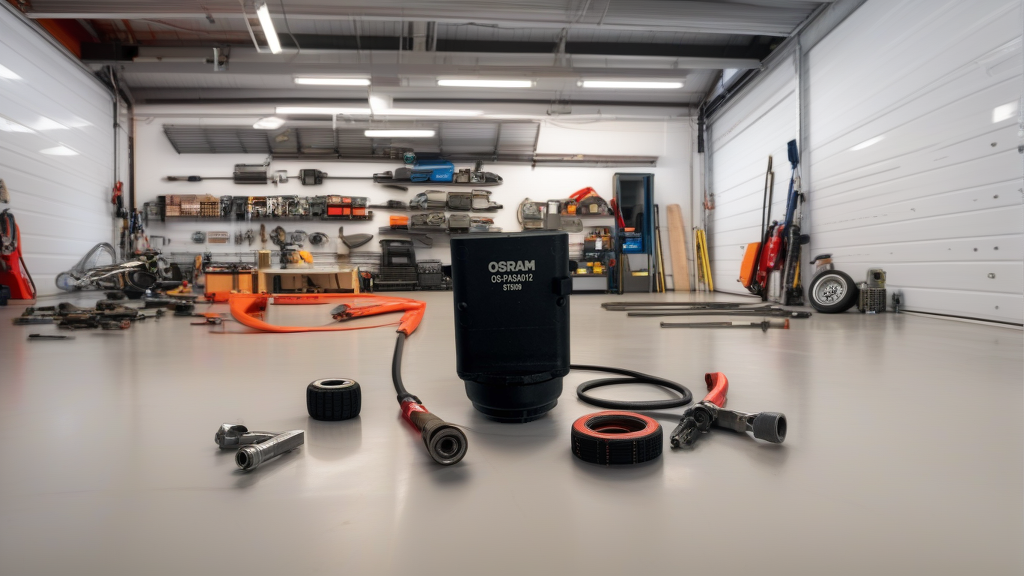
Volkswagen GOLF owners are reporting a frustrating new pattern of parking sensor failures that have nothing to do with physical damage—and everything to do with electrical noise. The symptom set is consistent: intermittent false alarms at low speed, a momentary beep burst followed by silence, and in worse cases, a system that refuses to engage until the ignition cycles. Behind many of these complaints is a faulty or aftermarket sensor that cannot handle the GOLF’s CAN-bus voltage fluctuations. That’s where the OSRAM OS-PASA012 enters the conversation.
The GOLF platform runs its parking assist through a dedicated controller that expects a very specific resistance and frequency response from each sensor. When a sensor drifts out of spec—common after moisture ingress or long-term heat cycling—the controller responds with a dead sensor or short-circuit code. But the more insidious failure mode is signal interference. An aging sensor with degraded internal circuitry can emit or absorb RF noise, which causes the controller to misread distance. The result: phantom beeps that send drivers chasing shadows in empty parking lots.
Key Specs — OS-PASA012
- Brand: OSRAM
- Type: Ultrasonic parking sensor
- OE Reference: 3D0919275D
- Fitment: Volkswagen GOLF (3 applications)
- Material: Reinforced polymer housing, sealed transducer
- Signal: CAN-bus compatible, factory-matched impedance
Diagnosing this issue on a lift is straightforward if you know what to look for. Start with a VCDS or OBDeleven scan—common codes include 01519 (right rear sensor) or 01520 (left rear sensor) with open/short to ground. But don’t just swap the sensor based on the code. Measure the resistance across the sensor pins. You’re looking for a reading between 10 and 12 kOhms. Anything outside that range means the transducer is worn. A second check: tap the bumper lightly while the ignition is on. A healthy sensor will produce a brief audible click. A silent sensor is a dead sensor.
The aftermarket landscape for GOLF sensors is crowded with cheap units that fail within six months. Many of them use lower-grade piezoelectric elements that drift with temperature. On a cold morning, the system may falsely report an obstruction. By afternoon, it works fine. That instability is what pushes many shop owners toward the OSRAM unit. It’s priced above the no-name brands but well below dealer stock, and it carries an OEM-grade transducer that holds its frequency curve across a wider temperature band.
Pro Tip: If you’re chasing intermittent faults, look at the wiring harness connector before blaming the sensor. GOLF rear bumper harnesses chafe against the bumper reinforcement bar on late-model cars. A pinched wire creates voltage drop that mimics a sensor failure. Check continuity from the sensor plug back to the controller before ordering parts.
For shop owners, stocking the OS-PASA012 | OSRAM Parking Sensor | Fits Volkswagen | OE# 3D0919275D makes sense from a warranty perspective. You’ll see fewer comebacks, and the fitment covers three GOLF applications, which simplifies inventory. If a customer insists on a cheaper alternative, set the expectation that signal interference issues are rarely solved by budget parts—the controller is too sensitive to tolerate sloppy frequency response.
The bottom line: if you’re seeing phantom beeps or intermittent parking assist failures on a GOLF, test the sensor resistance first. If it’s out of spec, the OS-PASA012 is the reliable replacement that won’t have your customer back in the bay next month. Skip the guessing game, verify the harness, and install a sensor that actually matches the GOLF’s electrical behavior—not one that just fits the hole.

Recommended Part: OS-PASA012 – OE-grade replacement, in stock now.