
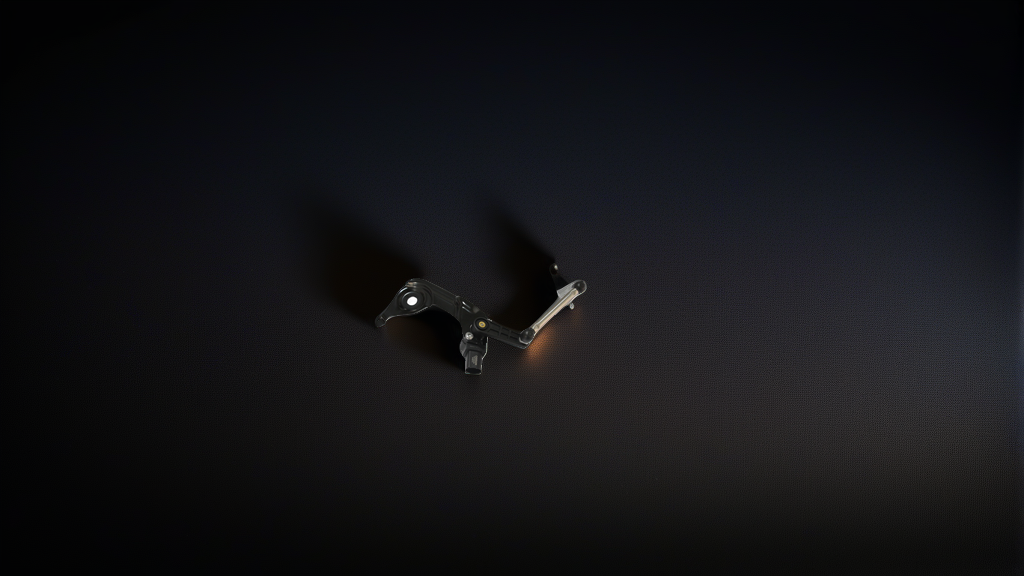
Ask any suspension specialist worth their salt, and they’ll tell you the same thing: the most common comeback on a ride height sensor job isn’t a faulty part—it’s the wrong part. You pull up the catalog, match the year, and still end up with a sensor that throws a code for the C7 chassis when you’re working on a B8. The culprit isn’t the parts house. It’s the OE number system—specifically, Audi’s maddening habit of superseding part numbers without changing the physical appearance of the component.
For Audi owners and independent shops alike, understanding how to decode those 10-character alphanumeric strings is the difference between a 20-minute fix and a week of chasing electrical gremlins. Let’s break down how the system works, why cross-referencing matters more than ever in 2026, and where the aftermarket has stepped up to fill the gaps.
The Anatomy of an Audi OE Number
Audi (and the broader VW Group) uses a logical structure that, once you know it, tells you almost everything about the part before you even open the box. The format is always the same: XXX XXX XXX X. For example, the OE number 8K0941309F breaks down like this:
- 8K0 – The model platform code. 8K0 refers to the Audi A4/S4/RS4 (B8 generation, 2008-2016) and the A5/S5 (B8, 2007-2017). The Q5 (8R) uses a different prefix, even for the same physical sensor.
- 941 – The main group. 941 is the domain for ride height sensors, level control systems, and air suspension electronics. Any part starting with 941 is going to be related to chassis leveling.
- 309 – The specific part identifier. This narrows it down to the sensor itself, not the bracket or the connecting rod.
- F – The revision letter. This is the killer. Audi revises parts constantly, and the suffix letter indicates the current version. An “A” version might be obsolete, with “F” being the latest supersession.
The critical gotcha? Audi does not always update the catalog to show that an older revision (say, 8K0941309B) is directly interchangeable with the newer “F” version. Sometimes the wiring connector changes. Sometimes the internal electronics are updated to change the output curve. And sometimes—infuriatingly—they’re identical, and Audi just changed the supplier.
Cross-Brand Equivalents: It’s Not Just Audi
Here’s where it gets interesting for the DIY crowd and budget-conscious shops. That 8K0941309F number isn’t exclusive to Audi. The VW Group parts bin is vast, and the same sensor often appears on:
- Volkswagen Touareg (7P6) – uses a similar level sensor, but the connector is often clocked differently.
- Porsche Cayenne (92A) – shares the suspension electronics architecture, but the mounting bracket geometry can differ.
- Bentley Continental GT – same platform kinship, but expect a different load curve in the software.
The physical sensor may look identical, but the output signal is tuned to the specific vehicle’s control module. Swapping a Porsche part into an Audi can work, but you run the risk of the module misreading the voltage range, triggering a fault for “implausible signal.” Cross-referencing the OE number alone isn’t enough—you must verify the suffix letter and the compatibility list from the aftermarket manufacturer.
The Aftermarket Reality Check
When OE sensors run $180–$250 from the dealer, the aftermarket has stepped in with units that perform identically for a fraction of the cost. The OSRAM OS-HSA036 is a prime example. It’s built to match the 8K0941309F spec exactly, including the connector pinout and the voltage sweep range (typically 0.5V to 4.5V, depending on ride height position).
The fitment is specific to the B8 A4/A5 chassis (and the Q5 with the same system), but here’s the thing: the OE number lookup for this part often pulls up the “G” revision, which supersedes the “F.” OSRAM made a smart call by locking the OS-HSA036 to the “F” spec, because the “G” revision changed the plug orientation slightly. If you order the “F” equivalent, you’re getting the exact part that was on the vehicle from the factory.
Pro Tip: When cross-referencing, always check the revision letter on your old sensor. If your car has a “D” revision and the aftermarket part is built to “F” spec, verify the connector is the same shape. Audi changed from a square 3-pin to a rectangular 4-pin in some 2013 models. If the pins don’t match, you’re sending the part back.
Where the Lookup Goes Wrong
The biggest mistake we see isn’t in the decoding—it’s in the trust of online catalogs. Many cross-reference databases take the OE number, strip the suffix letter, and return every possible match. For the 8K0941309, they’ll list the B, C, D, E, and F revisions as “compatible.” That’s technically true in terms of mounting, but the resistance sweep can differ by up to 15% between revisions.
On the Audi A4, the ride height sensor sends a signal to the headlight leveling module (not the air suspension—most B8 A4s have steel springs). The module uses that voltage to adjust the low-beam beam pattern. If you install a sensor with a different internal resistive track, the headlights will aim too low or too high. The driver won’t notice immediately, but oncoming traffic will, and you’ll get a flickering warning light on the dash.
The fix: Use the OE number as a starting point, not the final word. Cross-reference the aftermarket brand’s specific SKU back to the Audi ETKA system to confirm the revision letter matches.
The Verdict on OS-HSA036
For the B8 A4 and A5 owner, the OSRAM OS-HSA036 is the correct call for a few reasons. First, it sidesteps the dealer price gouge. Second, it’s built with a sealed housing that resists the moisture ingress that kills the factory units—Audi’s original design had a known breather port issue that allowed water into the connector.
The OS-HSA036 ride height sensor is a direct swap. No adapters, no wire splicing, no coding required. If the old sensor was throwing code 01577 (termination fault), this unit clears it on the first drive cycle.
If you’re working on a C7 A6 or a Q7 with air suspension, skip this part—you need the 4H0 or 7P6 series. But for the vast number of 2009–2016 A4/A5s still on the road, this is the sensor to keep on the shelf.
Bottom line: Learn to read the OE number like a map. The prefix tells you the car, the middle digits tell you the system, and the suffix tells you which generation you’re dealing with. When you match all three to a reputable aftermarket unit, you get dealer-level reliability at half the price.

Recommended Part: OS-HSA036 – OE-grade replacement, in stock now.