
If you’ve spent any time in the Audi parts ecosystem, you’ve seen the part number 7H0919275B floating around. It’s the rear parking sensor used across a surprising range of vehicles, from the Q7 SUV to the A4 sedan. But here’s the problem: that single OE number doesn’t tell you everything you need to know about fitment, and a mismatch can cost you an afternoon of disassembling a bumper for nothing.
The aftermarket has responded with options like the OSRAM OS-PASA002, which carries the 7H0919275B and 4B0919275G cross-references. But before you click “buy,” let’s talk about what makes this sensor tricky, and how to verify you’re getting the right one the first time.
The Cross-Reference Trap
The 7H0919275B is the primary OE number, but Audi also used 4B0919275G on certain models. These are not always interchangeable. The physical dimensions are similar—roughly 18mm in diameter with the standard snap-in mount—but the electrical characteristics and the internal circuitry can differ. The 4B0919275G is often found on older platforms (think C5 A6 and D2 A8), while the 7H0919275B appears on the newer modular platforms.
Here’s where it gets messy: some aftermarket manufacturers list both numbers on one SKU, claiming a “universal” fit. The OS-PASA002 does exactly this, and it works because OSRAM designed the sensor to handle both signal profiles. But not all dual-listed sensors are created equal. If you see both numbers on a cheap no-name unit, be cautious—it might mean the manufacturer copied the listing without doing the engineering.
What Actually Fails on These Sensors
The most common failure mode on Audi parking sensors isn’t the ceramic disc cracking or the internal piezo element dying. It’s water ingress. The ultrasonic transducer sits behind the bumper, exposed to road spray, pressure washing, and temperature cycling. Over time, the epoxy seal around the connector degrades, moisture gets in, and the sensor either stops responding or starts giving false readings.
You’ll notice this as an intermittent beep when there’s nothing behind you, or a “Parking Assist Fault” message on the MMI screen. The secondary failure mode is connector corrosion, especially in regions that use road salt. The pins oxidize, resistance climbs, and the control module interprets that as a sensor failure.
The OSRAM unit addresses this with a fully sealed connector housing and a more robust potting compound around the internal board. It’s not a dramatic design change—it’s the kind of incremental improvement you’d expect from a brand that actually manufactures its own components rather than rebadging whatever comes out of a Shenzhen batch.
How to Verify Fitment Before You Buy
Don’t rely solely on the “compatible vehicles” list. Here’s the process I recommend:
1. Pull your current sensor and read the part number printed on the side. It’s usually visible without removing the bumper—just reach behind the trim panel. If it says 7H0919275B or 4B0919275G, you’re in the right ballpark.
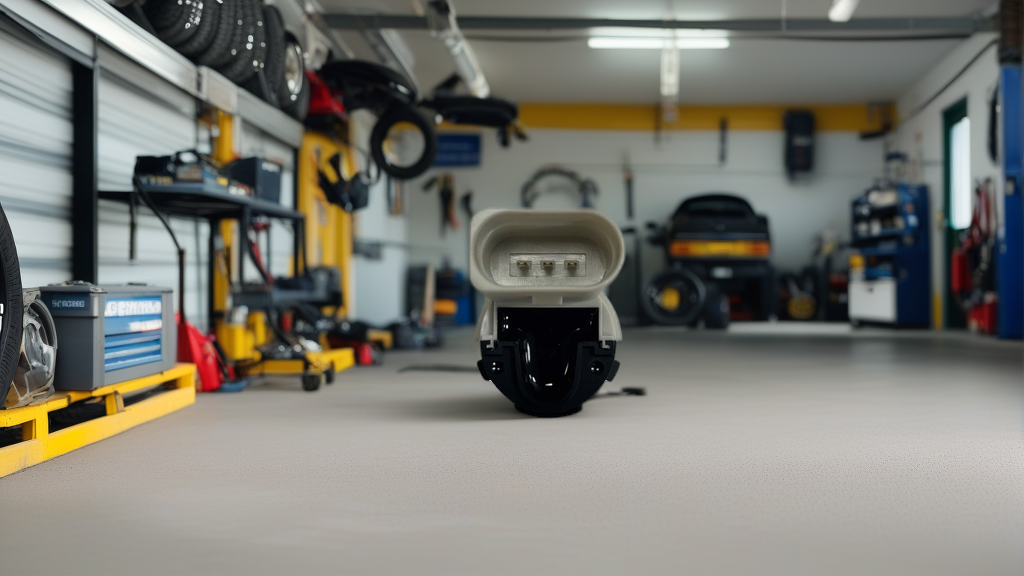
2. Check the connector shape. Audi used two connector styles on these sensors: the older rectangular 3-pin and the newer oval 3-pin. The OS-PASA002 ships with the oval connector, which matches the majority of 2005-2015 applications. If you have the rectangular connector, you’ll need an adapter harness.
3. Measure the mounting hole diameter. Most Audi sensors are 18mm, but some early A6s used a 16.5mm version. If you’re retrofitting into a bumper that wasn’t originally equipped, this matters. If you’re replacing an existing sensor, just match what you have.
4. Verify your MMI software version. For 2010+ models, the parking assist control module may need a firmware update to accept a non-OE sensor. Most aftermarket sensors work without it, but occasionally the module rejects the sensor’s impedance signature. If you have VCDS or OBDeleven, you can check for fault codes after installation.
The Aftermarket Advantage
Audi’s pricing on these sensors is frankly absurd. A genuine 7H0919275B will run you $80-$120 depending on the dealer. The OSRAM OS-PASA002 typically lands at roughly half that, and it comes with a two-year warranty that’s actually honored. That’s not nothing—I’ve seen OEM sensors fail within a year in harsh climates, and the warranty process is painful.
The trade-off is that aftermarket sensors sometimes have a slightly different tone frequency. This doesn’t matter in practice because the system only listens for reflection time, not a specific frequency. But it can matter if you’re replacing just one sensor on a car with existing genuine units. The control module calibrates each sensor individually, so mixed brands generally work fine—but if you get a sensor that’s way out of spec, you’ll see erratic behavior.
Pro Tip: When replacing a single sensor, test the new one before fully reassembling the bumper. Plug it in, turn on the ignition, and place a cardboard box about 0.5m behind the sensor. You should hear a steady tone, not an intermittent chirp. If it chirps, the sensor is likely misaligned or the connector isn’t fully seated.
Where the OS-PASA002 Fits
The OS-PASA002 covers five Audi applications: the Q7 (2006-2015), A4 (2008-2015), A5 (2008-2015), A6 (2005-2011), and the A8 (2005-2010). That’s a solid range, though it misses the later B9 A4 and the Q8. If you’re working on a 2016+ model, you’ll need a different sensor—the connector changed and the signal protocol was updated.
For the cars it does cover, the fitment is straightforward. The sensor body is dimensionally identical to the OE unit, so it snaps into the mounting bracket without modification. The bumper harness plugs in directly. No cutting, no splicing, no wire repinning.
The build quality is visibly better than the no-name competition. The housing is ultrasonically welded rather than glued, and the connector pins are gold-plated (you can see it if you look closely). The ceramic face is slightly recessed, which helps with self-cleaning—dirt doesn’t build up as quickly on the transducer surface.
The Bottom Line
If you’re replacing a failed parking sensor on a mid-2000s to mid-2010s Audi, the OS-PASA002 is the smart buy. It’s cheap enough that buying two is reasonable—one for the immediate fix and one for the inevitable failure of a neighboring sensor in the next year or two. The cross-reference covers the two most common OE numbers, and the build quality is genuinely better than what you’d get from a $15 no-name unit.
Just don’t skip the fitment verification. Pull the old sensor, match the connector, measure the hole diameter, and confirm your model year is in the coverage range. A five-minute check now will save you from a second bumper removal next weekend.
For the price and coverage, this is the sensor I’d stock on the shelf—and I do.

Recommended Part: OS-PASA002 – OE-grade replacement, in stock now.