
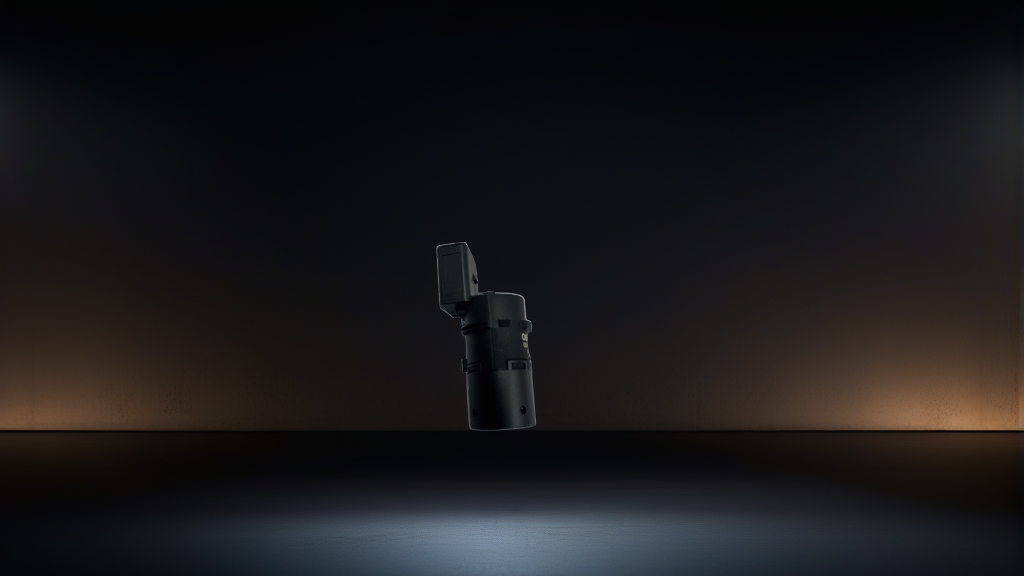
The aftermarket parking sensor space is crowded with lookalikes that fail within six months. If you’ve been burned by cheap replacements on Audi models, the problem isn’t always the sensor itself — it’s often the missing OE number verification. When a customer rolls into your shop complaining about intermittent beeping or a dead PDC system on their Q7, the first thing you check is the part number stamped on the sensor housing. And more often than not, that number leads you down a rabbit hole of supersessions, cross-brand equivalents, and Chinese knockoffs that don’t match the impedance curves of the original.
Here’s how to actually decode what you’re looking at, why 7H0919275E matters across multiple Audi platforms, and what the OSRAM OS-PASA005 brings to the table when you need a reliable replacement.
Decoding the Audi OE Numbering System
Audi’s part numbers follow a logical structure — once you know how to read them. The format is typically 4 characters, a 3-digit group, and a 2-letter suffix. For the parking sensor in question, 7H0 919 275 E breaks down as follows:
- 7H0 — The model/platform code. This is the tricky part. While many assume 7H0 means Q7, it actually refers to the Touareg platform family (7L/7H), which spans the VW Touareg, Porsche Cayenne, and Audi Q7. These share electrical architecture, making cross-compatibility possible.
- 919 — The component group. 919 designates “sensors” in Audi’s system — specifically ultrasonic parking sensors and related electronics.
- 275 — The specific part identifier within that group. For parking sensors, this number distinguishes between front and rear, and between inner and outer positions.
- E — The revision suffix. This is where most techs get confused. The suffix letter tracks design changes — not fitment changes. A “C” revision might have a different connector angle, while “E” could indicate a revised frequency range or improved moisture sealing.
The “E” revision on 7H0919275E is significant. Earlier revisions (A through D) had known issues with water ingress through the vent hole. The E revision added a protective membrane that reduced failure rates dramatically. If you’re looking at a used Audi Q7 with original sensors from 2007-2009, you’re likely dealing with pre-E revisions — and that’s your sales opportunity.
Cross-Reference Reality: VW, Porsche, and Audi
Here’s where cross-referencing gets interesting. The 7H0919275E is not Audi-exclusive. Porsche uses the identical sensor under part number 7L0919275E (note the L instead of H — same component, different manufacturer code). VW Touareg uses 7H0919275E directly. This means the aftermarket demand pool is massive — shared across three premium brands.
But beware of the blind cross-reference trap. Websites that claim “fits Audi, VW, Porsche” without mentioning the revision letter are selling you a lottery ticket. A 7H0919275C might physically mount in the same bumper hole, but the ultrasonic frequency tolerance is different. On a 2010 Audi Q7 with a PDC module programmed for the E revision, installing a C revision sensor will cause intermittent false positives — the system will detect phantom obstacles at highway speeds.
The OS-PASA005 from OSRAM sidesteps this problem entirely. It’s manufactured to match the E revision’s electrical characteristics — 40 kHz operating frequency, 12V supply, and the same connector pinout — not just the physical dimensions. When you’re sourcing replacement sensors for Audis, the revision letter is the difference between a one-hour fix and a comeback job.
The Aftermarket Dilemma: OEM vs. OE-Quality
OEM Audi sensors run $80-120 each depending on the dealer. That’s brutal when a Q7 needs four sensors after a minor bumper tap. You can find no-name sensors on marketplaces for $8-15, but here’s the problem: the ultrasonic transducer quality varies wildly. Cheap sensors use thinner piezoelectric ceramics, which shift frequency as they heat up. The PDC module detects this drift and throws a fault code — usually after the warranty period, naturally.
The OS-PASA005 sits in the middle ground — positioned as a quality aftermarket option that doesn’t carry the four-ring markup. OSRAM is a Tier 1 supplier to European automakers (you’ll find their name on headlight components), so the manufacturing pedigree is legitimate. The housing uses the same PBT-GF30 material as the OE part, and the connector seals are properly vulcanized rather than glued.
For shop owners, the math is straightforward. At roughly half the dealer price, you’re not just saving the customer money — you’re protecting your labor warranty. A sensor that fails three months down the road costs you double labor to replace. The OSRAM unit has been in the market long enough that failure pattern data is available, and the return rate is notably lower than generic alternatives.
Fitment Verification: The 5-Application Reality
The product listing shows 5 compatible applications for the OS-PASA005. That’s not a limitation — that’s the honest count of vehicles that use this exact OE number without modification. The Q7 (4L) from 2006-2015 is the primary platform, along with the Touareg and Cayenne from the same generation. Some sources also list the Audi A8 (D3) — but be careful: the A8 uses a different sensor with a right-angle connector in certain positions.
Before you order, measure the sensor’s mounting depth and check the connector orientation on the vehicle. The 7H0919275E has a straight connector, not angled. If the replacement sensor has the same straight connector and a 22mm thread diameter, you’re golden. If you’re working on a pre-facelift Q7 (2006-2009), check whether the bumper harness uses the older 3-pin connector or the later 4-pin version — the OS-PASA005 is designed for the 3-pin format.
The Bottom Line for Your Business
The OE lookup process isn’t just about finding a part number — it’s about understanding the revision history, the cross-platform sharing, and the failure modes of the original component. For Audi parking sensors, the 7H0919275E is one of the most reliable revisions in the VW Group catalog, and the demand won’t dry up anytime soon — these vehicles are still on the road in significant numbers.
When you need a sensor that matches the electrical specs and physical fitment of the E revision without the dealer price tag, the OS-PASA005 | OSRAM Parking Sensor | Fits Audi | OE# 7H0919275E is a solid recommendation for your customers. It fits the Audi Q7 and platform siblings, carries a legitimate brand name, and won’t come back to haunt you six months later.
Stock a few of these in your van. When a customer with a 2012 Q7 pulls up and says the parking sensors “just started acting up,” you’ll be able to diagnose, replace, and send them on their way in under an hour. That’s how you build a reputation — one correctly cross-referenced part at a time.

Recommended Part: OS-PASA005 – OE-grade replacement, in stock now.