
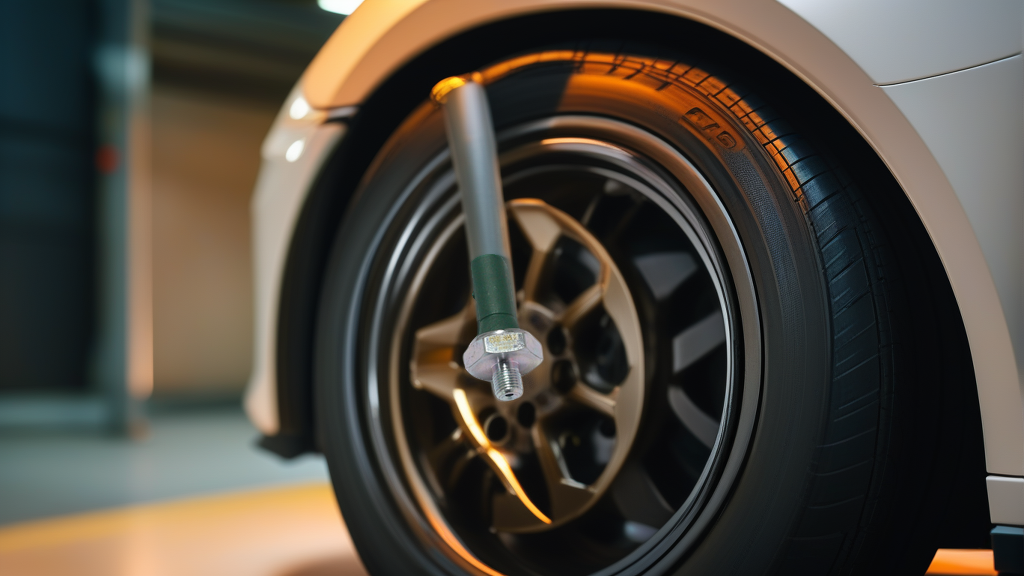
The phone call every independent Audi shop dreads arrives on a Monday morning. A 2015 Audi A4 Quattro limps in on a tow truck, oil pressure warning light glowing like a hazard flare. The owner tells you he replaced the sensor himself last weekend—ordered a generic unit from an online marketplace for eleven bucks. The part was the wrong resistance range, the ECM read a phantom pressure spike, and the engine kept running without proper lubrication for approximately four minutes on the highway.
That’s a $6,800 short block replacement caused by a $11 sensor.
The aftermarket for Audi oil pressure sensors has exploded over the past three years as the B8.5 and B9 generation cars flood the used market. But this is not a category where you want to gamble on the cheapest option. Here’s the pre-order checklist that separates a routine 30-minute swap from a catastrophic failure.
The First Check: Resistance Range and Signal Type
Audi has used at least three distinct oil pressure switch configurations across the 2.0T and 3.0T families. The early high-pressure switches operate as simple on/off contacts that close when pressure falls below a threshold. Later variable-resistance sensors provide a continuous voltage signal that allows the ECM to calculate actual pressure in real time.
The OS-OPA002 from OSRAM falls into the latter category—a proper variable-resistance sender that communicates with the engine control module just like the OE part. Its OE cross-reference number L036919081C is stamped directly on the housing, a detail that matters more than you’d think. Many cheap knockoffs omit this stamping entirely, and when you’re trying to match a part visually against a grainy photo on your phone at 7 AM, that little detail saves you from installing the wrong sensor.
Before you order, pull the old part off the engine and read the OE number printed on the ceramic base. If you can’t read it—and after 80,000 miles of heat cycling, often you can’t—use the last eight digits of your VIN to confirm the engine family. The 2.0 TFSI (EA888 gen 3) uses a different sender than the 3.0 TFSI supercharged unit.
Check the Thread Pitch and Connector Geometry
Here’s where bulk buyers routinely get burned.
The oil pressure sensor location on Audi engines sits in a block that sees a lot of thermal expansion. The thread pitch is M10x1.0 on most models, but the 3.0T uses a slightly different sealing shoulder. If you force a sensor with the wrong thread pitch, you will strip the aluminum housing in the engine block. That’s not a part replacement anymore—that’s a helicoil job, and on some V6 engines, it means pulling the entire timing chain cover.
The connector geometry matters equally. Audi uses a two-pin flat connector on most models, but the locking tab orientation varies. The OS-OPA002 mirrors the OE connector exactly—the tab clicks in at the 10 o’clock position, and the seal sits flush against the block face. Cheap sensors often have the tab at 8 o’clock or no tab at all, which means the connector vibrates loose within weeks.
Pro Tip for Bulk Orders: When ordering multiple units for your shop inventory, request a sample first. Install it on a customer car, run it for 200 miles, then check the connector retention and the sealing washer deformation. If the washer crushes unevenly, that sensor is going to leak. We’ve seen this with three different budget brands this year alone.
The B2B Bulk Buying Trap: “Compatible” Does Not Mean “Direct Fit”
When you’re purchasing for a shop, you’re not just buying parts—you’re buying labor efficiency. Every return, every core charge dispute, every “this was listed as compatible but doesn’t fit” phone call costs you more than the part markup.
Here’s the reality of the aftermarket supply chain: many distributors list “Audi compatible” sensors that physically fit the thread but have the wrong electrical characteristics. The resistance curve is off by 30-50 ohms at cold start. The sensor reads correctly at operating temperature but sends a low-pressure signal during the first 30 seconds of a cold start, triggering a false warning light and a freeze-frame code that your diagnostic software flags as a real fault.
The | OE# L036919081C](https://longweiparts.com/product/os-opa002-osram-oil-pressure-sensor-fits-audi-oe-l036919081c/”>OSRAM Oil Pressure Sensor for Audi) addresses this directly. OSRAM is a tier-one OEM supplier with decades of automotive electronics manufacturing experience. This is not a reboxed generic part—it’s built in the same facilities that supply original equipment to European automakers. The resistance sweep matches the Audi specification within 2%, and the operating temperature range extends to 150°C, which covers the worst-case oil temperatures on the 3.0T under hard load.
What to Verify Before You Place the PO
If you’re ordering for your shop’s inventory or doing a one-time replacement for a personal vehicle, run this five-point check:
- Confirm the OE part number on your existing sensor or via your VIN decoder. Cross-reference against L036919081C.
- Check the thread pitch—M10x1.0 is standard, but verify the sealing method (crush washer vs. tapered thread).
- Verify the connector type—count the pins and note the locking tab position.
- Check the resistance spec—at 20°C, the sensor should read between 10-40 ohms across the two terminals. A dead short or open circuit means the wrong part.
- Confirm the pressure threshold—for variable sensors, confirm the voltage output range (typically 0.5V at zero pressure to 4.5V at 150 psi).
The Cost of Getting It Wrong
Let’s put some real numbers on this. A genuine Audi sensor from the dealer costs between $65 and $95 depending on the model year. The | OE# L036919081C](https://longweiparts.com/product/os-opa002-osram-oil-pressure-sensor-fits-audi-oe-l036919081c/”>OS-OPA002) comes in at a fraction of that with the same performance characteristics. A generic no-name sensor costs $8-15.
The labor to replace an oil pressure sensor on an Audi A4 is 0.5-0.7 hours at most independent shops—call it $60-85. The diagnostic time to chase a phantom oil pressure code is 1-2 hours, often more if you have to verify wiring integrity.
The failure cost if a bad sensor causes a real oil pressure issue to go unnoticed: $4,000-8,000 for a replacement engine on a B8.5 generation car.
Do the math. The “savings” of a $12 sensor evaporates completely if you have to redo the job, and it creates a liability nightmare if a customer’s engine fails after you installed a substandard part.
The Bulk Order Verdict
For shop owners and fleet managers ordering in volume, the rule is simple: standardize on a sensor that you can trust to work every time, verify the first article, and don’t chase the bottom dollar on safety-critical components. The | OE# L036919081C](https://longweiparts.com/product/os-opa002-osram-oil-pressure-sensor-fits-audi-oe-l036919081c/”>OSRAM OS-OPA002) is that part—consistent manufacturing, OE-matching specs, and a brand name that carries weight when you’re explaining your parts choices to a skeptical customer.
Buy the cheap sensor once, and you’ll learn this lesson the expensive way. Buy the right sensor every time, and oil pressure sensor failures become a 45-minute warranty job instead of an engine replacement narrative.

Recommended Part: OS-OPA002 – OE-grade replacement, in stock now.