
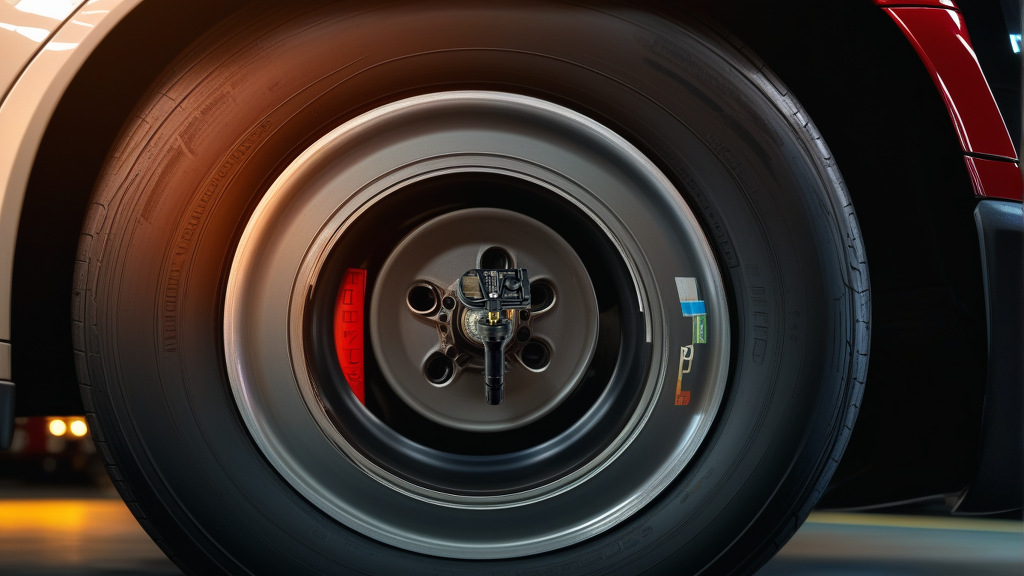
The BYD QIN PLUS DM-I has become one of the best-selling plug-in hybrids in the Chinese market, and with 2025 models now rolling into North American and European fleets, TPMS sensor replacement demand is climbing fast. But here’s the catch: the 2025+ QIN PLUS DM-I uses a different sensor generation than earlier models, and a surprising number of aftermarket listings still reference the old 315MHz units. If you’re sourcing for a shop or fleet, one wrong SKU means a dead sensor at installation time — and a chargeback you don’t want to eat.
The Frequency Trap
Before you commit to a bulk order, confirm the frequency. The QIN PLUS DM-I’s 2025 revision uses 433MHz sensors. Ordering 315MHz stock “because it worked for the 2023 model” is the single most common mistake we see from B2B buyers. The BL-ST-096 from BH-Sens (Baolong Technology) is a clamp-in, pre-programmed 433MHz unit that covers 34 BYD applications, including the 2025+ QIN PLUS DM-I — but it won’t do you any good if you skip the two-minute VIN check on your customer’s car.
| Checkpoint | What to Verify | Why It Matters |
|---|---|---|
| Frequency | 433MHz vs 315MHz | Wrong freq = no signal, no data |
| Mounting type | Clamp-in vs snap-in | QIN PLUS DM-I uses clamp-in |
| Pre-programming | OE-compatible IDs | Pre-programmed saves programming time |
| OE number | EUEA3609200B (also 110964) | Confirms fitment for 2025+ models |
OE vs Aftermarket: The Cost Reality
BYD’s OEM sensor runs anywhere from $45 to $60 per unit at dealer pricing. The BH-Sens alternative comes in at roughly half that in single-unit quantities, and the gap widens further when you negotiate bulk tiers. For a fleet running 50+ QIN PLUS DM-I units, the savings on a full set of five sensors (including the spare) can fund another set entirely. That’s real money.
But don’t price-shop alone. Check the sensor’s programming requirement. The BL-ST-096 is pre-programmed, which means it arrives ready to train. Non-programmed units add a step that some shops bill at $15-20 per tire. Factor that into your cost-per-install math.
What to Verify in Bulk
When ordering for multiple vehicles, confirm the production date of the target vehicle. BYD changed the TPMS module supplier mid-2024, and early 2025 units may still have the older ECU firmware. In practice, the BL-ST-096’s broad compatibility covers the transition, but if you’re sourcing for a mixed fleet of 2024 and 2025 QIN PLUS DM-I vehicles, request sensors with the latest firmware version from your supplier. Baolong updates sensor firmware periodically, and older stock can occasionally fail to sync with newer ECUs.
Also confirm the valve stem material. The QIN PLUS DM-I uses rubber stems, and the BL-ST-096 includes the correct stem for this platform. Aluminum stems sold with some aftermarket sensors will corrode in salted-road climates — a warranty issue you don’t want to own.
Bottom Line
The QIN PLUS DM-I’s 2025 TPMS platform is stable and the aftermarket has caught up, but only if you verify frequency, mounting type, and OE number before ordering. Buy the pre-programmed BL-ST-096 | BH-Sens 433MHz TPMS Tire Pressure Sensor | Fits BYD (2025+) | OE# EUEA3609200B, 110964, BLST096 to skip the programming bench entirely. At roughly half the dealer cost with identical fitment, it’s the sensible choice for shops and fleets — just confirm your vehicle’s build date first.

Recommended Part: BL-ST-096 – OE-grade replacement, in stock now.