
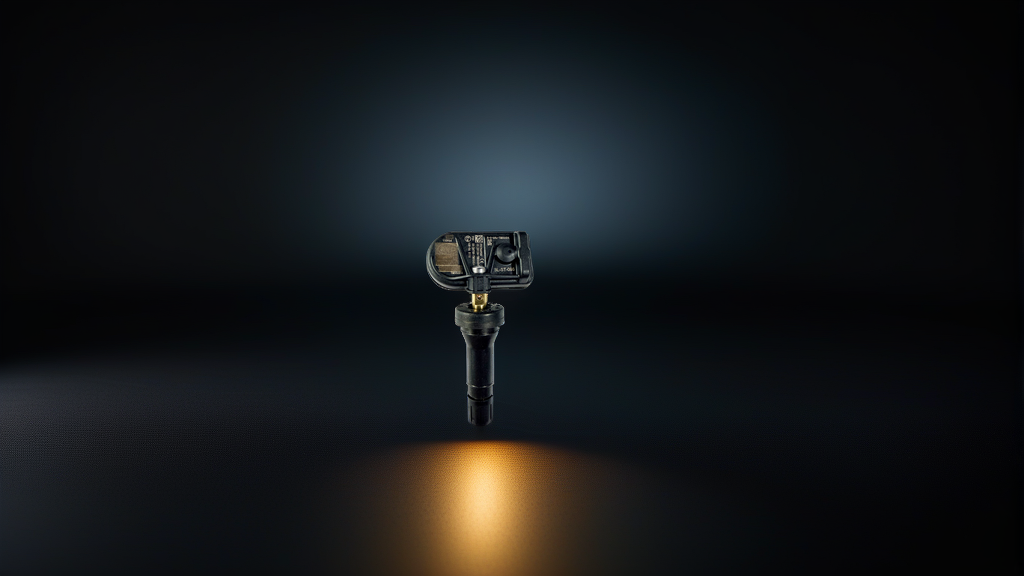
The BYD QIN L EV has become a fixture in Chinese driveways and, increasingly, in overseas markets where the brand’s export push is gaining serious momentum. For aftermarket parts suppliers and independent workshops, that means one thing: a growing need for reliable TPMS replacement options. The OE sensor on these cars—part number EUEA3609200B—works fine when it works, but battery life is finite, and valve stems corrode.
Here’s the part most catalogs don’t tell you: the specifications printed on the box are more than marketing filler. Understanding what 433MHz, IP67, and “clamp-in” mean in real-world terms separates a shop that fixes the problem once from one that deals with comeback complaints.
Key Specs at a Glance
| Specification | BL-ST-096 Value | What It Means in Practice |
|---|---|---|
| Frequency | 433MHz | Global standard for Asian and European vehicles; strong range through chassis and wheel wells |
| Protection Rating | IP67 | Dust-tight and protected against temporary immersion (1m for 30 min)—critical for wheel-mounted electronics |
| Mounting Type | Clamp-in | Uses a metal valve stem and internal nut; more durable than snap-in for EVs with heavier wheel assemblies |
| Pre-programmed | Yes | Ships with OE-compatible IDs; no cloning tool required at installation |
| OE Reference | EUEA3609200B | Direct cross-reference to the BYD factory part |
Frequency: 433MHz Is Not a Compromise
There are three main TPMS frequency bands in the world: 315MHz (mostly North America), 433MHz (Europe, Asia, and most BYD applications), and 125kHz (low-frequency trigger, rarely used for data transmission). The QIN L EV uses 433MHz.
Why does that matter beyond compatibility? At 433MHz, the signal penetrates metal and rubber more effectively at lower power than higher-frequency alternatives. The sensor only transmits a few milliseconds per burst to conserve battery, so the receiver in the car needs a reliable signal on the first attempt. A weak signal at 315MHz or a mis-tuned antenna can cause intermittent dropouts—the “tire pressure shows –” issue that sends customers back to the shop.
The BL-ST-096 operates at 433MHz with a transmit power that matches BYD’s receiver sensitivity. In practical terms: the sensor wakes up on rotation or pressure change, sends its burst, and the dashboard updates within seconds. No lag, no ghost readings.
IP Rating: The Spec That Saves You Warranty Calls
IP67 is the rating you’ll see on most quality TPMS sensors, but it’s worth understanding what it actually covers. The “6” means total dust ingress protection—no particles get in, even in fine sand or brake dust environments. The “7” means the sensor survives submersion in water up to 1 meter for 30 minutes.
For a wheel-mounted sensor, that rating is tested against real conditions: pressure washing at car washes, driving through deep puddles, and the constant vibration and temperature swings of a rotating wheel. The BL-ST-096’s housing is ultrasonically welded and sealed to maintain that rating over the sensor’s expected 5-7 year battery life.
Here’s the practical angle for shops: a sensor with a lower IP rating might pass initial fitment but fail after the first winter when salt-laden water seeps into the PCB. That’s not a sensor failure—it’s a specification failure. The IP67 rating on the BH-Sens unit is your first line of defense against warranty returns.
Clamp-In vs. Snap-In: Why It Matters for the QIN L EV
The QIN L EV is not a light car. The battery pack adds significant mass, and the 18-inch wheels on higher trims increase rotational stress on valve stems. Snap-in TPMS sensors use a rubber grommet and are easier to install, but they’re more prone to leaking under centrifugal force on heavier vehicles.
The BL-ST-096 uses a clamp-in design: a metal valve stem threaded through the wheel and secured with a nut from the outside. This provides a positive mechanical seal that doesn’t rely on rubber compression. For the QIN L EV’s wheel weight and typical highway speeds, clamp-in is the correct engineering choice. Replacement valve cores and nuts are standard parts, so serviceability is not an issue.
One installation note: torque the clamp nut to the manufacturer’s specification (usually 4-5 Nm). Over-tightening distorts the sealing surface; under-tightening invites air seepage. If a customer comes back with a slow leak a week after installation, check the nut torque before condemning the sensor.
Pre-Programmed: The Time-Saver That Matters
The BL-ST-096 arrives pre-programmed to the OE frequency and protocol for the QIN L EV. That means it will wake up, transmit, and be recognized by the car’s receiver once installed. For shops without a TPMS programming tool—or for mobile technicians working out of a van—this removes a significant barrier to entry.
What it doesn’t mean: it won’t automatically learn into the vehicle’s module without a registration procedure. On most BYD models, you’ll still need to put the car into TPMS learning mode (usually via the infotainment menu or a diagnostic tool) and trigger each sensor to pair its ID. That takes about two minutes per wheel. The advantage is that you’re not programming the sensor itself—just telling the car which sensor is in which position.
Market Outlook and Buyer Takeaway
As BYD’s export volume grows, aftermarket TPMS demand will follow a predictable curve: early failures start appearing in the 4-5 year range, which puts 2025-2026 models right in the replacement window. The BL-ST-096’s 34 dedicated OE fitments across BYD’s lineup make it a sensible stock item for any shop servicing Chinese EVs, not just the QIN L EV.
For parts buyers, the calculation is straightforward. A pre-programmed, clamp-in 433MHz sensor at this price point eliminates the need for a programming tool inventory and reduces installation time. The IP67 rating covers your warranty exposure. The OE cross-reference ensures compatibility without guesswork.
If you’re stocking TPMS sensors for the growing BYD population, the BL-ST-096 | BH-Sens 433MHz TPMS Tire Pressure Sensor | Fits BYD (2025+) | OE# EUEA3609200B, 110964, BLST096 is the one to have on the shelf. It covers the QIN L EV and extends to over three dozen other BYD applications, which means one SKU handles a lot of the Chinese EV traffic coming through your bay doors.

Recommended Part: BL-ST-096 – OE-grade replacement, in stock now.