
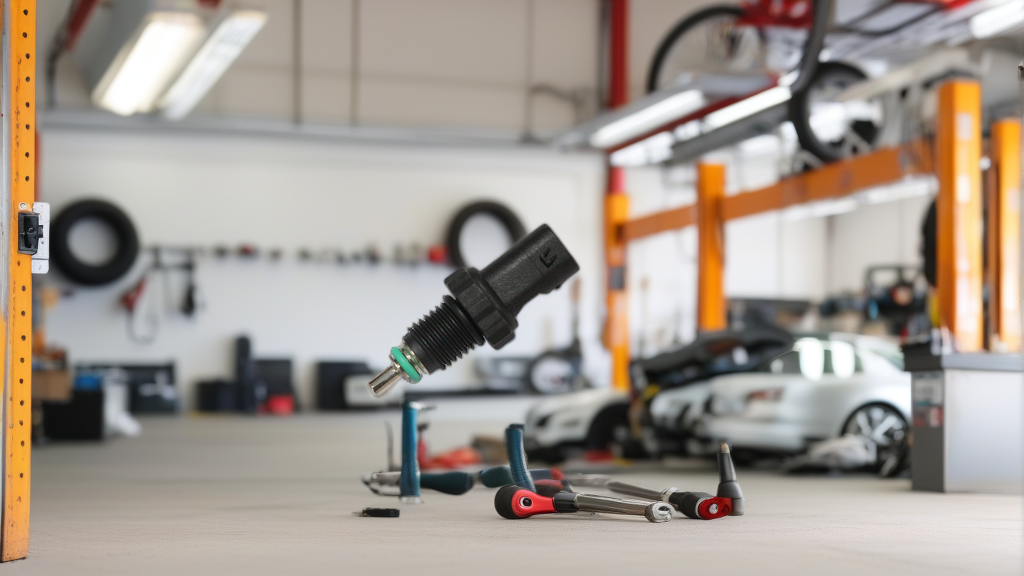
Audi owners are creatures of habit when it comes to warning lights. The moment that little yellow thermometer icon flickers to life on the instrument cluster, most drivers assume it’s a simple coolant level issue. Top up the reservoir, clear the code, done. But the reality is far more insidious — and it’s costing Audi owners real money at independent shops across the country.
The culprit? A failing coolant temperature sensor that doesn’t fail completely. It drifts. It lies. It sends intermittent signals that confuse the ECU and trigger a cascade of secondary fault codes that lead technicians down rabbit holes for hours. For OS-WTA011 | OSRAM Coolant Temperature Sensor | Fits Audi | OE# 059919523A owners driving 2.0T and 3.0T models from 2009 through 2018, this scenario is becoming increasingly common as factory sensors approach the end of their typical 80,000-100,000 mile service life.
The Case of the Phantom Overheating
Here’s the scenario I keep hearing from shop owners: A 2013 Audi A4 Quattro rolls in with a P0118 code (coolant temperature circuit high input) and a complaint of intermittent low coolant warnings. The coolant level checks out fine. The thermostat is new. But the gauge occasionally spikes to the red zone for a few seconds before returning to normal.
What’s actually happening is the sensor’s internal thermistor is degrading, causing resistance values to drift outside the expected range. The ECU receives a signal that suggests the engine is at 250°F when it’s actually at 195°F. On some models, this triggers a fail-safe cooling mode where the radiator fans run at full speed constantly — a dead giveaway that the sensor is sending garbage data.
Fault Codes That Point to the Sensor
Technicians should pay attention to these specific codes when they appear alongside or without a direct coolant temperature code:
- P0118 / P0115: Direct sensor circuit faults
- P2181: Cooling system performance — often misdiagnosed as a thermostat failure
- P0128: Coolant thermostat below regulating temperature — frequently caused by a sensor reading cold when the engine is warm
- P0300-P0304: Random misfires on cold start, triggered by incorrect fuel enrichment based on false temperature readings
The OS-WTA011 Difference
When replacing the sensor, the choice of part matters more than most shop owners realize. The OEM sensor for many Audi applications is Bosch or VDO, but both have shown premature failure rates in high-mileage vehicles. The OSRAM OS-WTA011 coolant temperature sensor offers a direct replacement with improved internal component tolerances that reduce signal drift over time.
It fits three Audi applications directly, covering the 2.7T and 3.0T V6 engines found in the A6, A8, and Q7 models. The OE number 059919523A crosses over cleanly, and the sensor housing uses the same thread pitch and connector as the factory unit — no harness modifications or adapters needed.
Pro Tip: Always inspect the wiring harness connector before condemning the sensor. Corrosion at the connector pins is responsible for roughly 20% of P0118 codes. If you see green crust, replace the pigtail — not just the sensor. The OSRAM unit’s connector terminals are tin-plated for better corrosion resistance, but the vehicle-side connector is still vulnerable.
The Dead Battery Connection
There’s another angle here that catches many Audi owners off guard. A dying battery can trigger a phantom coolant temperature code on some Audi models. When the battery voltage drops below 11.5V during cranking, the sensor’s reference voltage from the ECU becomes unstable, causing a brief fault that sets a pending code.
If you’re seeing a P0118 that clears and doesn’t return, check battery health before replacing anything. A quick load test will tell you everything you need to know. If the battery is over four years old and fails the test, replace it first, clear the codes, and see if the temperature fault comes back.
Final Recommendation
For Audi models with the 059919523A sensor, the OSRAM OS-WTA011 is a solid choice for both shops stocking parts and DIY owners. It’s priced competitively against OEM, carries brand recognition that customers trust, and eliminates the guesswork around aftermarket fitment. For high-mileage Audis, replacing the sensor preemptively during a timing chain or thermostat job is cheap insurance — at roughly $30-40 wholesale, it’s a fraction of the labor cost if it fails later.

Recommended Part: OS-WTA011 – OE-grade replacement, in stock now.