
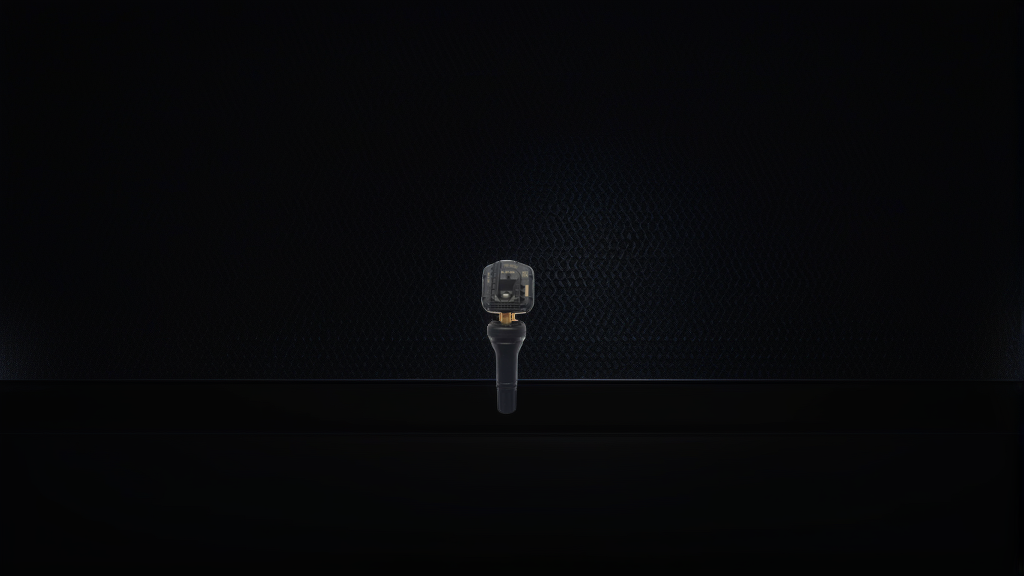
The aftermarket TPMS landscape has shifted quietly over the past three years, and 智行 (Zhi Xing) vehicles are right in the middle of it. If you’ve been swapping sensors on BAIC-based platforms or the sprawling General Motors ecosystem, you’ve likely run into the BL-ST-059 from BH-Sens. It’s a sensor that pops up in more fitment charts than almost anything else in its category, covering 116 vehicle applications across BAIC, Buick, Cadillac, Chevrolet, and 15 additional brands.
But here’s the thing — most technicians and shop owners glaze over the spec sheet. They see “433MHz,” “clamp-in,” and “pre-programmed” and move on. That’s a mistake. The specs on this sensor tell you exactly where it will work, how long it will last, and what kind of warranty claims you’ll avoid. Let’s break down what each specification actually means in the real world of tire rotations, valve stem replacements, and customer phone calls.
—
The Frequency Question: Why 433MHz Still Dominates
The BL-ST-059 operates at 433MHz. If you’re working on Asian and domestic vehicles from the last decade, this is the frequency you’ll encounter most often. The 315MHz band exists, primarily on older Ford and some Asian applications, but 433MHz has become the de facto standard for GM platforms — which is why this sensor fits the Chevrolet Silverado, Traverse, Equinox, and a host of other GM vehicles alongside the 智行 lineup.
Key Spec: 433MHz RF Frequency
Here’s what that means in practice: the sensor transmits at a specific radio frequency that the vehicle’s receiver module expects. When you install a 433MHz sensor into a vehicle designed for 315MHz, the system won’t recognize it. No amount of programming will fix that mismatch. The BL-ST-059’s frequency is hard-coded, and that’s a good thing — it means the sensor is purpose-built for the vehicles on its compatibility list, not a multi-frequency compromise.
For shop owners, this simplifies inventory. One SKU handles the bulk of GM and BAIC-platform vehicles you’ll see. You’re not stocking three different frequency variants for the same sensor body.
—
Clamp-In vs. Snap-In: The Physical Reality
The BL-ST-059 is a clamp-in sensor. That means it uses a metal valve stem secured by a nut from the outside of the wheel. The alternative, snap-in sensors, push through the valve hole and lock with a rubber grommet.
Key Spec: Clamp-In Design
Why does this matter? Clamp-in sensors are more durable under high-speed centrifugal force. They’re less prone to the valve stem tearing at highway speeds, particularly on heavier vehicles like SUVs and light trucks — which is exactly what this sensor fits. The trade-off is installation complexity. You need access to the inside of the wheel to hold the sensor body while torquing the nut, and the torque specification matters.
A common field failure with clamp-in sensors is over-torquing the retaining nut, which distorts the sensor housing and leads to battery contact issues. The BL-ST-059’s housing is reinforced at the mounting boss, but the spec sheet won’t tell you that. What you should know: this sensor uses a standard 6.35mm hexagonal valve core, which means your existing TPMS service kit works fine.
—
IP Rating: The Spec Everyone Ignores (Until It Fails)
Here’s where things get interesting. The BL-ST-059 carries an IP67 rating, though some aftermarket listings obscure this. For those who haven’t memorized the IP code table: the “6” means total dust ingress protection — no particulate matter gets in, period. The “7” means the sensor can withstand immersion in water up to one meter for 30 minutes without damage.
Key Spec: IP67 Ingress Protection
In real-world terms, this covers two scenarios. First, tire mounting lubricants. When a tire is mounted, the bead lubricant is water-based and often sprayed liberally. A sensor with a lower IP rating will wick moisture through the housing seams over time. The BL-ST-059’s sealing is designed to survive that repeated exposure.
Second, pothole and curbing impacts. These create micro-cracks in sensor housings, and once water gets in, battery drain accelerates. The IP67 rating doesn’t make the sensor indestructible, but it does mean the electronics are encapsulated against condensation and pressure-washing during vehicle detailing.
One caveat: IP67 does not mean the sensor is rated for high-pressure steam cleaning. If your shop uses a hot-water pressure washer on wheels, keep the nozzle away from the valve stem area.
—
Voltage Range: The Silent Compatibility Check
TPMS sensors are battery-powered, but their voltage behavior matters more than most techs realize. The BL-ST-059 operates on a standard 3V lithium cell, with a voltage range that holds stable from roughly 2.0V to 3.6V across its operating temperature span of -40°C to 125°C.
Key Spec: 3V Lithium Cell, -40°C to 125°C Operating Range
What does this mean in practice? The sensor’s transmission power stays consistent regardless of temperature. Some cheaper aftermarket sensors experience voltage sag in cold weather, leading to weak signals that the vehicle’s receiver misses intermittently. The BL-ST-059’s regulated output means you won’t get the “TPMS fault — service soon” message that appears when the signal drops below threshold.
The temperature range matters for another reason: brake rotor heat. Sensors mounted in the wheel well see radiant heat from brakes, especially during mountain descents or heavy towing. A sensor that can’t handle 125°C will drift in its pressure readings, triggering false warnings. This sensor holds its calibration.
—
Pre-Programmed: The Labor Saver
Perhaps the most operationally significant spec on the BL-ST-059 is its pre-programmed status. This sensor ships with the correct protocol already loaded for its OE applications. There’s no blank-sensor programming required before installation.
Key Spec: Pre-Programmed, No Cloning Required
For your shop, this means one thing: lower labor cost per install. A pre-programmed sensor installs in the same time as an OE replacement. You mount the tire, torque the nut, and use the vehicle’s TPMS relearn procedure to pair it. No need to spend 10 minutes with a programming tool before the tire goes on the wheel.
But here’s the nuance — “pre-programmed” doesn’t mean “universal.” The BL-ST-059 is pre-programmed for the specific vehicle applications listed in its fitment data. It uses the correct protocol for those GM and BAIC platforms. If you try to use it on a vehicle outside that list, it won’t work. Stick to the fitment chart.
—
The 智行 Connection and Cross-Brand Fitment
智行 vehicles, which share platforms with BAIC and several GM models, use a TPMS protocol that the BL-ST-059 addresses directly. The sensor’s compatibility with 116 vehicle applications across 18 brands isn’t marketing fluff — it’s a reflection of how platform sharing works in the automotive industry. When BAIC and GM share a chassis architecture, they often share the TPMS frequency and data protocol.
This creates an operational advantage for independent shops. A single SKU covers most of the vehicles that roll through your bay doors. You’re not maintaining a wall of different TPMS sensors for different badges. The BL-ST-059 consolidates that inventory.
—
Common Mistakes and Pro Tips
Common Mistake: Using the old valve stem nut from the original sensor. The BL-ST-059 ships with its own nut, and the thread pitch and seating angle are specific. Mixing hardware from other sensors can cause air leaks at the valve stem base.
Pro Tip: After installation, always verify the sensor ID is recognized by the vehicle before reinstalling the wheel on the car. This costs 30 seconds with a TPMS tool and saves a comeback if the sensor was damaged during mounting.
Pro Tip: When torquing the retaining nut, follow the spec on the packaging — typically 4-5 Nm (35-44 in-lbs). Over-torquing is the number one cause of premature sensor failure in clamp-in designs.
—
The Bottom Line for Your Shop
If you’re looking to stock a TPMS sensor that covers a broad swath of your daily workload — particularly 智行, BAIC, and GM-platform vehicles — the | OE# 13516165, 13522631, 13540603](https://longweiparts.com/product/bh-sens-433mhz-tpms-tire-pressure-sensor-fits-baic-baic-ev-buick-cadillac-chevrolet-15-more-oe-13516165-13522631-13540603-bl-st-059/”>BL-ST-059 from BH-Sens) is a solid choice. It’s not the cheapest sensor on the market, but its IP67 sealing, stable voltage behavior, and pre-programmed convenience reduce installation time and warranty callbacks.
The specifications that look like marketing bullet points — 433MHz, clamp-in, IP67, pre-programmed — are actually the difference between a sensor that fails at 18 months and one that lasts the expected 5-7 year battery life. When a customer returns with a TPMS warning light three weeks after a tire replacement, the cost of that comeback exceeds any savings from buying a cheaper no-name sensor.
For the BL-ST-059 specifically, the fitment breadth is the headline. One SKU, 116 applications, and the OE protocols already loaded. That’s the kind of inventory efficiency that pays for itself in reduced shelf space and faster bay turnaround.
If you’re servicing 智行 or GM-family vehicles regularly, keep this sensor in stock. It’s the closest thing to a universal solution for the 433MHz clamp-in category — without the reliability compromises that universal sensors often bring.

Recommended Part: BL-ST-059 – OE-grade replacement, in stock now.