
There’s a quiet revolution happening in the TPMS aftermarket, and it’s not about flashy new technology. It’s about the humble sensor that fits not just one car, but a whole family of them. For owners of the BYD HAN L EV, this means the difference between a $120 dealer-only replacement and a $35 part that works identically—sometimes better. The secret lies in understanding how modern automakers share platforms, and how a single sensor like the BH-Sens BL-ST-096 has become the go-to for 34 different vehicle applications.
The Platform Sharing Reality
Here’s the thing most drivers don’t realize: BYD doesn’t build a unique TPMS sensor for every model. The HAN L EV, the Seal, the Dolphin—they all share the same underlying electrical architecture and, crucially, the same 433MHz TPMS protocol. This isn’t a coincidence. Automakers have been consolidating parts across models for years to cut costs. A sensor that works on a 2025 HAN L EV will often work on a 2025 Seal or a 2024 Song Plus. The OE number EUEA3609200B is the Rosetta Stone here—it’s the same part number stamped across a dozen different BYD models.
What does this mean for you? If you’re a DIY owner or a shop that services multiple BYD models, you don’t need to stock five different sensors. You need one good one that covers the lot. That’s where cross-referencing comes in. The aftermarket has caught onto this, and the BL-ST-096 is a prime example of a sensor built for the platform, not just the badge.
Inside the BL-ST-096: Clamp-In Simplicity
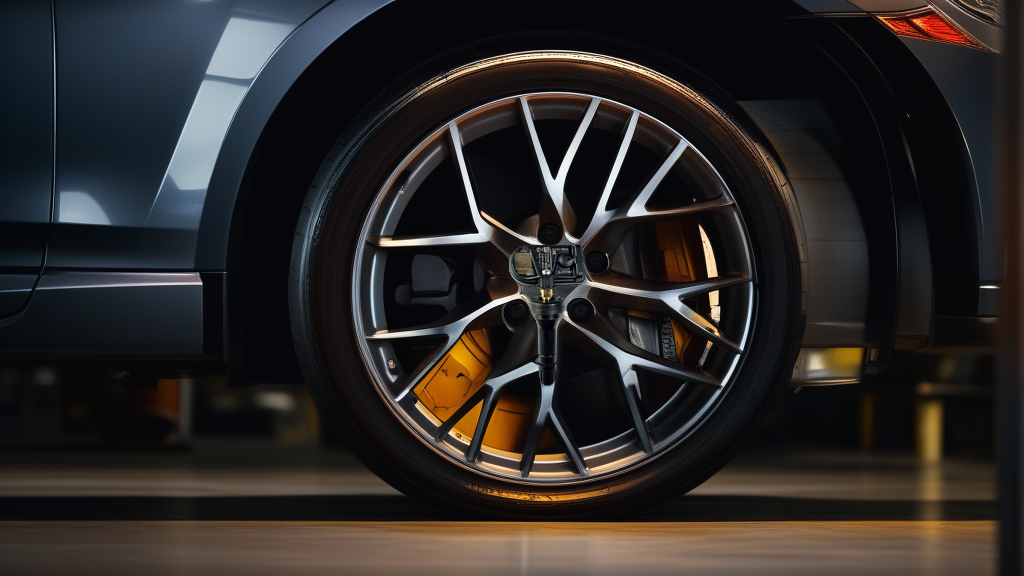
Let’s talk about what this sensor actually is. It’s a clamp-in style unit—the traditional metal valve stem that bolts through the wheel rim. That’s a plus for durability, especially on a heavy EV where unsprung weight and heat from regenerative braking can punish cheap rubber-stem sensors. The frequency is 433MHz, which is the standard for Asian and European markets, and it comes pre-programmed. That last part is a huge time-saver. You don’t need a separate programming tool to copy the original sensor ID. You just install it, and in most cases, the car will learn it automatically after a short drive, or you can trigger the learn mode through the vehicle’s menu.
Key Specs:
- Frequency: 433MHz
- Type: Clamp-in (metal valve stem)
- OE Cross-Reference: EUEA3609200B, 110964
- Fitments: 34 vehicle applications (BYD family)
- Brand: BH-Sens (Baolong Technology)—an OE supplier to multiple automakers
Baolong Technology is worth noting. They’re not a no-name eBay seller. They’re an original equipment supplier for several Chinese and global brands. That means the build quality, the sealing, and the battery life are held to OE standards, not “good enough” standards. For a part that lives outside the cabin in rain, salt, and heat, that matters.
Why Pre-Programmed Beats Cloneable
There’s a lot of confusion in the TPMS market about pre-programmed versus cloneable sensors. Cloneable sensors require a tool to copy the original sensor’s ID, which is a real problem if you’ve lost a wheel or the original sensor is dead. A pre-programmed sensor like the BL-ST-096 sidesteps this issue. It ships with a default ID that the car can accept, or it’s pre-set to match a common OE ID range. For a shop owner, this is the difference between a 10-minute install and a 45-minute diagnostic headache.
For the HAN L EV specifically, there’s another advantage. The car’s TPMS module is sensitive to signal strength and timing. A cheap cloneable sensor often has a weaker transmitter or different timing that causes intermittent “low pressure” warnings even when tires are fine. The BL-ST-096 matches the OE transmitter characteristics because it’s built on the same reference design as the original Baolong sensor that BYD uses. It’s a drop-in fix, not a workaround.
The Aftermarket Advantage: Cost and Availability
Let’s talk numbers. A dealer-branded sensor for the HAN L EV will run you anywhere from $80 to $120 at retail. The BL-ST-096 typically lands in the $30 to $45 range. For a full set of four, that’s a $200 to $300 saving. And here’s the kicker: the dealer part is often manufactured by Baolong anyway. You’re paying for the BYD logo on the plastic housing.
Availability is another factor. Dealer stock for newer models like the HAN L EV can be spotty, especially if you’re not near a major urban center. Aftermarket distributors that stock cross-referenced sensors have them on the shelf. When a customer is standing in your shop with a blinking TPMS light and a 200-mile drive ahead, waiting two days for a dealer part isn’t an option. Having a verified cross-reference part is the difference between losing a sale and building a loyal customer.
Pro Tip: When installing any aftermarket TPMS sensor on a BYD, always check the valve stem torque. The spec is typically 4.0–5.0 Nm. Over-torquing the stem stretches the sealing washer and causes slow leaks. Under-torquing causes vibration and stem failure. Use a proper torque wrench, not a “feel” for it.
Who Should Buy This, Who Should Skip
If you own a HAN L EV or any 2025+ BYD that shares the platform, this sensor is a no-brainer. It’s also ideal for independent shops that see a mix of BYD models and don’t want to tie up cash in stocking five different SKUs. The cross-reference list is broad enough that you’re covered for most of the lineup.
Skip it if you’re working on a pre-2023 BYD with an older 315MHz system, or if you’re dealing with a salvage-titled car that had its TPMS module swapped for a non-OE unit. In those edge cases, you need to diagnose the system first before blaming the sensor. Also, if you’re a perfectionist who insists on OEM-branded parts only, this isn’t for you. But know that you’re paying a premium for a logo.
Bottom Line
The BL-ST-096 is a textbook example of why the aftermarket beats the dealer for modern EV ownership. It’s built to OE specs, covers 34 applications through platform sharing, and costs a fraction of the branded alternative. For the B2B buyer, it’s a stock item that rotates fast. For the individual owner, it’s a reliable fix that won’t break the bank. Platform sharing is the future—make sure your parts shelf reflects it.
Product Recommendation: For the HAN L EV or any compatible BYD, the BL-ST-096 | BH-Sens 433MHz TPMS Tire Pressure Sensor | Fits BYD (2025+) | OE# EUEA3609200B, 110964, BLST096 is the smart choice. It’s pre-programmed, clamp-in, and backed by OE-level manufacturing. Keep one in your toolbox or stock a dozen in your shop. You’ll thank yourself the first time a customer rolls in with a dead sensor and a tight schedule.

Recommended Part: BL-ST-096 – OE-grade replacement, in stock now.