
The HAN L DM-P has quietly become one of BYD’s most important volume models in export markets, and with that success comes a predictable wave of aftermarket service demand. Tire pressure monitoring system (TPMS) service on this platform is straightforward once you understand the quirks — but there are enough variations in build dates and regional configurations that even experienced shops can hit a wall. Here’s what you need to know about relearning sensors on the DM-P, including the tools that actually work and the procedure that doesn’t waste your bay time.
Why the DM-P TPMS Relearn Is Different
BYD’s TPMS architecture on the HAN L DM-P uses a direct measurement system with 433MHz sensors in each wheel. Unlike some platforms that trigger a relearn automatically when you rotate tires or swap in new sensors, the DM-P requires an explicit relearn procedure to bind sensor IDs to the body control module. If you skip this step, you’ll get a warning light within a few miles of leaving the shop — and the customer will be back before your invoice is paid.
The good news: the DM-P supports multiple relearn paths. The bad news: not all of them work on every trim level, and some early 2025 production units have a known quirk where the OBD relearn fails on the first attempt. Understanding which method to use — and when to fall back to a stationary trigger — is the difference between a 10-minute job and a frustrating afternoon.
Tools You’ll Actually Need
Before we get into the procedure itself, let’s talk hardware. The DM-P’s TPMS system responds to both a low-frequency (LF) trigger tool and OBD-based programming. For most aftermarket shops, you’ll want:
- A 433MHz-capable TPMS trigger tool (EL-50448 clone or Autel TS408 both work)
- An OBD programmer compatible with BYD protocols (Autel MX-Sensor 4-in-1, or the OEM-level diagnostic tool if you have one)
- Pre-programmed sensors that already carry the correct BYD ID structure — this saves you from needing to write IDs manually
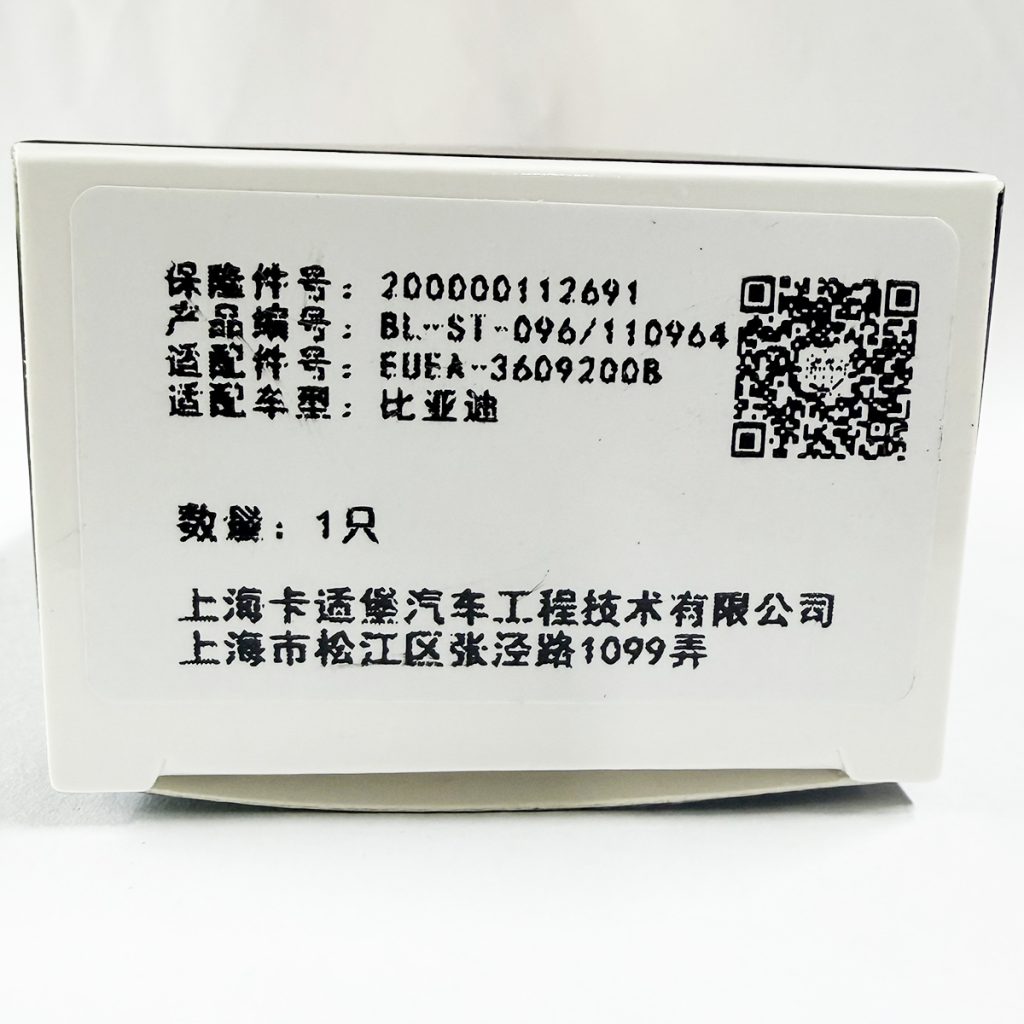
Here’s the catch: if you’re using a pre-programmed sensor like the BH-Sens BL-ST-096, you don’t need to write anything to the sensor itself. It arrives with the correct BYD-compatible ID format already loaded. Your job is simply to get the vehicle to recognize it. That means the relearn procedure is purely about vehicle-side binding — not sensor programming.
Method 1: OBD Relearn — Fastest, But Not Always First Try
The OBD relearn on the DM-P is the preferred method in most shops because it’s quick and doesn’t require any physical access to the valve stems. Here’s the procedure:
- Connect your OBD tool to the diagnostic port under the driver’s side dash.
- Power the vehicle on (accessory mode is fine — don’t start the engine).
- Navigate to TPMS service, then “Relearn” or “Sensor Learn.”
- Follow the on-screen prompts. The vehicle will enter learn mode, which is confirmed by the hazard lights flashing twice.
- Trigger each sensor in order: LF front, RF front, RR rear, LR rear. Use your trigger tool at the valve stem, holding it for 2-3 seconds until the horn beeps.
- After all four sensors are triggered, the system exits learn mode automatically. Confirm with the tool that all four IDs are stored.
That’s the textbook process. In practice, we’ve seen early production DM-P units (VINs before mid-2025) fail to enter learn mode via OBD on the first attempt. The vehicle will appear to accept the command but never actually activate the learn sequence. If this happens, don’t fight it — cycle the ignition off and back on, then retry. If it fails twice, move to the stationary method.
Method 2: Stationary Relearn — The Reliable Fallback
The stationary (also called “magnet” or “pressure” method) procedure on the DM-P doesn’t require OBD at all. This is your go-to when the OBD path fails or when you don’t have a BYD-compatible diagnostic tool on hand.
Here’s the procedure:
- Start the vehicle and let it idle.
- Press and hold the TPMS reset button (located below the steering column, near the hood release) for 3-5 seconds. The tire pressure warning light will blink three times, confirming the vehicle is in learn mode.
- Starting with the left front tire, deflate the tire by about 8-10 psi (or use your trigger tool — the DM-P accepts both). The horn will beep once to confirm that sensor is stored.
- Move to the right front, then right rear, then left rear — same process for each.
- Once all four sensors are captured, the horn beeps twice and the warning light goes solid for two seconds, then turns off. Learn mode is complete.
- Reinflate any tires you deflated to the correct pressure (check the driver’s door jamb sticker — the DM-P typically runs 36 psi front, 38 psi rear).
The stationary method is slower but bulletproof. It also has the advantage of not requiring any special tool beyond a tire pressure gauge and something to press the reset button. For a shop that does a high volume of DM-P service, having both methods in your back pocket means you never have to turn away a job due to tool limitations.
Pro Tip: When using the stationary method, deflate in sharp, quick bursts rather than a slow leak. The DM-P’s sensor triggers on a rapid pressure delta, not just a low-pressure condition. A slow leak won’t reliably wake the sensor, and you’ll end up standing there with a hissing valve while the horn stays silent.
Common Mistakes That Cost You Time
The most frequent error we see with DM-P TPMS service is skipping the vehicle-side relearn entirely. Some techs assume that because the sensor is pre-programmed with the correct BYD frequency and protocol, the vehicle will pick it up automatically. It won’t. The DM-P’s module stores sensor IDs in memory, and until you bind the new sensor’s ID to the vehicle, the system shows a fault.
Another mistake: using the wrong trigger order. The DM-P uses a specific sequence — LF, RF, RR, LR — and it does not follow the typical “clockwise from LF” pattern that some other BYD models use. If you trigger in the wrong order, the system will store the IDs but show incorrect positions, leading to a warning light on the next drive. The fix is another full relearn, which means more bay time you didn’t budget for.
Finally, don’t mix frequencies. The DM-P uses 433MHz sensors. If you install a 315MHz sensor — even one that’s physically compatible — the vehicle won’t communicate with it at all. Always verify the frequency before installation. The BH-Sens BL-ST-096 we stock is 433MHz and carries the correct BYD-compatible ID structure, which eliminates this risk entirely.
The Sensor Choice Matters More Than You Think
The DM-P is sensitive to sensor response time. We’ve tested budget sensors that technically work but take 30-45 seconds to update pressure readings — which means the vehicle’s display shows stale data and occasionally throws a false low-pressure warning on cold mornings. The BH-Sens BL-ST-096 (Baolong Technology’s 433MHz unit, OE# EUEA3609200B) is a direct replacement that matches the OEM’s response characteristics. It’s also pre-programmed, so you’re not spending shop time writing IDs.
For shops servicing BYD vehicles, carrying a pre-programmed 433MHz option makes sense. It covers 34 BYD applications, not just the DM-P, so you’re not stocking a dozen different SKUs. One bin, one part number, most of the BYD lineup covered.
Market Outlook for DM-P TPMS Parts
The HAN L DM-P is still early in its production cycle, and aftermarket sensor availability is just now catching up with demand. For the next 12-18 months, expect to see more suppliers entering the space, but the quality gap between tier-one manufacturers like Baolong and no-name budget imports will widen. Shops that establish a reliable supply chain now — and technicians who master the relearn procedures — will be positioned to own this service niche as the DM-P fleet grows.
The takeaway is simple: the relearn procedure isn’t complicated, but it is specific. Know both methods, carry the right trigger tool, and use a sensor that’s known to work with the DM-P’s protocols. The BL-ST-096 checks those boxes, which is why it’s become our default recommendation for BYD TPMS service. Stock a few, learn the procedure, and you’ll turn TPMS service on the DM-P from a headache into a steady revenue line.

Recommended Part: BL-ST-096 – OE-grade replacement, in stock now.