
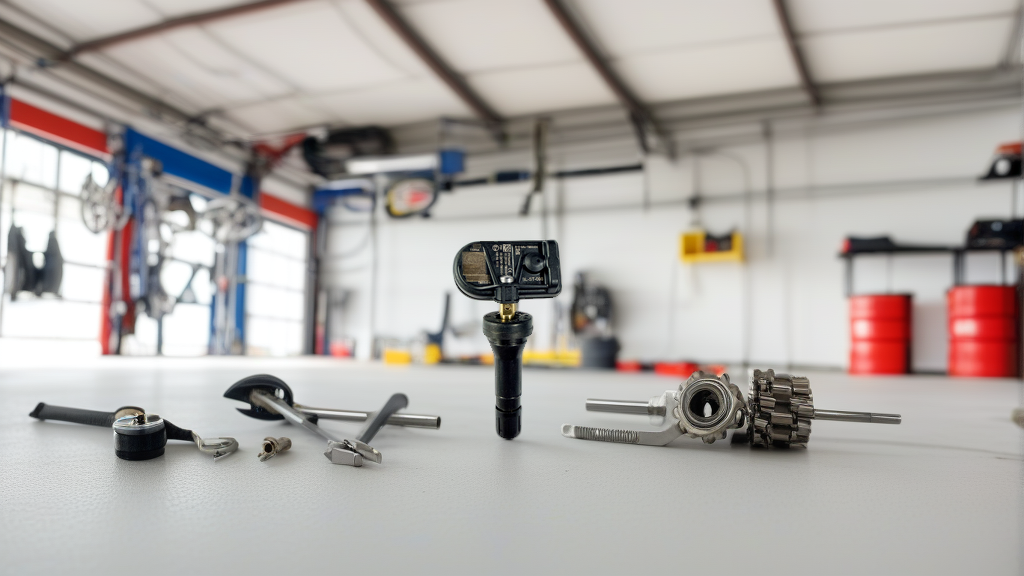
If you’ve spent any time shopping for a TPMS sensor for your SONG PRO DM-I, you’ve likely stared at a spec sheet that reads like alphabet soup: 433MHz, IP67, clamp-in, pre-programmed. These numbers and terms aren’t just marketing filler—they dictate whether the sensor survives a pothole-laden commute, pairs correctly with your BYD’s onboard computer, and lasts longer than the factory rubber valve stems.
The aftermarket landscape for the SONG PRO DM-I has shifted in the last 12 months. With OE part number EUEA3609200B crossing over to multiple BYD platforms—including the 2025+ DM-i lineup—independent shops and fleet managers are no longer forced to pay dealership premiums. But choosing the right replacement requires understanding what those specs mean in real-world terms, not just what looks good on a box.
—
The Frequency Question: Why 433MHz Isn’t Negotiable
Your SONG PRO DM-I’s TPMS receiver is tuned to listen for signals at 433MHz. This is the ISM band allocated for short-range automotive telemetry in most global markets, and BYD has standardized on it for the DM-i generation. When you see a sensor listed at 433MHz, it means the transmitter matches the receiver’s listening frequency—swap in a 315MHz sensor (common on older North American models) and the car will simply never see the data.
Here’s the practical catch: frequency alone doesn’t guarantee compatibility. The sensor must also speak the right data protocol. BYD uses a proprietary modulation scheme that generic universal sensors often fail to replicate reliably. The BH-Sens BL-ST-096 from Baolong Technology is pre-programmed with the correct protocol for the SONG PRO DM-I, which is why it’s listed as a direct OE replacement rather than a “universal” unit that requires manual cloning. In practice, this means you install it, drive for a minute or two, and the car auto-learns the sensor ID without additional tooling.
Pro Tip: If you’re using a universal sensor, you’ll need a TPMS programming tool to write the original sensor IDs. Pre-programmed units like the BL-ST-096 skip that step entirely—but verify your vehicle’s build date matches the listed 2025+ fitment, as late-2024 production runs occasionally used a different protocol.
—
IP Rating: The Difference Between a Sensor That Lasts and One That Fails in 18 Months
The IP (Ingress Protection) rating on the BL-ST-096 is IP67. Let’s break that down because most TPMS listings don’t even publish this spec, and the ones that do often confuse buyers.
- The “6” means dust-tight. No particulate ingress, period. This matters because road grit and brake dust are abrasive—they can work their way into poorly sealed housings and corrode the PCB or bridge contacts.
- The “7” means the sensor can be immersed in water up to 1 meter for 30 minutes without damage. That’s not just for deep puddles; it’s for high-pressure car washes, where water is forced into every crevice at close range.
Why does this matter for the SONG PRO DM-I specifically? BYD mounted the TPMS sensors on the inside of the rim, which means they’re exposed to centrifugal force, brake heat, and water spray every time it rains. A sensor with an IP65 rating might survive light moisture but fail after repeated exposure to pressurized wash water or salted winter roads. The IP67 rating on the BL-ST-096 is the same protection class used by most premium European OE sensors—it’s not a corner-cut spec.
—
Clamp-In vs. Snap-In: It’s Not Just About Installation Style
The BL-ST-096 is a clamp-in (metal valve stem) design. The SONG PRO DM-I factory wheels are designed for clamp-in sensors—the valve hole is sized for a metal stem, and the retaining nut holds the sensor body flush against the rim’s drop center.
Snap-in (rubber stem) sensors are cheaper and easier to install, but they have two practical disadvantages on modern vehicles:
- They flex more under centrifugal force at highway speeds, which can cause intermittent signal dropouts.
- Rubber degrades from ozone and UV exposure, leading to stem cracking and slow leaks—a common failure point on 3-4 year old vehicles.
Clamp-in sensors are less prone to both issues. The metal stem is rigid, and the seal relies on a standard valve core rather than a rubber grommet that hardens over time. For a vehicle like the SONG PRO DM-I that’s often driven daily, the clamp-in design is the right call.
—
Key Specs at a Glance
| Specification | BL-ST-096 Value | What It Means for You |
|---|---|---|
| Frequency | 433MHz | Matches BYD DM-i receiver; no signal compatibility issues |
| Protocol | Pre-programmed | No cloning tool required; auto-learns on installation |
| IP Rating | IP67 | Dust-tight and waterproof for car washes and heavy rain |
| Valve Type | Clamp-in (metal) | Durable at speed; resists ozone cracking |
| OE Cross-Reference | EUEA3609200B, 110964 | Direct replacement for factory part; 34 BYD applications |
The 34-vehicle application list is worth noting. While this article focuses on the SONG PRO DM-I, the same sensor fits other 2025+ BYD models sharing the DM-i platform—Seal, Sea Lion, and certain Tang variants. If you run a mixed BYD fleet, you can stock one SKU and cover multiple vehicles, which simplifies inventory and reduces the risk of installing the wrong part.
—
Voltage Range and Signal Strength: The Hidden Spec That Causes “Intermittent” Failures
Manufacturers rarely advertise voltage range, but it’s a common root cause of TPMS headaches. The BL-ST-096 operates reliably between 2.0V and 3.6V, which is the working range of the CR2032-style battery inside. Here’s why that matters:
When a TPMS sensor’s battery voltage drops below ~2.2V, the transmitter’s output power decreases. The signal may still reach the receiver at close range (like when parked in the driveway), but fail at highway speeds when the sensor is rotating and the distance to the receiver module fluctuates. The result is an intermittent low-pressure warning that comes and goes.
Most aftermarket sensors are rated down to 2.4V, which gives you a shorter warning window before complete failure. The 2.0V threshold on the BL-ST-096 means the sensor keeps transmitting accurately for a longer portion of its battery life—so you get a gradual, predictable low-battery warning rather than sudden silence. For a daily-driven SONG PRO DM-I, that’s the difference between replacing a sensor on your schedule and being stuck at a tire shop on a Sunday.
—
The Bottom Line for Buyers
If you’re replacing a failed sensor on your SONG PRO DM-I, the BL-ST-096 from BH-Sens is a direct-fit solution that doesn’t require a programming tool, survives harsh weather, and covers multiple BYD models if you manage more than one. It’s priced competitively against OE dealer parts—typically 30-50% less—without compromising on the specs that actually affect performance.
Who should skip it: If your SONG PRO DM-I is a 2023 or earlier model year, verify part number compatibility before ordering. The 2025+ designation is specific, and earlier DM-i builds may use a different protocol. Also, if you’re doing a full four-corner replacement and your vehicle has been in a front-end collision, check the receiver module’s health first—a damaged antenna won’t be fixed by new sensors.
Who should buy it: Independent shops stocking BYD-compatible parts, fleet operators with mixed 2025+ BYD vehicles, and DIY owners who want a plug-and-play replacement without investing in TPMS programming equipment.
The aftermarket for BYD TPMS sensors is maturing quickly, and the BL-ST-096 is proof that you no longer need to choose between OE price and aftermarket reliability. The specs check out—and more importantly, they hold up on the road.