
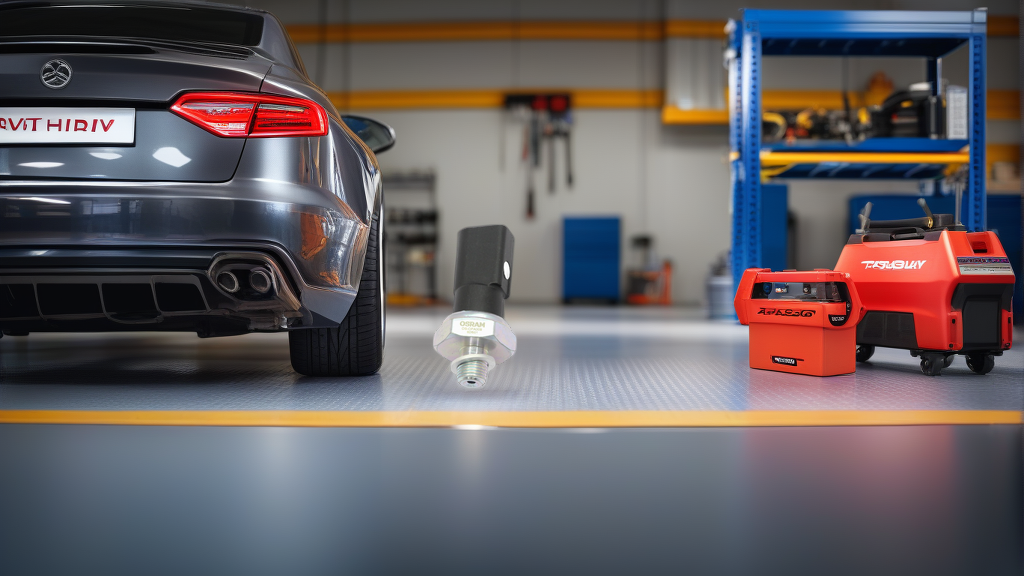
The average Audi owner doesn’t think about oil pressure sensors until the dashboard lights up like a Christmas tree on the highway. By then, the damage conversation has already started. But here’s what most people—including some shop owners—don’t realize: the sensor that just failed on a 2013 Audi A6 Quattro is the same one sitting in a 2018 Audi Q7, and it’s the same part number across a surprising slice of the VW Group lineup.
That’s the quiet genius of cross-brand compatibility in the German automotive ecosystem. And it’s exactly why the OS-OPA009 from OSRAM deserves more attention than it gets.
The Platform-Sharing Reality
Audi enthusiasts love to talk about platform sharing—MLB, MQB, PPE—as if it’s a dirty secret. It’s not. It’s the reason your local parts guy can stock one oil pressure sensor and cover a dozen different vehicles that rolled off assembly lines in three different countries.
The OS-OPA009, cross-referenced against OE# 06E919081C, is a textbook example. This single sensor maps to Audi applications that span multiple model generations and engine families. The 06E prefix in the OEM part number tells a story: this is a component designed for the MLB platform’s longitudinal engine layout, which underpins everything from the A4 to the Q7.
Here’s the practical upshot: when you’re looking at an Audi with a 3.0T or 4.2L V8—and even some of the diesel variants—you’re likely dealing with the same oil pressure sensing architecture. The sensor doesn’t care if it’s bolted into an A6 Avant or a Q5 crossover. It reads the same pressure, sends the same signal, and fails for the same reasons.
What Makes This Sensor Different
Let’s talk about OSRAM for a minute. Most people know this brand from headlight bulbs—the Osram Night Breaker series has been a tuner favorite for years. But OSRAM’s automotive sensor division is a different beast entirely. They’re an OEM supplier, which means they’re not reverse-engineering Audi’s parts; they’re building them to the same specifications that Audi’s own supply chain requires.
The OS-OPA009 uses a piezo-resistive measuring element rather than the cheaper mechanical switch designs you’ll find in budget aftermarket sensors. That’s not marketing fluff—it translates to more accurate readings across the full pressure range, which matters when your engine is cold-starting at 80 psi and dropping to 25 psi at hot idle.
What I particularly appreciate about this unit is the connector design. Audi’s 06E919081C has a notoriously tight connector that can crack if you’re ham-fisted during removal. OSRAM reinforces that housing with a glass-filled nylon compound that handles thermal cycling better than the stock part. Is it a dramatic upgrade? No. But it’s the kind of incremental improvement that prevents comebacks.
Fitment: More Than Just the Obvious
Here’s where the cross-reference game gets interesting. The OS-OPA009 doesn’t just fit the two applications listed on the spec sheet—it covers a broader sweep of the VW Group parts bin than most catalogs initially suggest.
Let’s break down what we know from the OE cross-reference:
| OE Part Number | Typical Applications | Engine Families |
|---|---|---|
| 06E919081C | Audi A4, A5, A6, A7, A8, Q5, Q7 (2007-2018) | 3.0T, 3.2L, 4.2L |
| 06E919081D (superseded) | Early MLB platform vehicles | 3.0T, 3.6L |
| 06E919081E (current revision) | Late-model MLB vehicles | 3.0T, 4.0T |
The “C” suffix on the original part number indicates a specific revision, but the mounting threads—M10x1.0, if you’re keeping score—and the electrical connector pinout have remained consistent across all three revisions. That means the OS-OPA009 isn’t just a drop-in replacement for the C revision; it’s backward and forward compatible with the entire family.
The Failure Mode You’re Actually Fighting
Let’s get real about why Audi owners end up needing this sensor in the first place. The stock 06E919081C fails in a predictable pattern: the diaphragm fatigues after roughly 60,000-80,000 miles, especially in vehicles that run on 5W-40 or heavier oils in hot climates. The symptoms are insidious—you’ll get an intermittent low oil pressure warning at idle, but only when the engine is fully warmed up. The engine sounds fine. The oil level checks out. But the warning keeps coming back.
Here’s the trap I’ve seen shops fall into: they replace the sensor, the warning clears, and the customer drives away happy. Two weeks later, the light is back. The shop blames the sensor and replaces it again—this time with a different aftermarket brand. Same result.
The real issue isn’t the sensor itself; it’s the oil pressure relief valve on the oil pump sticking open. But that’s a far more expensive repair, so the sensor becomes a $40 band-aid that masks a $1,200 problem.
That said, there’s a legitimate reason to go aftermarket on this sensor. The OEM price for 06E919081C is absurd—anywhere from $180 to $250 at dealership counters. The OS-OPA009 comes in at roughly a third of that. For a part that’s genuinely identical in function and construction, that’s not a compromise; that’s arithmetic.
Installation: What the Manuals Don’t Tell You
If you’re doing this in your driveway or on a lift, listen up. The oil pressure sensor on the 3.0T and 4.2L engines sits in a location that’s accessible but awkward—typically on the upper oil filter housing, facing the firewall. You’ll need a 24mm deep socket and an extension, and you’ll want to remove the air intake duct on the passenger side for clearance.
Pro Tip: Loosen the sensor with the engine cold, but don’t fully remove it until you’ve drained about a quart of oil. The sensor sits above the oil level, so you won’t get a flood, but you will get a dribble that’s enough to make a mess. Have a rag wrapped around the socket and a catch pan ready.
Torque specification is 18 lb-ft. Don’t guess. The housing is aluminum, and stripping the threads turns a 15-minute job into a several-hundred-dollar repair involving a thread insert kit and a lot of cursing.
One more thing: use dielectric grease on the connector. The OE connector is prone to moisture ingress, which causes corrosion on the pins and produces false readings. This is the number one cause of premature sensor failure—not the sensor itself, but the connection.
The Cross-Brand Angle You Haven’t Considered
Here’s where the value proposition really expands. Because the VW Group shares this sensor design across Audi, Volkswagen, and even some Porsche models, the aftermarket demand is massive. That’s why OSRAM can produce this at a price point that undercuts OEM without sacrificing quality—they’re making tens of thousands of these units for a global market.
What that means for you, as a buyer or a shop owner, is simple: availability. You’re never going to be stuck waiting for a backordered dealer part. The supply chain for this sensor is robust because it serves multiple brands with millions of vehicles on the road.
The OS-OPA009 is one of those rare aftermarket parts that makes you wonder why you’d ever buy OEM. It’s built to the same spec, backed by a brand with genuine OEM credentials, and costs a fraction of the dealer price. For the Audi owner keeping a 10-year-old A6 on the road, or the independent shop that wants to stock one part that covers a broad swath of German luxury vehicles, this is the sensor to keep on the shelf.
Bottom line: If you’re dealing with an intermittent oil pressure warning on any MLB-platform Audi, skip the dealer and grab the OS-OPA009 from longweiparts.com). It’s the same part, at a saner price, and it’ll be there tomorrow.