
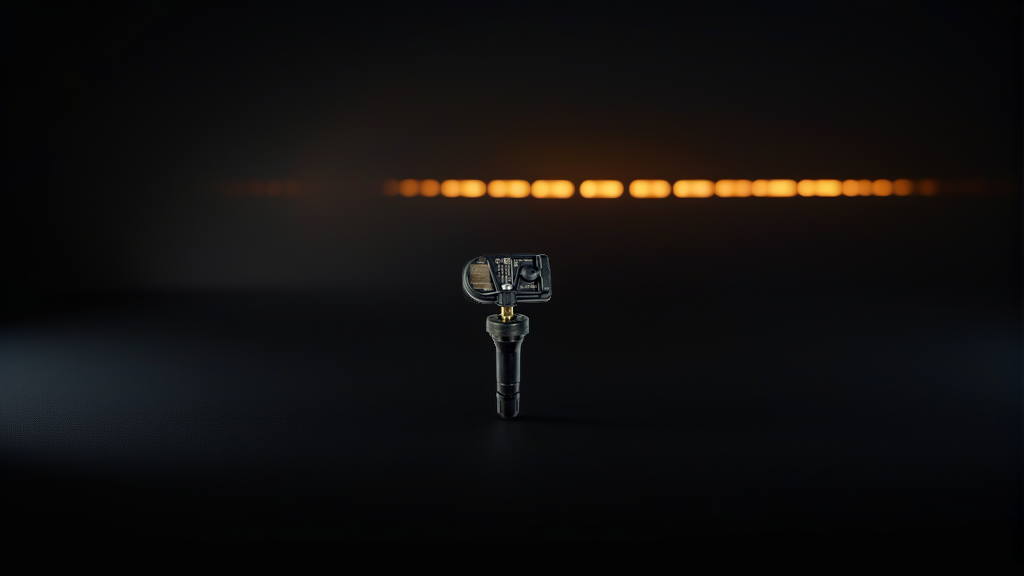
The aftermarket TPMS landscape has always been fragmented—every automaker seems to have its own frequency, its own protocol, and its own way of making life difficult for the independent shop. But that’s starting to change, particularly for BYD owners. With the HAN DM-I now firmly established in markets across Europe, Southeast Asia, and Latin America, the demand for reliable, cross-compatible TPMS replacements has spiked. And the supply side is finally catching up.
The BL-ST-096 from BH-Sens is part of a new wave of pre-programmed sensors that collapse dozens of OE part numbers into a single SKU. For the HAN DM-I, that means a 433MHz clamp-in sensor that doesn’t require a dealer visit or a proprietary programming tool. It’s a genuine shift in how the aftermarket approaches Chinese EV platform servicing.
Why Platform Sharing Makes Single-SKU Sensors Possible
Here’s what most buyers don’t realize: the HAN DM-I doesn’t use a unique TPMS sensor. It shares its TPMS hardware architecture with other BYD models built on the same electronic platform. This is the same parts-bin strategy that Toyota, Volkswagen, and GM have used for years—but BYD has taken it further, standardizing sensor frequencies and communication protocols across a wider swath of their lineup.
The result is that one sensor, pre-programmed with the right protocol, can serve as a direct replacement for OE part numbers like EUEA3609200B across 34 distinct vehicle applications. That’s not just the HAN DM-I—it’s the Seal, the Song Plus, the Atto 3, and a range of other models that roll off BYD’s lines with the same basic TPMS footprint.
From a supply chain perspective, this is a godsend. Shops no longer need to stock eight different sensors hoping they have the right one. One part number covers a huge swath of the BYD owner base, and that’s precisely what BH-Sens has engineered here.
Key Specs at a Glance
| Specification | BL-ST-096 |
|---|---|
| Brand | BH-Sens (Baolong Technology) |
| Frequency | 433MHz |
| Type | Clamp-in, pre-programmed |
| Compatible Brands | BYD |
| OE Cross-Reference | EUEA3609200B, 110964, BLST096 |
| Vehicle Applications | 34 total |
| Programming Required | None (plug-and-play) |
The Technician’s Reality Check
Let’s be honest about what “pre-programmed” actually means in the aftermarket. It means the sensor arrives with the correct protocol already loaded—no cloning tool, no OBD programming, no dealer-level software required. For a shop that sees a 2025 or 2026 HAN DM-I roll into the bay with a blinking TPMS light, that’s the difference between a 20-minute fix and a two-hour ordeal.
When a HAN DM-I comes in with a dead sensor, the first step is always diagnosis. Is the sensor actually dead, or is it a battery issue? On BYD units, the sensor batteries are non-replaceable—once the battery drops below 2.3V, the sensor is done, and the whole unit needs to come out. A TPMS tool will confirm this quickly. If you see a sensor that’s not transmitting at all, or only transmitting intermittently with a low voltage reading, replacement is the only option.
That’s where the BL-ST-096 makes sense. It’s a clamp-in design, so the installation procedure is identical to the factory unit. Remove the wheel, break the bead, pull the old sensor, torque the new one to spec (usually around 4.5 Nm on BYD valve stems, but always check the specific application), re-bead, balance, and relearn. The relearn procedure on a HAN DM-I is straightforward—most aftermarket TPMS tools will trigger the sensor and the car will pick it up without issue.
Pro Tip: Don’t skip the valve stem torque. On BYD aluminum wheels, over-torquing the TPMS valve nut is a common cause of cracked sensor housings and air leaks. Use a torque wrench, not a “feel” wrench.
What the 34-Application Coverage Actually Means
The pre-programmed nature of this sensor means it’s not just for current HAN DM-I models. That 34-application list covers earlier BYD models too, which matters for shops that see a mixed customer base. If you’ve got a 2022 BYD Atto 3 in the morning and a 2025 HAN DM-I in the afternoon, one SKU handles both.
The 433MHz frequency is worth emphasizing here. Some aftermarket sellers try to push universal sensors that require programming, and while those have their place, they introduce a failure point—if the programming is wrong, the sensor won’t communicate. The BL-ST-096 removes that variable. It’s factory-configured for BYD’s protocol, so it’s genuinely a one-for-one swap.
This is a significant advantage over generic “universal” sensors that claim broad compatibility but require a separate programmer to set the correct protocol. When a shop buys the pre-programmed unit, there’s no risk of a technician selecting the wrong vehicle profile during setup. It’s installed, and it works.
Build Quality and Long-Term Reliability
Baolong Technology is one of the largest TPMS manufacturers in the world, supplying OE sensors to multiple automakers. The BH-Sens line is their aftermarket brand, and the build quality reflects that OE pedigree. The sensor housing is sealed against moisture and road salt, and the battery is rated for roughly five to seven years of typical use—comparable to the factory unit it replaces.
One thing worth checking on any aftermarket TPMS sensor is the valve stem material. The BL-ST-096 uses a metal valve stem, which is the right call for the HAN DM-I. Rubber valve stems degrade faster and are more prone to cracking under the heat generated by EV brake systems, especially on a car as heavy as the HAN DM-I. Metal stems also hold up better when the sensor is installed or removed multiple times over its lifespan.
Market Outlook: Where This Fits
BYD’s global expansion is forcing aftermarket suppliers to take notice. As more HAN DM-I units come off warranty, the demand for cost-effective replacement parts will only grow. The OE sensor carries a premium price tag, and the dealer programming requirement adds labor time that customers are reluctant to pay for.
The BL-ST-096 sits in a sweet spot. It’s priced below the OE part, requires no programming, and covers 34 applications—so a shop can stock it with confidence. For the HAN DM-I owner, it means a TPMS replacement that doesn’t require a trip to a BYD service center.
We’re already seeing this pattern play out across the industry. As Chinese EV brands expand their footprint, the aftermarket is adapting with sensors that offer genuine cross-compatibility. The BL-ST-096 is a solid example of that trend—one sensor, one SKU, and a whole family of vehicles covered.
Buyer Takeaway
If you’re a shop owner stocking TPMS parts for BYD vehicles, or a HAN DM-I owner looking to avoid dealer pricing, the BL-ST-096 | BH-Sens 433MHz TPMS Tire Pressure Sensor | Fits BYD (2025+) | OE# EUEA3609200B, 110964, BLST096 is worth serious consideration. It covers the HAN DM-I and 33 other BYD applications, ships pre-programmed at 433MHz, and eliminates the need for clone tools or dealer-level programming.
For independent shops, the value proposition is clear: fewer SKUs to stock, less training required, and a part that installs exactly like the factory unit. For owners, it means a straightforward replacement that doesn’t require a special trip or a service department appointment.
The aftermarket for Chinese EVs is maturing quickly, and sensors like this are leading the charge. When you need a TPMS replacement for a HAN DM-I, the BL-ST-096 is the part that makes sense—not just for the price, but for the simplicity of installation and the breadth of coverage. That’s a combination that’s hard to beat in today’s fragmented TPMS market.