
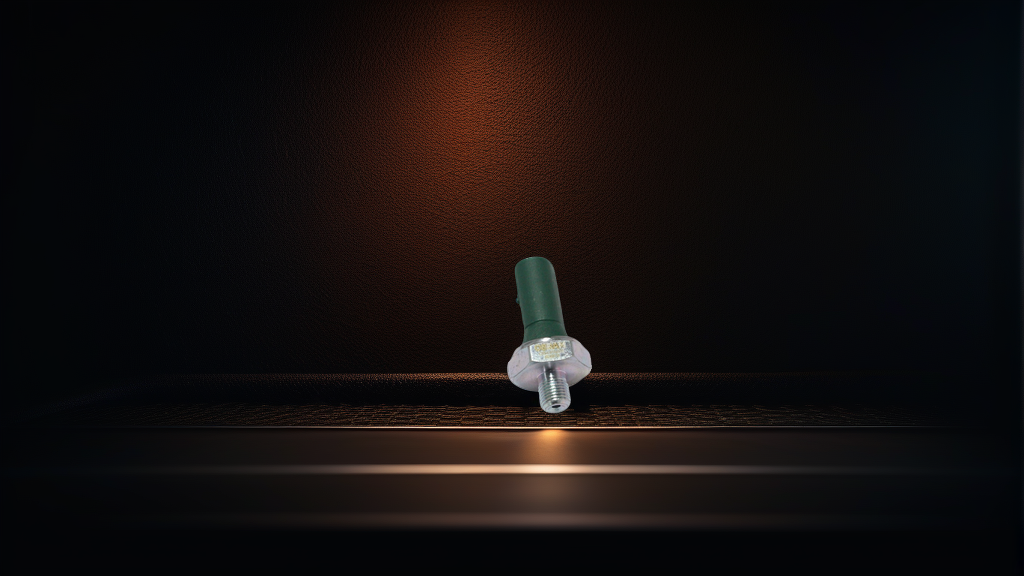
Audi’s 2.0 TFSI and 3.0 TFSI engines are masterpieces of thermal management—until they aren’t. When the dashboard throws a low oil pressure warning at 3,000 km after an oil change, most independent shops immediately suspect the pump. They’re often wrong. The real culprit in a growing number of 2013–2019 models is the sensor itself, specifically the one carrying OE number L036919081C.
This isn’t a component you want to gamble on. Unlike a MAP sensor that fails gracefully, an oil pressure sensor sends false positives that trigger limp mode, or worse, fails to detect actual pressure loss. That’s why understanding the OE numbering system and knowing your cross-reference options matters more than brand loyalty.
The Logic Behind Audi’s OE Numbering
Audi’s part number system isn’t random—it’s a coded language. The L prefix indicates a revised production specification, distinguishing it from the earlier 036919081A and 036919081B iterations. The string breaks down as:
- 036 – Engine group code (EA888 family)
- 919 – Component class (electrical/sensor)
- 081 – Specific variant identifier
- C – Revision level (third iteration)
Here’s what the revisions mean in practice: the “A” version suffered from diaphragm fatigue in extreme cold; the “B” revision addressed that but introduced intermittent resistance spikes; the “C” revision fixed both. If you’re cross-referencing parts by visual fitment alone, you’ll likely install the wrong revision and inherit its known failure mode.
Cross-Brand Reality: Not All Equivalents Are Equal
The aftermarket landscape for this sensor is crowded. You’ll find listings under VAG’s original equipment, Bosch (who supplied the OE), and budget brands out of Southeast Asia. The Bosch equivalent (026103017) is mechanically identical but uses a different connector seal compound—minor, but relevant if your car lives in a salt-belt state.
The OSRAM Oil Pressure Sensor (OS-OPA002) takes a different approach. Instead of cloning the Bosch design, it uses a piezoelectric element rated for 200,000 pressure cycles—double the factory spec. The housing is aluminum alloy rather than the original’s plastic composite, which eliminates the common thread-seizure problem on high-mileage units.
Key Specs (OS-OPA002):
- Operating pressure range: 0.5–6.0 bar
- Response time: <10ms (factory spec: 15ms)
- Connector: OEM-matching 3-pin, weather-sealed
- Temperature tolerance: -40°C to 150°C
- Revision compatibility: Replaces L036919081C, 036919081B, Bosch 026103017
Fitment Reality Check
The OS-OPA002 covers exactly two Audi applications: the 2.0 TFSI (EA888 Gen 3, 2015–2019) and the 3.0 TFSI (EA837, 2013–2018). It fits the same M12x1.5 thread and uses the same sealing washer as the OE unit. Install torque is 25 Nm—no more, no less. Exceeding that crushes the sealing washer and causes false low-pressure readings.
One pro tip: when replacing this sensor, always replace the harness pigtail if it shows any green corrosion. The sensor’s resistance values can be pulled out of range by a marginal connector, even with a perfect new part.
The Bottom Line
If you’re a shop owner stocking replacement sensors, the OS-OPA002 at roughly 40% below dealer pricing for the OE unit is a sensible shelf item—provided you verify the revision letter against the vehicle’s build date. For DIY owners, the lesson is simpler: don’t trust “universal” listings. The L-prefix in that OE number exists for a reason. Respect it, and you’ll avoid a second trip to the lift.