
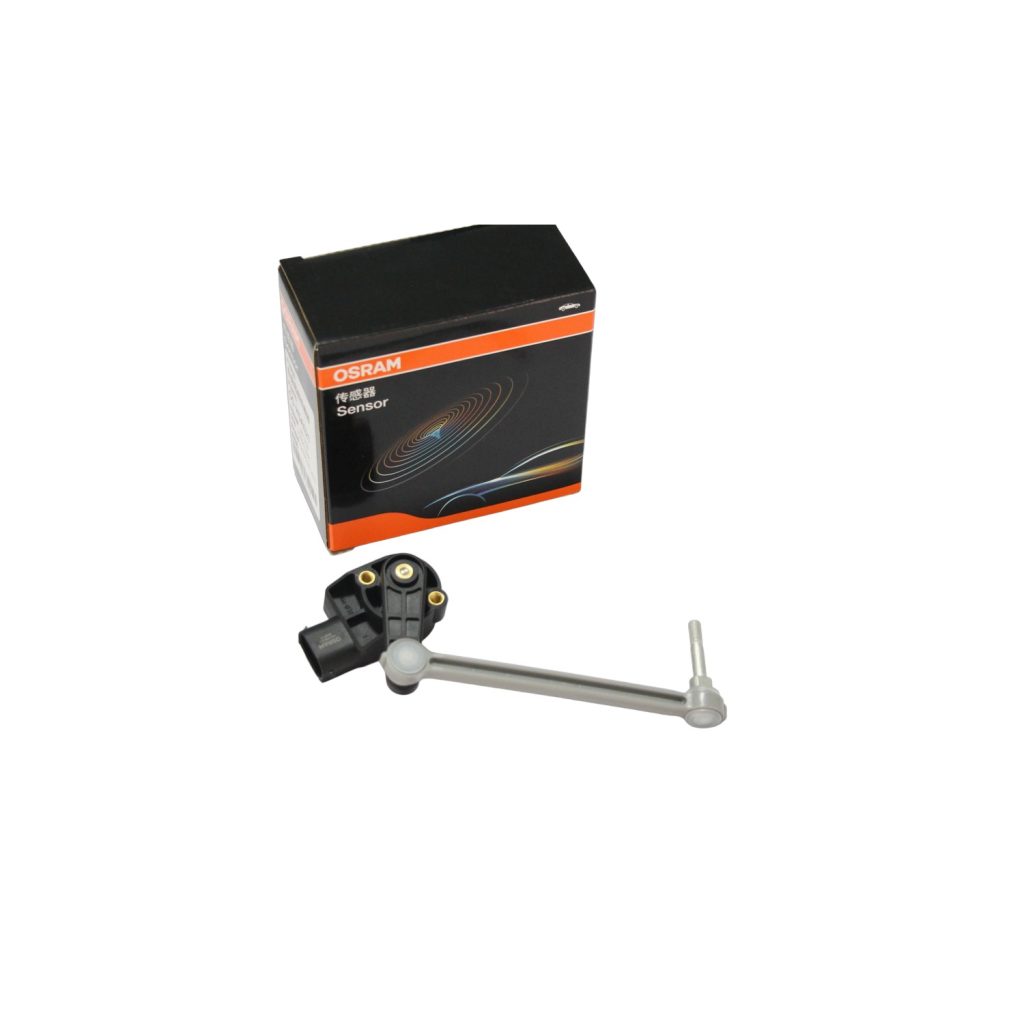
The adaptive air suspension on an Audi is a marvel of hydraulic and pneumatic engineering, but it’s blind without its sensory network. Among the most critical—and most frequently replaced—components in that network is the ride height sensor, a small potentiometer-style device that tells the control module exactly how far the chassis sits from the control arms. When these sensors drift or fail outright, Audi owners don’t just get a warning light; they get a car that self-levels incorrectly, rides harshly, or refuses to lower at highway speed. The aftermarket has taken notice, and options like the OSRAM-built OS-HSA021 are giving shops a reliable alternative to OEM units.
How the Measurement Actually Works
Audi’s ride height sensors are contactless Hall-effect units in most modern applications, though earlier models used mechanical potentiometers. The principle is straightforward: a lever arm connects to the suspension link, and as the arm rotates with suspension travel, it moves a magnetic target across a sensor IC. That IC outputs a linear voltage signal—typically 0.5V to 4.5V—proportional to the angle. The air suspension control module (J197) reads that voltage, compares it against the other three corners, and adjusts air spring pressure accordingly. The key spec is the transfer curve: a sensor that’s off by even 0.2V can translate to a 10mm ride height error, which is enough to cause uneven tire wear and compromised headlight aim.
Signal Types and Diagnostic Signatures
These sensors use a 5V reference, ground, and a single analog signal wire. On the diagnostic side, you’re looking for a plausible voltage sweep when you manually raise and lower the vehicle on a lift. A common failure mode is a dead spot in the middle of the travel—the voltage jumps erratically, or drops to zero, triggering DTCs like 01772 (level control system sensor). Temperature drift is another culprit; the Hall-effect IC itself is stable, but the connector housing and wiring harness are prone to corrosion, especially in salt-belt cars. That’s why the OS-HSA021 uses sealed connectors and a reinforced lever arm, addressing the two most common physical failure points we see in the field.
Why the OS-HSA021 Makes Sense for Shops
While OE sensors from Audi’s traditional suppliers (Continental, Hella) are priced at a premium, the OSRAM unit offers a compelling middle ground. It’s a brand-name part with a solid reputation in the lighting and sensor space, direct fitment for the 3D0941286E application, and it’s sourced with the same manufacturing tolerances you’d expect from a Tier-1 supplier. For a shop, that means fewer comebacks and no need to explain why you installed a no-name white-box sensor. It’s a particularly good call for 2003–2010 Audi A8 and Q7 models, where the front-left sensor takes the brunt of road spray and debris.
Pro Tip: Replace ride height sensors in pairs on the same axle. If one has failed due to corrosion or mechanical wear, the other side is likely not far behind. A single replacement will still trigger a leveling fault if the two sides read more than 5mm apart.
Market Outlook
The aftermarket for European ride height sensors is growing steadily, driven by the sheer number of aging Audi air suspension cars still on the road. As OEM prices continue to climb, shops are increasingly turning to branded alternatives like the OS-HSA021 | OSRAM Ride Height Sensor | Fits Audi | OE# 3D0941286E to keep repair costs reasonable without sacrificing quality. For the independent technician, stocking this sensor is a low-risk investment—it covers one of the most common suspension faults on a popular platform, and the diagnostic process is straightforward with any capable scan tool. If you’re rebuilding an Audi air suspension, don’t overlook the sensors; they’re cheap insurance against a system that otherwise rides beautifully when everything talks correctly.