
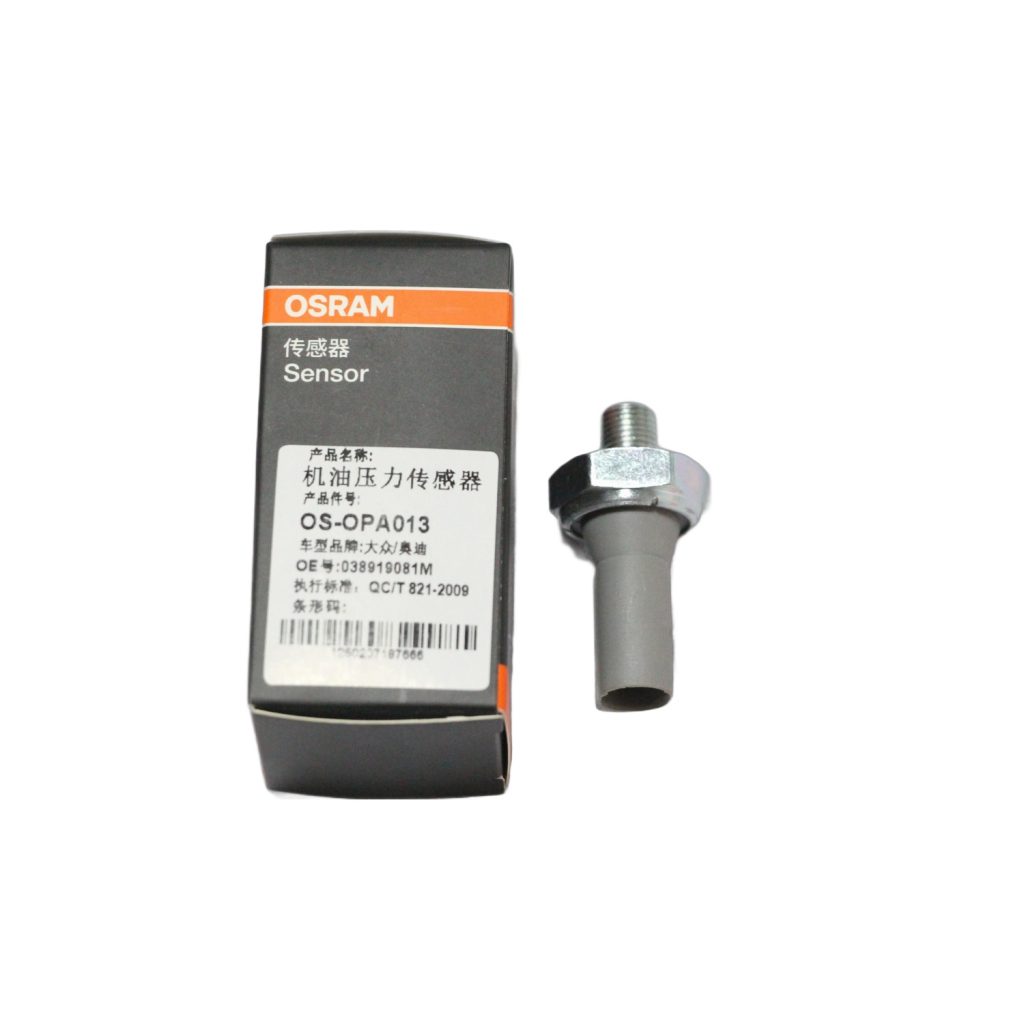
A 2012 Volkswagen Passat with the 2.0T rolled into the shop last month with an intermittent oil pressure warning. Oil looked fine. Previous shop had already condemned the engine — quoted the customer for a long block. I pulled the pressure switch, found a hairline crack weeping oil past the hex, replaced it, and verified with a mechanical gauge. Twenty-dollar part. One hour labor. Customer drove out same day.
That scenario plays out weekly in independent shops. The fix is usually simple: replace the switch. But the switch itself is a bigger trap than most techs realize, because the 038919081M supersession family looks interchangeable — and it isn’t.
What the OS-OPA013 Actually Covers
The | OE# 038919081M](https://longweiparts.com/product/os-opa013-osram-oil-pressure-sensor-fits-audi-volkswagen-oe-038919081m/”>OS-OPA013) from OSRAM is a direct-fit oil pressure sensor for Audi and Volkswagen) 1.8T and 2.0T engines. The fitment sheet lists two applications. That sounds narrow — but for a VAG-specific pressure switch, narrow is normal. The 038919081M OE number it replaces appears across a surprisingly wide engine family, and if you check by VIN, you’ll find the same switch spec used on everything from the B5 Passat to the early transverse 2.0T cars.
The pressure switch is a normally-open design. At rest, the circuit is open. When oil pressure exceeds roughly 0.75 bar (about 11 psi), the diaphragm inside closes the circuit to ground, and the cluster reads “OK.” When the switch fails, it can fail open, fail closed, or leak oil through the housing. Oil weeping from the sensor body is the classic tell.
Why You Can’t Just Match the Shape
Here’s where the fitment question gets real. The 038919081M supersedes into several different part numbers depending on build date and engine code. Some are black, some are brown. Some use a flat two-pin connector; others are round. If you order by photo alone — shape looks right, connector looks right — you’ll sometimes get the wrong switching pressure. A switch rated for a different bar spec won’t trigger the warning light at the right threshold, so your customer’s “fixed” car may still flash a low-pressure warning on hot idle — or, worse, never warn until the bottom end is already knocking.
The Verification Sequence for a VAG Oil Pressure Switch
Before you buy, do this. Read the old switch’s OE number — not just the VW logo — and compare it to the replacement’s cross-reference. The | OE# 038919081M](https://longweiparts.com/product/os-opa013-osram-oil-pressure-sensor-fits-audi-volkswagen-oe-038919081m/”>OS-OPA013) is built to the 038919081M spec, so that’s the baseline number to check. Then verify by VIN against a dealer catalog or a good aftermarket fitment database. The brand filter in your parts system only tells you the part fits an Audi or VW — not whether it fits the specific engine code sitting on your lift.
Also check the connector. VAG pressure switches come in single-pin and two-pin variants. The two-pin version used on later TFSI engines carries both a pressure signal and a sensor ground. Forcing a single-pin switch into a two-pin harness throws a hard fault code in the cluster and an instant warning light. That is the number one warranty-return complaint on aftermarket oil pressure switches — and it’s not the switch’s fault.
The socket issue is subtle, too. The OS-OPA013 uses a 24mm hex, so reach for a deep 24mm socket with a cutout for the wiring. A standard 24mm socket crushes the connector tabs and turns a ten-minute replacement into an hour of wire repair.
Pro Tip: Before ordering, look for the color band on the old switch. The 038919081M family is often black, but some supersessions — especially for the 1.8T in the B5 Passat — are brown. A brown band usually signals a different pressure threshold. When in doubt, match the OE number printed on the housing, not the color.
What the Common Failures Look Like
Three failure modes to explain to your customer. First: oil weeping from the switch hex — worn diaphragm seal, replace immediately. Second: warning light flickers at idle but clears at 2,000 RPM — classic switch threshold drift. Third: no warning at all until the lifters start making noise — the switch has failed open and the cluster never sees ground. That third one is what kills engines, and it’s why you should bench-test the old switch before you condemn anything else.
A simple bench test — pressure gauge, air pump, and a test light — tells you the exact cut-in pressure. If you don’t have that setup, just replace the sensor and verify with a mechanical oil pressure gauge before handing the keys back. That step keeps your shop out of the “they said it needed an engine” complaints.
The Part to Reach For
For a 1.8T or 2.0T Audi or Volkswagen with a pressure light issue and a confirmed-good oil pump and pickup screen, the OSRAM OS-OPA013 is a solid, budget-friendly pick. | OE# 038919081M](https://longweiparts.com/product/os-opa013-osram-oil-pressure-sensor-fits-audi-volkswagen-oe-038919081m/”>Check the fitment details for the OS-OPA013 here) — it’s the same OE number family, the two-pin connector matches the harnesses that cause so much back-and-forth, and the price undercuts the dealer-boxed part by a wide margin.
Buy it by OE number, not by photo. Confirm the pin count. Confirm the hex size. And always spend five minutes running a mechanical gauge after install. That combination fixes the VW oil pressure warning right the first time — and keeps the long-block quote in the drawer where it belongs.

Recommended Part
OS-OPA013 – OSRAM Quality Aftermarket Replacement
Direct fit. OE-spec construction. In stock and ready to ship. View product details