
It’s Friday at 4:30 PM, and a 2008 Audi A4 2.0T just rolled in with a customer who’s already been to two shops. The complaint: intermittent oil pressure warning light, then the sensor was replaced twice, and the light still flickers at idle. The customer is done guessing — they want a fix, not another parts cannon.
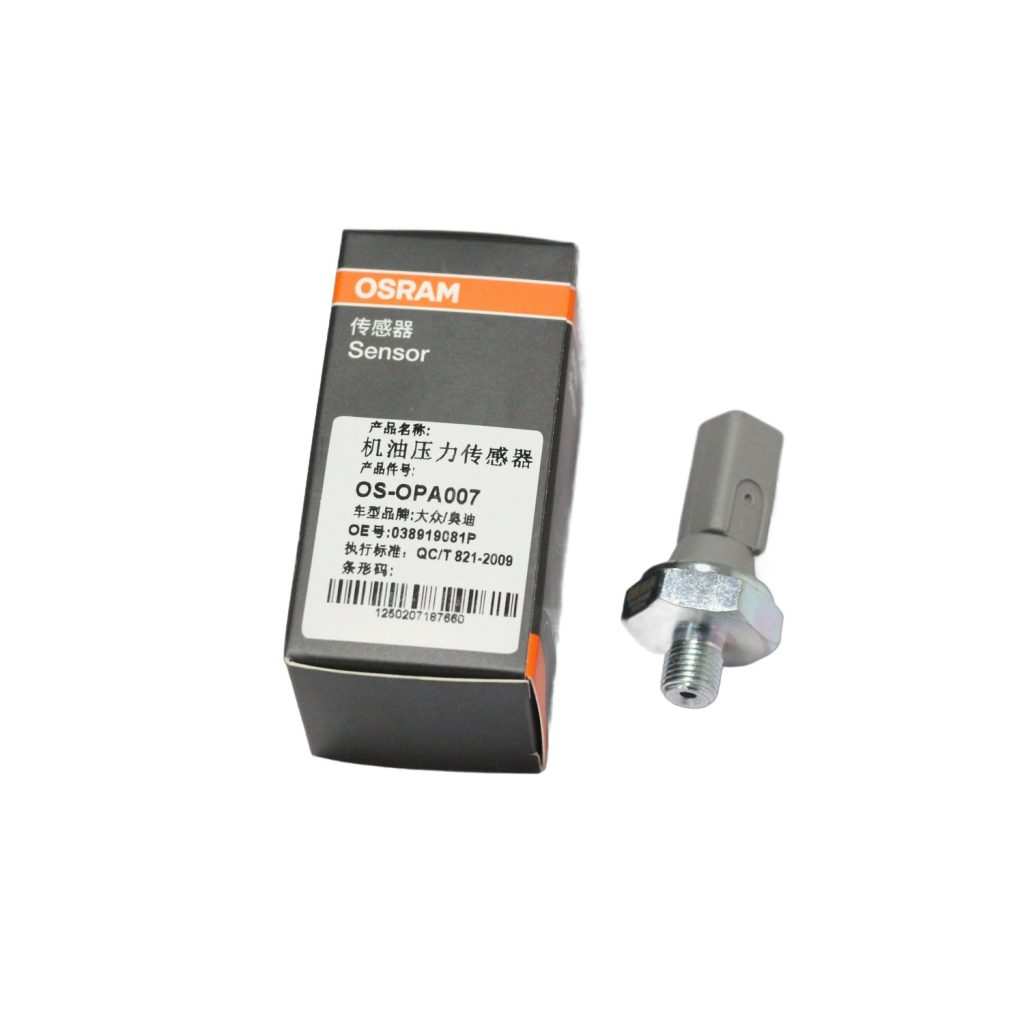
You pull the electrical connector off the oil pressure switch and find it swimming in engine oil. That’s your first clue. The OE-style sensor has a known failure mode where oil wicks up the threads, contaminates the connector, and leaves the circuit grounded — which means the warning light stays on even with healthy pressure. This isn’t a pressure problem. It’s a sensor problem. And it’s exactly the kind of case the OS-OPA007 OSRAM replacement is built to solve.
Diagnose Before You Wrench
Before touching a socket, verify the engine actually has oil pressure. Screw a mechanical gauge into the port where the switch mounts. On the Audi 2.0T FSI, you’re looking for at least 2.0 bar at hot idle and 3.5-4.0 bar around 3000 RPM. If the mechanical gauge reads healthy, the fault is electrical — either the sensor, the wiring, or the connector.
Check the harness for oil contamination and chafing. The single wire on the 038919081P-style switch carries power from the instrument cluster, and the switch case grounds it when pressure drops below roughly 0.3-0.9 bar. If oil has gotten into that connector, it creates an unintended ground path. The fix is the sensor plus a thorough harness flush.
The Replacement: Tools, Torque, and Technique
Here’s what you’ll need on the bench before you start:
- 24mm deep socket (6-point, not 12-point — you’ll thank me later)
- Ratchet or breaker bar
- Torque wrench (in Nm, not whatever it’s set to from that last job)
- Brake cleaner and shop rags
- New sensor — the OS-OPA007 | OSRAM Oil Pressure Sensor | Fits Audi | OE# 038919081P OSRAM unit is the direct-fit call for most Audi 2.0T and 3.2 applications
Step 1: Disconnect the electrical connector. Press the locking tab down and pull straight back. Don’t yank the wiring — that harness gets brittle with heat and the terminals pull out of the housing.
Step 2: Clean the area around the sensor with brake cleaner and compressed air. Any grit that falls into the bore when the sensor comes out will go straight through the oil galleries. That’s a cheap way to ruin a turbocharger.
Step 3: Break the old sensor loose with the 24mm socket. It’ll be seated at 30 Nm from the factory, so a firm pull is expected. Expect a small oil spill — have a rag under the socket to catch it.
Step 4: Compare the old sensor to the new OS-OPA007 | OSRAM Oil Pressure Sensor | Fits Audi | OE# 038919081P unit. Check thread pitch, hex size, and pin configuration. The OSRAM OS-OPA007 is built to match the OE 038919081P spec, so this should be identical. If anything looks even slightly different, stop and verify the part application before you proceed.
Step 5: Thread the new sensor in by hand. This is a tapered thread, so it needs to seat metal-to-metal. Do not use Teflon tape. Do not use thread sealant. The taper creates the seal on its own, and any extra material can interfere with the ground path or break loose into the oil system.
Step 6: Torque to 30 Nm using a real torque wrench. The aluminum block in the Audi engine will strip well below 40 Nm, and too little torque leaves you with a slow oil weep down the side of the engine.
Step 7: Reconnect the electrical connector until it clicks into place. Start the engine and watch the oil pressure light. It should extinguish within two seconds of cranking. Let the engine idle and check for leaks at the sensor base, then rev to 2500 RPM and inspect again.
Common mistakes I see from other techs: Teflon tape clogging the oil port. 12-point sockets rounding the hex. Torque wrenches left in the box, with the sensor “FT-tightened” until it strips. And the most expensive mistake of all — skipping the mechanical gauge test and replacing a good sensor because the wiring harness is the actual problem. Don’t be that shop.
Real-World Notes
The OSRAM OS-OPA007 is worth a second look if you’ve had issues with cheap aftermarket sensors throwing false warnings. The build quality is noticeably better — the plastic housing is properly sealed, and the hexagonal base is machined cleanly, so the 24mm socket seats without any wobble.
Twice now I’ve seen this sensor hold up on Audis that live on track days, where sustained oil temps can cook a marginal aftermarket switch in a weekend. The signal has been rock-solid, and I haven’t had a single return for a false oil pressure light in the months since I started using them.
The Bottom Line for Your Shop
The oil pressure sensor on an Audi is a twenty-minute job with the right socket and a torque spec. The diagnosis part is what separates a quick fix from a comeback. Verify pressure mechanically, confirm the wiring is intact, and pick a sensor built to the OE spec.
For most Audi 2.0T, 2.5, and 3.2 applications, the OS-OPA007 | OSRAM Oil Pressure Sensor | Fits Audi | OE# 038919081P gives you the fit and reliability you need without the thirty-percent markup of a dealer part. Keep one stocked in the drawer — it’s the kind of item that pays for itself the first time a regular customer calls with a blinking oil can on a Friday evening.