
It’s the first hard freeze of the season, around 6 a.m., and a 2015 Audi A8 rolls into your bay with the air suspension warning glowing amber. The customer says the rear end dropped overnight on the passenger side. You plug in the scan tool, and sure enough, there’s a ride height sensor code on the right rear — not a compressor fault, not a strut leak. Just a sensor that stopped reporting accurate position.
This is a familiar pattern in shops that see Audi vehicles year-round. The ride height sensor is the least protected component in the air suspension loop, and it takes the brunt of seasonal abuse. In winter, road salt, freezing temps, and constant thermal cycling beat up the small Hall-effect elements and plastic gear train inside the housing. In summer, the reverse happens: heat soak from the exhaust and hot asphalt expands the internals, producing intermittent signals that are nearly impossible to reproduce on a lift.
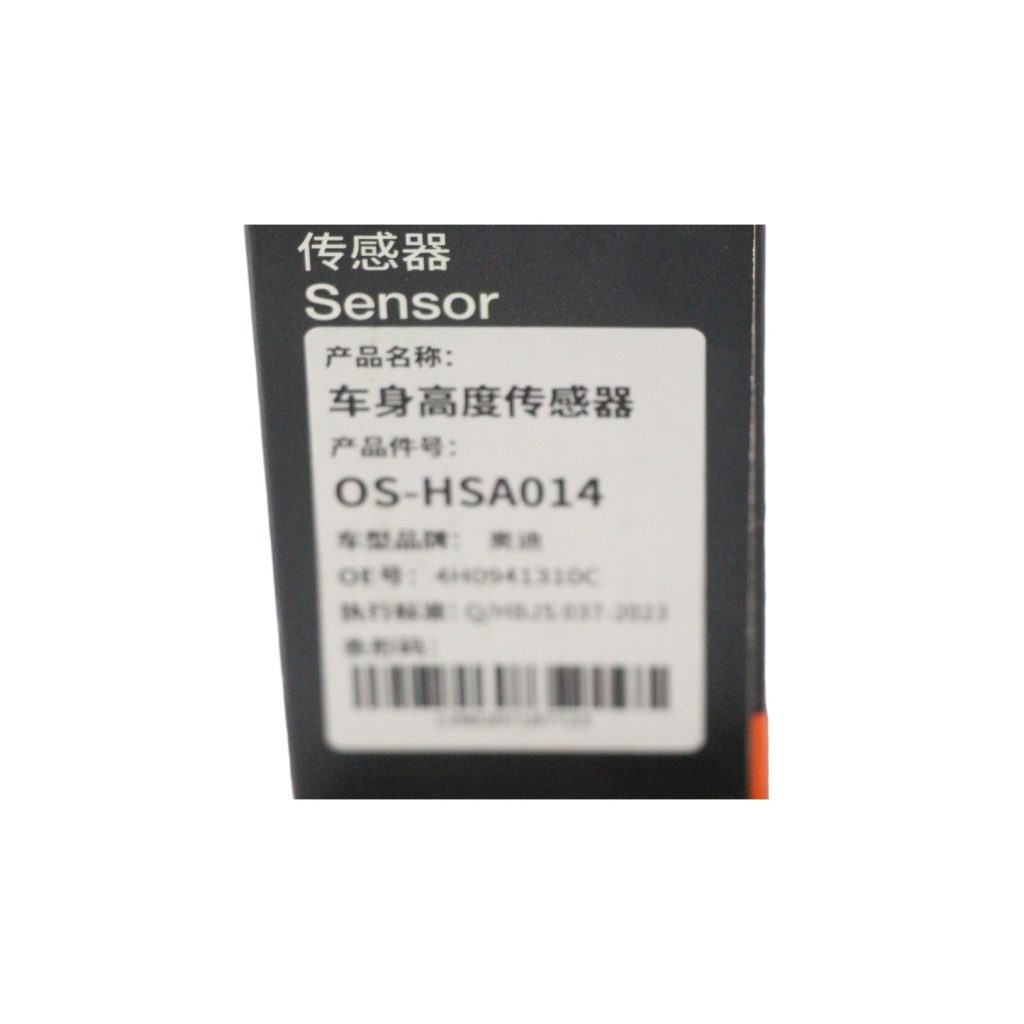
Before you condemn the sensor, check the linkage. The plastic ball joint on the connecting rod seizes, and the sensor itself is fine. That’s one of the most common misdiagnoses in this job. But when the sensor is the real culprit — and it often is after 60,000 miles of thermal stress — the replacement to reach for is the OSRAM OS-HSA014 | OSRAM Ride Height Sensor | Fits Audi | OE# 4H0941310C. It’s a direct fit for the application with OE# 4H0941310C, and the housing is properly sealed against moisture intrusion, which is where cheap units fail first.
Pro Tip: Always sweep the old sensor’s arm slowly through its full range before scrapping it. If resistance values glitch or drop out mid-sweep, the sensor is compromised. If it reads clean, the connecting rod was your problem. And for the love of a comeback — never let a customer’s pressure-washer-happy detailer blast the underbody in winter. Water forced past the housing vent cools the internals in seconds and gets sucked right back in as the part contracts.
The longevity play here is basic physics. This sensor sits low, near the wheel and the brake rotor, and it takes heat, salt, and stone chips that an engine bay sensor never sees. It’s worth advising your customer on some autumn prep: clean the connector and pack it with dielectric grease, inspect the rubber boot over the link arm, and flush the mounting area with plain water rather than high pressure. Those small steps extend the life of any sensor, factory or aftermarket.
For the shop, keeping an OSRAM OS-HSA014 | OSRAM Ride Height Sensor | Fits Audi | OE# 4H0941310C on the shelf means skipping the “customer needs it tomorrow” scramble when the first cold snap hits a parking lot full of air-suspension Audis. The price is fair, the fit is right, and it stops the diagnostic round-trip that eats your margin.