
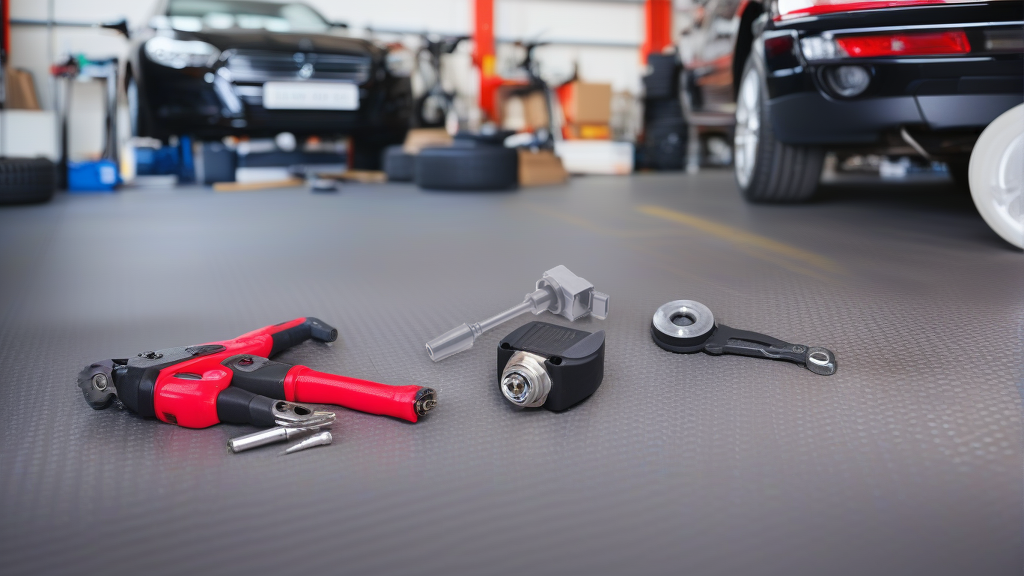
It was a Tuesday morning when the 2015 Maserati Ghibli rolled into the shop on a flatbed. The owner looked like he’d already been through two other independent shops and one dealer quote. The complaint was simple: intermittent misfire that turned into a total no-start. The dealer had quoted him $8,200 for a full set of ignition coils plus labor. The previous independent shop had replaced all six spark plugs and done a compression test—still no fix. That’s when the car landed on my lift.
This kind of story plays out far more often than it should, especially with Maseratis. They’re not unreliable cars by nature, but the parts supply chain for them can be genuinely punishing. The dealer markup on ignition components for the Ferrari-derived F160 V6 engine borders on absurd. And the real kicker? The fix on this Ghibli required a part that Maserati doesn’t even manufacture themselves.
Diagnosis: Following the Miss
The car still had battery power, and the starter turned over clean, but it would catch on two cylinders and then stall. No MIL on initial key-on—which is unusual. I pulled the live data stream with a high-end scan tool and saw the crankshaft position correlation was intact, but cylinder 2 was showing zero contribution during the cranking test.
Pulled the coil pack on cylinder 2. The boot was brittle, cracked, and there was a visible carbon tracking line running from the coil tower down the side of the insulator. The spark plug that the other shop installed was brand-new, but it was already wet with unburned fuel. That coil had been arcing internally under load for weeks before it finally died completely. Classic intermittent failure pattern that scanners often miss because it only happens under heat and load.
The previous shop had swapped the coil from cylinder 2 to cylinder 5 and never rechecked the misfire counts. Rookie mistake. The car came back to them a week later with the same issue, and they threw up their hands.
The Part That Shouldn’t Fit—But Does
Here’s where things get interesting. Maserati uses a Denso-based ignition coil design for the 3.0L twin-turbo V6 that is functionally identical to what you’ll find on a Lexus GS350 or a Toyota Camry V6. The factory part number is 9091902269. And that same coil is manufactured by OSRAM with a simpler, more robust internal winding that handles heat soak better than the OEM variant.
The part in question is the OS1003 | OSRAM Ignition Coil, and it’s a direct-fit replacement. Same connector. Same mounting tab geometry. Same dwell time characteristics. The only difference is the housing material uses a higher-temperature thermoplastic, which matters when you’re dealing with a turbocharged engine where the heat blanket effect under the engine cover can push coil temperatures past 140°C.
Key Specs — OSRAM OS1003
- OE Cross-reference: 9091902269
- Coil Type: Pencil (direct spark)
- Primary Resistance: 0.45–0.55 Ω
- Secondary Resistance: 8.5–10.5 kΩ
- Output Voltage: 35 kV (peak)
- Housing Material: High-temp PPS with silicone boot
- Fitment Platform: Lexus GS350/IS350, Toyota Sienna V6, Maserati Ghibli/Levante 3.0L (aftermarket confirmed)
The Install and the Result
Pulled the remaining five coils. Three of them had hairline cracks in the boots that weren’t visible until you flexed the rubber. All six got replaced with the OS1003 units. Total parts cost: roughly $240 at wholesale. Labor: 1.5 hours, including pulling the intake manifold support bracket that Maserati engineers thoughtfully placed directly over coil position 4.
Cranked it over. Fired on the first compression stroke. Idled smooth within three seconds. Road test showed zero misfire counts across all six cylinders under full boost up to 6,500 RPM. The owner took the car back the next day and drove it 400 miles. Called me to say fuel economy went from 16 mpg highway to 21. That’s the kind of difference a full set of healthy coils makes on a direct-injection turbo engine.
Pro Tip: If you’re diagnosing a Maserati 3.0L V6 with an intermittent misfire and no codes, pull the coils and examine the boots for carbon tracking before you run a compression test. I’ve seen three shops in the last year chase low-compression phantom failures on these engines only to find a cracked coil boot. The tracking creates a carbon path that acts like a resistor bleed, and the ECU interprets the odd voltage as a lean condition. One coil can make the whole bank look bad.
Why the OS1003 works better here than the OEM
The factory Maserati coils are rebranded Denso units, and they’re okay—for about 60,000 miles. But the intense underhood heat in the Ghibli and Levante tends to cook the internal resin potting material faster than the same coil in a naturally-aspirated Lexus application. The OS1003 uses a different epoxy formulation with a higher glass-transition temperature. In plain English: it doesn’t get brittle and start micro-cracking when the engine bay hits peak heat after a hard pull.
You’ll find the same core performance data across both parts on a bench test—the dwell times, the spark duration, the voltage rise curve all overlap. Where the OS1003 separates itself is in thermal endurance. For a turbo Maserati that sees daily driver use, that matters. For the garage queen that gets driven once a week, the OEM is fine.
Market Reality for Maserati Owners
Here’s the cold truth: Maserati parts pricing is not tethered to manufacturing cost. The dealer sells a coil from the same Denso line that Toyota charges $55 for, and marks it up to $210 with a Maserati box and a tri-color logo. That’s not engineering. That’s rent-seeking.
The aftermarket has caught up. The OS1003 sits at the right intersection of quality and cost: it doesn’t aim to be the cheapest option (there are $18 Chinese coil packs that you should absolutely avoid), nor does it pretend to be OEM in a white box. It’s a legitimate upgrade for the heat-sensitive application that Maserati owners actually need.
Bottom line for the buyer: If you own a Maserati 3.0L V6 (Ghibli, Levante, Quattroporte S) and you’re chasing a misfire or just want to do preventative maintenance before the turbo heat takes out your factory coils, the OS1003 is the smart play. It’s the same platform that OSRAM supplies to several European OEMs, and it handles the thermal abuse better than the original. Save the dealer markup. Spend it on fuel instead.