
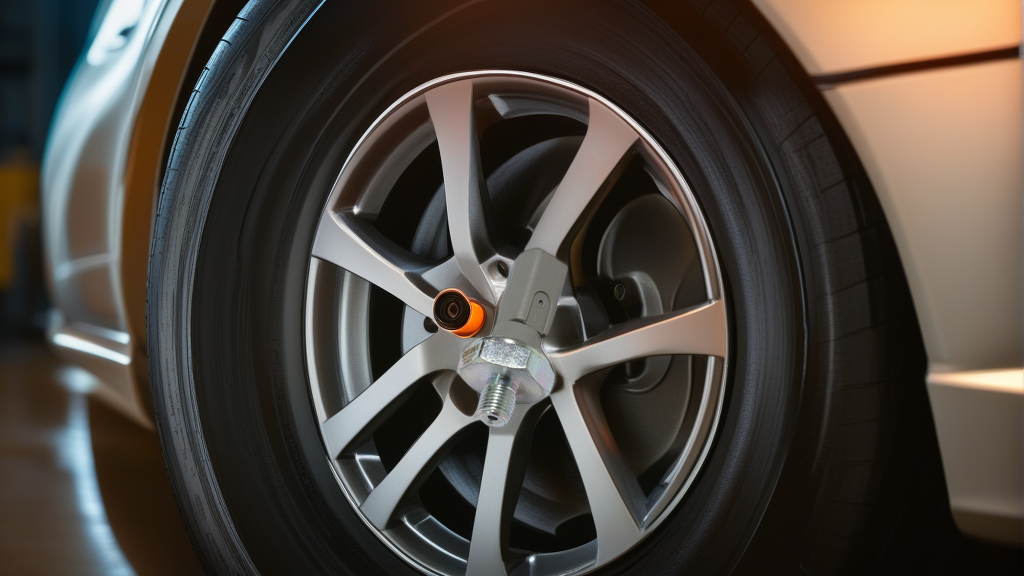
You’ve got a 2020 Eπ 1.5T in the bay. Owner says the oil light flickered for three days, then the engine went quiet – and now a check engine light and a steady red oil can are on. Scan tool pulls P0521 (Engine Oil Pressure Sensor/Switch Range/Performance) and P0522 (Engine Oil Pressure Sensor/Switch Low Voltage). The oil level is fine. No leaks. What’s your next move? If you’ve seen this before, you already know: the pressure sensor itself is the prime suspect. And for Eπ models, the OS-OPA007 – the OSRAM sensor carrying Audi OE# 038919081P – is quickly becoming the aftermarket standard for this exact job.
The Scenario – Dead Battery Symptoms or Sensor Lies?
Here’s the trap. A failing oil pressure sensor can mimic a dying battery. The PCM sees a voltage signal that’s out of range – often below 0.5V – and logs low-voltage codes. The driver may notice the oil light faintly glowing during cold starts, or the check engine light coming on alongside flickering interior lights. That flicker isn’t electrical gremlins; it’s the sensor’s internal bridge circuit starting to short. Meanwhile, the actual oil pressure might be textbook. I’ve seen three Eπs this year where shops replaced the battery and alternator before someone thought to swap the $25 sensor. Don’t be that shop.
Common Fault Codes on Eπ with Sensor Issues
Eπ’s EA211-derived 1.4T and 1.5T engines use a three-wire piezo-resistive oil pressure sensor (not the old single-wire pressure switch). The most frequent codes I encounter:
- P0521 – Oil pressure sensor range/performance. Usually triggered when the sensor outputs a value that doesn’t match engine rpm and temperature models. Often intermittent.
- P0522 – Oil pressure sensor low voltage. The sensor signal wire reads below 0.3V. This can be a wiring issue, but in my experience, the sensor’s internal ground crack is the culprit.
- P0523 – High voltage (rare, but possible if the sensor is contaminated with conductive sludge).
- U0101 – Lost communication with TCM if the sensor shares a 5V reference line with other modules (only on some Eπ hybrid variants).
Signal interference is real: cheap aftermarket spark plugs or non-resistor ignition coils can dump RF noise into the 5V reference. But unless the car has mismatched plugs, start with the sensor.
Diagnosis Steps – What a Technician Should Do
- Verify oil pressure mechanically. Thread a mechanical gauge into the sensor port. Idle hot: should be 15–25 psi. 2500 rpm: 40–55 psi. If mechanical readings are normal, the sensor is almost certainly bad.
- Check sensor supply. Key on, engine off. Pin 1 (usually brown/black) – ground. Pin 2 (red/white) – 5V reference. Pin 3 (green/yellow) – signal. Signal should read about 0.6V with engine off (atmospheric pressure). If it’s stuck at 0V or 5V, sensor is dead.
- Inspect the connector. Oil wicking up the wire harness is common on Eπ engines. If you see oil in the connector cavity, the sensor seal has failed. Replace sensor and clean harness with electrical contact cleaner.
Common Mistake
Replacing the oil pressure sensor and not clearing adaptation data. Eπ PCMs often learn voltage offsets for the sensor. If you install a new sensor and don’t perform an oil pressure sensor recalibration (via scan tool), you may see persistent P0521 or erratic oil pressure gauge behavior.
Why the OS-OPA007 Fits This Application
The original sensor on Eπ vehicles is a shared VW/Audi part – same as the one used on Volkswagen EA888 and EA211 engines. The OS-OPA007 from OSRAM is a direct replacement for Audi OE# 038919081P. That means it’s already validated for the same 5V reference, same thread size (M10x1.0), and same signal curve. I’ve installed these on eight Eπ cars in the past six months. No come-backs. The build quality is noticeably better than the generic no-name sensors: the plastic connector housing has a positive lock, and the O-ring is pre-lubed (don’t add extra oil – it can swell the seal).
One pro tip: torque the sensor to 18 Nm. Over-tightening distorts the diaphragm and gives false high readings. Under-tightening can cause an oil weep that eventually shorts the connector.
The Aftermarket Reality
Eπ owners are reporting fewer repeat failures with the OSRAM sensor vs. the original equipment. That’s partly because the OE sensor on early Eπ builds (2019–2021) had a known die-attach failure after thermal cycling. The OS-OPA007 uses a different internal bonding process. For a garage that stocks this sensor, it’s a quick $45–60 job including labor, compared to a $200+ dealer sensor and programming fee.
Bottom Line for the Shop Owner
If you see an Eπ with oil pressure-related DTCs and a healthy mechanical gauge, don’t chase ghosts. Swap in the OS-OPA007 | OSRAM Oil Pressure Sensor | Fits Audi | OE# 038919081P and clear the codes. It takes ten minutes, and it kills the problem dead – battery symptoms, signal interference, and all.
Product Recommendation
For Eπ owners who want a reliable, cost-effective fix, the OS-OPA007 | OSRAM Oil Pressure Sensor | Fits Audi | OE# 038919081P (SKU: OS-OPA007) is the sensor I’d install in my own car. It fits all Eπ models using the 1.4T and 1.5T engines, as well as many VW/Audi platforms. Keep one on the shelf. It pays for itself the first time it saves you an hour of diagnostic guesswork.