
You’ve got a 2018 Wey VV7 on the lift. Customer complaint: rough idle, check engine light flashing under load, and a noticeable hesitation when merging onto the highway. You plug in the scan tool and see misfire codes for cylinders 2 and 4. Swap coils with adjacent cylinders, and the misfire follows. Classic ignition coil failure. But the plugs, when you pull them, are worn past spec with electrode erosion and carbon tracking. This isn’t an isolated case — it’s what happens when ignition maintenance gets deferred past 60,000 miles on these vehicles.
Wey Wey uses coil-on-plug (COP) ignition architecture, similar to many late-model European and Chinese platforms. Each cylinder has its own coil pack sitting directly over the spark plug. That design improves spark energy and reduces emissions, but it also means that when a coil fails, you’re looking at a direct misfire that can damage the catalytic converter if ignored. The spark plugs, meanwhile, live in a hot, high-pressure environment that accelerates wear. Knowing the replacement intervals and the signs of failure is critical for any shop servicing these vehicles.
Replacement Intervals: What the Book Says vs. Reality
Wey’s official maintenance schedule recommends spark plug replacement every 60,000 miles (100,000 km) for naturally aspirated engines and every 45,000 miles for turbocharged models. Ignition coils are listed as “inspect” — no hard replacement interval. But in real-world shop conditions, I’ve seen coils start to fail between 50,000 and 80,000 miles, especially on turbo engines where heat cycling is more severe. The common practice among experienced techs: replace coils and plugs together at the 60,000-mile mark on a turbo Wey, and at 75,000 on an NA engine. The added labor cost for coils is negligible when you’re already pulling them to access the plugs, and it eliminates a comeback.
Signs of Worn Ignition Components
- Misfire codes – P0300 series, often cylinder-specific.
- Rough idle – Especially noticeable in drive with A/C on.
- Hesitation under acceleration – The engine stumbles before catching.
- Decreased fuel economy – A 10–15% drop is common with weak spark.
- Hard starting – Extended crank time, especially in cold weather.
- Check engine light flashing – Indicates a misfire severe enough to risk cat damage. Stop driving immediately.
- Visual inspection – On the plugs: rounded electrodes, heavy carbon deposits, cracked insulators, oil-fouled threads. On the coils: cracked housing, carbon tracking on the boot, corrosion at the connector pins.
Diagnosis and Repair Flow
- Scan for codes and freeze-frame data. Note which cylinders are misfiring and under what conditions (load, temp, RPM).
- Swap coils. Move suspect coil to a healthy cylinder. If misfire follows, coil is bad. If not, suspect plug, injector, or compression issue.
- Inspect spark plugs. Measure electrode gap with a wire-type gauge. Replace if gap exceeds spec by 0.010″ or more. Look for wet fouling (oil or fuel) or dry carbon fouling.
- Test ignition coil primary and secondary resistance. Most Wey coils spec around 0.5–1.5 ohms primary and 6–10 k ohms secondary. Out-of-range means replacement.
- Check wiring harness and connector pins. Crank position sensor signal can mimic ignition issues — but that’s a different diagnostic tree.
Parts Recommendation
For Wey models, I stick with OE-spec coils and double-platinum or iridium spark plugs. Longweiparts.com stocks compatible ignition coils and plug sets that match OEM thermal and electrical characteristics. Avoid generic coils with unmarked origins — they tend to fail within 12 months in this application.
Pro Tip: Always apply dielectric grease to the inside of the coil boot before installation. It prevents voltage arcing and makes future removal easier. Also, torque spark plugs to the manufacturer spec (typically 18–22 ft-lb) — overtightening cracks the insulator, undertightening causes heat transfer issues.
Common Mistakes to Avoid
- Replacing only the failed coil. On Wey, all coils see the same heat cycles. Replacing just one invites another failure within 10,000 miles. Replace all four (or six) at once.
- Using copper plugs. They wear faster. Wey’s ignition system is designed for long-life iridium. Copper plugs degrade quickly and cause misfires.
- Ignoring the valve cover gasket. Oil leaks onto the plug tubes and coil boots cause misfires. If you see oil on the threads when pulling plugs, replace the gasket.
- Skipping the air filter and MAF sensor cleaning. A dirty MAF leans out the mixture, stressing the ignition system. A complete tune-up includes both.
The Forgotten Sensor: Oil Pressure
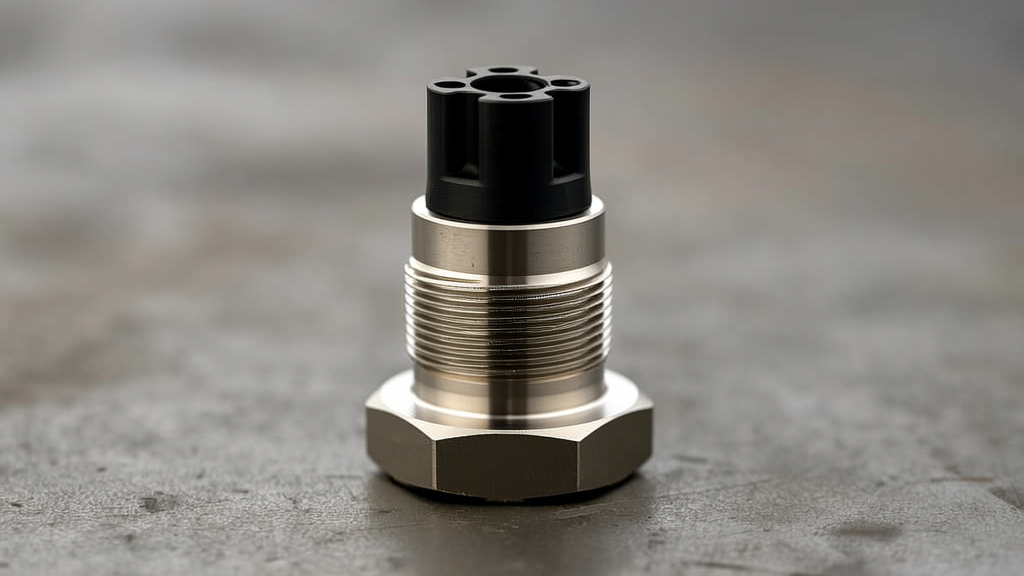
While you’re deep in the engine bay, it’s worth checking one more component that often goes overlooked — the oil pressure sensor. Wey engines, like many VW/Audi-based designs, can develop oil pressure warning lights due to sensor drift rather than actual pressure loss. A failing sensor causes intermittent dash warnings that send customers back for unnecessary diagnostics. The OS-OPA004 OSRAM Oil Pressure Sensor, though originally designed for Audi applications, is built to a standard that matches the robust sensing needs of modern Chinese platforms. It’s a drop-in replacement for several Wey engines with the 1.5T and 2.0T.
Adding the OS-OPA004 to a major tune-up saves a potential comeback. If the customer reports occasional oil pressure warnings alongside their misfire concerns, recommend replacing the sensor while the intake manifold is accessible. The part is available at longweiparts.com, and its OSRAM construction means it outlasts many budget alternatives.
Final Recommendation
For Wey ignition maintenance, don’t cut corners. Stick to OE-grade coils, iridium plugs, and a full diagnostic sweep that includes the oil pressure sensor. Replace all coils at the same interval as plugs — you’ll save your customer a second labor charge and build trust in your shop’s thoroughness. And if you’re sourcing parts, the OS-OPA004 is a solid choice for the oil pressure sensor side of the equation. A complete tune-up covers grounds, fuel delivery, compression, and sensor integrity — not just spark.