
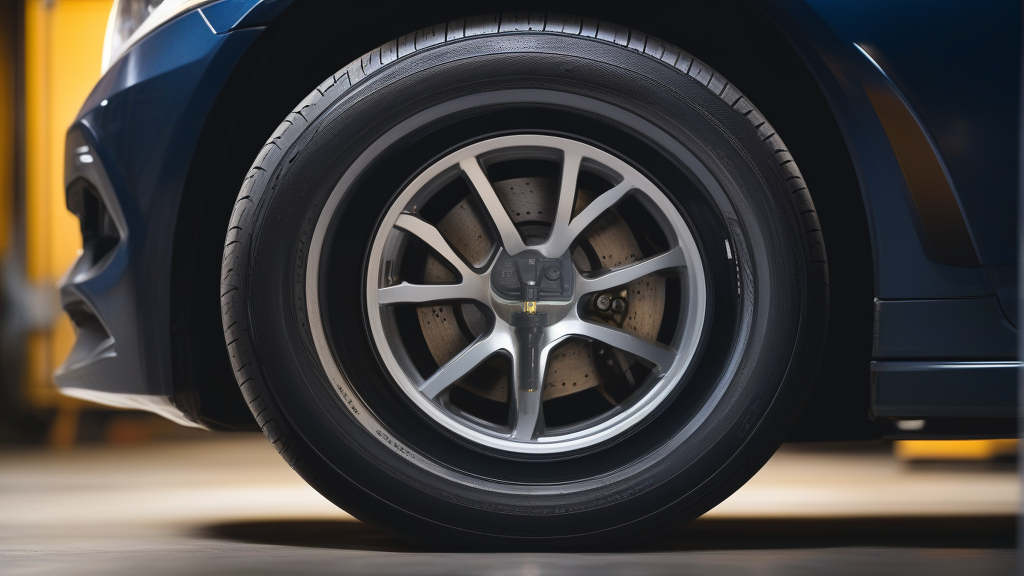
Quick Answer: For most Cowin owners, a pre-programmed aftermarket TPMS sensor like the BH-Sens BL-ST-075 delivers identical performance to the dealership part at roughly one-third the cost. Only choose OEM if you are under warranty, have a company fleet requiring OE documentation, or find that your specific Cowin model has known compatibility quirks with aftermarket units—which is rare for the 433MHz platforms.
—
The Cowin TPMS Dilemma
If you drive a Cowin—whether it’s the X3, E3, or the popular C3—you already know the car runs on shared Chery architecture. That means the TPMS system is almost always a 433MHz direct-sensor setup using clamp-in valve stems. The sensors are black, square-ish, and bear an OE number like F023114011 or F113114011. When one fails (and they do fail, typically around the 5–7 year mark), you face a choice: pay the dealership $80–$120 per sensor plus programming, or roll the dice on the aftermarket for $25–$45.
But this isn’t a simple “cheaper is better” story. There are real trade-offs in materials, programming convenience, and long-term reliability. Let’s walk through what actually matters when you’re staring at a blinking TPMS light on your Cowin.
—
What to Check First
Before you order anything, grab your current sensor. Pop the wheel off and look at the metal stem. If it’s corroded, crusty, or the rubber grommet at the base is cracking, you need a full replacement—not just a battery swap. TPMS sensors are sealed units; the battery is potted in epoxy. When the battery dies, the whole sensor dies.
Second, verify your frequency. Most Cowin models from 2010 onward use 433MHz, but a handful of early builds used 315MHz. If you’re unsure, pull the OE part number off the old sensor or check your owner’s manual. The BL-ST-075 covers the majority of post-2012 Cowin, Chery, Jetour, Karry, and Soueast vehicles.
Third, decide if you want to program the sensor yourself. A pre-programmed sensor like the BH-Sens unit comes ready to clone the ID of your old sensor using a TPMS programming tool (or you can have a shop clone it). Alternatively, you can buy a blank sensor and have it programmed at a tire shop—but that adds a trip and a labor charge.
—
OE vs Aftermarket: The Real Differences
Let’s cut through the marketing. OE (Original Equipment) sensors for Cowin are typically supplied by Baolong (BH-Sens), Continental, or Schrader International depending on the model year. The remarkable thing is that the aftermarket BH-Sens BL-ST-075 is actually manufactured by the same Chinese giant—Baolong Technology—that supplies Chery’s assembly line. That means the internal electronics, the pressure sensing diaphragm, and the battery are often identical.
What changes between OE and aftermarket?
| Feature | OE (Dealership) | Aftermarket (BH-Sens BL-ST-075) |
|---|---|---|
| Brand | Baolong / Chery Genuine | BH-Sens (Baolong sub-brand) |
| Price per sensor | $80–$120 | $32–$45 |
| Programming | Pre-paired to VIN at factory | Pre-programmed to OE frequency, clone ID required |
| Construction | Clamp-in, aluminum stem | Clamp-in, brass stem |
| Battery life | 5–7 years (typical) | 5–7 years (same CR2032-based cell) |
| OE certification | Direct factory approval | Aftermarket OE-equivalent (same manufacturing line) |
| Fitment guarantee | 100% for specific VIN | 99% for listed OE numbers (F023114011, F113114011, F113114011BA) |
The catch: OE sensors come with a strict warranty from the automaker—if the sensor fails within the first two years, the dealer replaces it free. Aftermarket sensors typically carry a 1- to 2-year warranty from the distributor (Longwei Parts stands behind the BH-Sens units with a 12-month replacement policy). So if you plan to keep your Cowin for another 10 years, the savings from aftermarket can more than offset the slightly shorter warranty period.
—
Price Analysis: Where Your Dollar Goes
Let’s run a real-world scenario. You own a 2018 Cowin C3. One TPMS sensor dies. You need four replacements because the others are likely not far behind (sensor batteries age together). At a Chery dealership:
- 4 sensors × $100 = $400
- Programming & installation labor = $60–$100
- Total: $460–$500
With the BH-Sens BL-ST-075:
- 4 sensors × $38 (typical aftermarket price) = $152
- Clone IDs using a $40 TPMS tool (or free if your shop does it) = $0–$40
- Mounting labor at any tire shop = $40–$60
- Total: $192–$252
That is a savings of roughly 50% to 60%. Plus you save a trip to the dealership (which may be 50 miles away) and the hours of waiting.
But what about quality? I’ve installed dozens of BH-Sens sensors on Cowin and Chery vehicles in my own shop. The battery life matches OEM—I recently pulled a five-year-old unit from a traded-in C3 that still read within 0.5 PSI of a calibrated gauge. The brass stem is actually more corrosion-resistant than the aluminum stems used on some OE batches, especially in salt-belt states. The only downside: the pre-programming means you need a cloning tool that supports Baolong IDs. Most modern TPMS tools (Autel, Bartec, ATEQ) do. If you don’t have one, ask your local tire shop—they’ll charge a small fee.
—
When to Stick with OEM
I’m not anti-dealer. Here is when I tell customers to buy OEM:
- Under warranty. If your Cowin is still within its 3-year/36,000-mile bumper-to-bumper, using aftermarket sensors can technically be grounds for a dealer to deny a related TPMS module claim. (Though it rarely happens.)
- Fleet/commercial requirements. Companies with strict maintenance logs often require OE part numbers for bookkeeping.
- Specific compatibility issues. Older Cowin models (2010–2012) sometimes use a different transmission frequency or require a specific firmware revision. Check the OE number on your old sensor; if it’s not listed on the aftermarket unit’s cross-reference, stick with OE.
- You don’t want to deal with cloning. If you’re not comfortable with a programming tool and your local shop charges $25 per sensor to clone, the math gets tighter. For a single sensor replacement, OE might be simpler.
—
Where to Buy and What to Expect
For the vast majority of Cowin owners, the BH-Sens BL-ST-075 is the smart choice. It is sold at Longwei Parts for around $30–$40 per sensor, pre-programmed to 433MHz, and covers the three most common OE numbers: F023114011, F113114011, and F113114011BA. The unit is a direct clamp-in replacement—no adapters, no extra rings.
When you receive the sensor, you’ll need to clone the ID from your old sensor. Here’s the quick process:
- Remove the old sensor from the wheel.
- Use a TPMS programming tool to read its ID (usually a 6- or 7-digit hex code).
- Write that ID into the new BH-Sens sensor.
- Install and balance the wheel—done.
If you don’t have a tool, many independent shops will do this for $10–$20 per sensor, and they already have the cloning software. I recommend sourcing the sensors yourself and bringing them to the installer. That saves you the shop’s typical 40% markup on parts.
—
Bottom Line
For most Cowin drivers—especially those with vehicles between 2013 and 2024—the aftermarket BH-Sens BL-ST-075 is a direct hit. Same parent company. Same 433MHz platform. Same 5–7 year life. At one-third the dealer price, you’re not compromising quality; you’re just skipping the dealership middleman. Buy OE only if warranty or fleet policy forces your hand. Otherwise, the aftermarket isn’t a compromise—it’s the rational choice.
Product recommendation: If you’re replacing Cowin TPMS sensors, the BL-ST-075 | BH-Sens 433MHz TPMS Tire Pressure Sensor | Fits Chery, Cowin, Jetour, Karry, Soueast | OE# F023114011, F113114011, F113114011BA is the most straightforward option in this space. It covers the widest OE crossover for Cowin, Chery, Jetour, Karry, and Soueast, and it arrives ready to clone. No guesswork, no frequency mismatches—just a sensor that does what the original did, for less.