
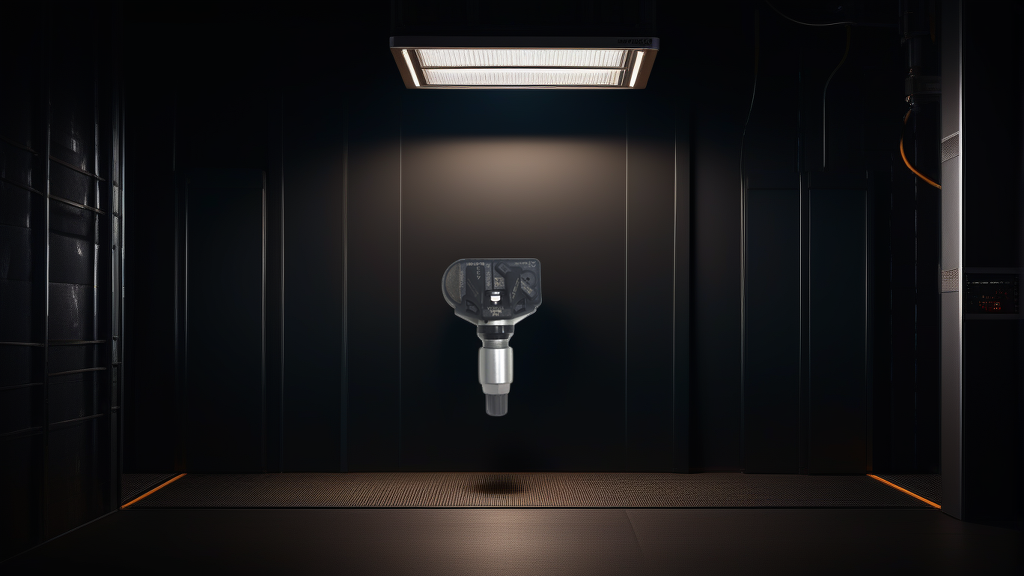
You’ve got a 2019 Mercedes-Benz B‑Class in the bay with a persistent TPMS warning. Customer says the light came on after a tire rotation and “just want the cheapest sensor that works.” You pull the original – stamped OE# 36106872774 – and cross it to a catalog. Six different numbers come back, three brands, two frequencies. Sound familiar?
That’s the reality of modern TPMS service. The same physical sensor can carry a half‑dozen OE numbers depending on who built the car and when. For B‑Class owners – and the shops that service them – knowing how to read those numbers and find cross‑brand equivalents isn’t just a time‑saver. It’s the difference between a one‑and‑done fix and a comeback.
The Problem with OE Number Overload
Take the sensor on that B‑Class. Mercedes‑Benz lists it under 36106872774, but the same part also appears as A0009052102, A0009054104, and A0009057205. That’s because Mercedes revised the supersession chain as production shifted between suppliers. Meanwhile, the identical sensor (same internals, same 433 MHz frequency) shows up on BMW, Aston Martin, Mini, and even some Maybach models – under numbers like 42607WAA02, 5A3DC0401, and 687793602.
If you hand the customer a dealer‑branded sensor at $120 each, they’ll balk. If you grab a generic “fits many” sensor without checking the cross‑reference, you risk fitment issues or a dead sensor out of the box. The smart play is understanding the numbering logic and using a proven aftermarket replacement that consolidates all those OE numbers into one part.
Decoding the Numbers – A Quick Sight Read
Most OE numbering systems follow a pattern, but no two automakers do it exactly the same. Here’s what you’ll see on B‑Class and related platforms:
- Mercedes‑Benz (36106872774) – 11 digits. The first three (361) denote the department (chassis/electrical), the next seven are the sequence, and the last digit is a check digit or revision suffix. Supersessions often change the last few digits.
- BMW (36106872774 appears on some BMWs, but also 36106877422) – Typically 11 digits as well, but BMW uses a different prefix structure. Cross‑reference databases are essential here because BMW and Mercedes frequently share sensor hardware from the same Tier‑1 suppliers (e.g., Baolong, Huf, Schrader).
- Honda/Acura (42607WAA02) – 10 digits. First five are the part family (42607 = TPMS), next five are the variant. “WAA” indicates a specific revision level. This sensor shows up on Honda/Acura applications that share the same 433 MHz platform.
- General Motors (5A3DC0401) – 8‑character alphanumeric. “5A3” is the GM brand code for aftermarket/Tier‑1, “DC” likely denotes the supplier (Baolong), “0401” is the version.
The common thread: all these numbers reference the same Baolong Technology sensor module – the BH‑Sens BL‑ST‑081. Instead of stocking six different SKUs, you can stock one that covers the B‑Class plus ten other vehicle lines.
Why Cross‑Brand Equivalents Matter for Your Shop
The B‑Class isn’t a high‑volume car for most independent shops, but the sensor platform it uses is everywhere. A single BH‑Sens unit – the BL‑ST‑081 – replaces OE numbers from Mercedes, BMW, Honda, GM, Aston Martin, Mini, and Maybach. That means you can carry one part on the shelf and cover a 2014 Mini Cooper, a 2018 BMW 5 Series, and a 2020 Mercedes B‑Class without digging through three catalogs.
The substitution works because the sensor is a clamp‑in design with a 433 MHz frequency and programmable ID. It’s built to the same OE specs as the Baolong sensors that originally shipped in those cars. Programming is straightforward with any universal TPMS tool that supports Baolong protocols.
Common Mistakes When Cross‑Referencing B‑Class Sensors
Pro Tip: Never assume the OE number alone guarantees frequency compatibility. A 315 MHz sensor and a 433 MHz sensor can look identical but won’t talk to your B‑Class’s receiver. Always confirm the frequency on the original part or the vehicle’s service info before ordering.
Another mistake: ignoring the valve stem type. The BL‑ST‑081 is a clamp‑in sensor (metal stem with a nut). Some B‑Class models from certain years ship with snap‑in sensors. If your customer’s car has a snap‑in, the clamp‑in will still work, but you’ll need to replace the entire assembly, not just the sensor. Verify by looking at the original valve – if it’s rubber and pushes through the rim, you’re likely looking at a snap‑in.
A third pitfall: not checking the torque spec for the clamp‑in nut. Under‑torquing causes leaks; over‑torquing cracks the housing. The BL‑ST‑081 spec is 4.0 N·m (35 in‑lb). Use a torque wrench, not a feel.
The Recommendation
For the B‑Class and its cross‑brand cousins, the BH‑Sens BL‑ST‑081 is the practical choice. It’s a single SKU that covers more than a dozen OE numbers, including all the ones listed for that 2019 B‑Class. Program it with your TPMS tool, install it with the correct torque, and you’re done – no chasing supersessions, no guesswork.
If you’re tired of juggling six different sensors for a family of cars that use the same internals, the BL‑ST‑081 is how you simplify your inventory and keep B‑Class drivers coming back.
Bottom line for the shop: Cross‑reference by OE number, but buy by platform. The BH‑Sens BL‑ST‑081 covers the B‑Class and its OE equivalents in one box. It’s the part you reach for when the customer says “just fix the light.”