
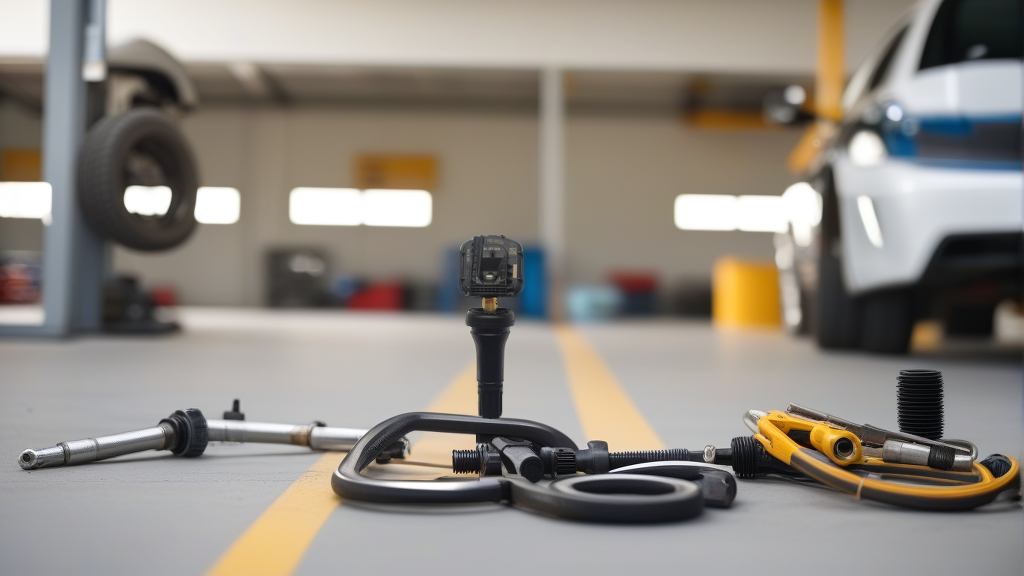
If your XJ TPMS light stays on after inflating tires to the correct pressure, the problem isn’t air—it’s electronics. Most XJ models using 433MHz sensors (common on vehicles fitted with OE part numbers like 13516165 or 13522631) rely on lithium batteries sealed inside each sensor. These batteries aren’t replaceable; once they die, the sensor stops transmitting. But not every warning means a dead battery. Signal interference can also trigger false alerts, and it’s easier to fix than swapping all four sensors.
Below is a practical breakdown of what’s causing that light and how to pinpoint the fault without guesswork.
Common Causes of the TPMS Warning Light on XJ
Three things typically trigger the light on an XJ:
- Actual low tire pressure – Always check with a gauge first. If one tire is 5+ PSI below the others, the light will come on after a few minutes of driving.
- Dead sensor battery – Sensors have a finite life. Cold weather can cause a weak battery to fail entirely, making the light flash for 60–90 seconds at startup and then stay solid.
- Signal interference – Radio frequency noise from aftermarket electronics can block the 433MHz signal between the sensor and the receiver module behind the dashboard.
A TPMS diagnostic tool (e.g., Autel, Bartec, or ATEQ) will read each sensor’s ID, battery voltage, and pressure. If a sensor doesn’t respond, the battery is likely dead. If all four respond but the light stays on, look for interference.
Symptoms of a Dead TPMS Sensor Battery
A dying sensor behaves differently than a dead battery. Here’s a quick reference:
| Symptom | Likely Cause | Action |
|---|---|---|
| Light flashes for 60 seconds at startup, then stays solid | One or more sensors have dead internal batteries | Replace those sensors |
| Light comes on intermittently but goes off after driving | Weak battery / low voltage sensor; temperature drop | Replace sensor(s) soon |
| Light stays off, but dash shows “– –” or “NO ID” for one tire | Sensor is completely dead or missing | Replace sensor or program new one |
| All four sensors read normal pressure, light still on | Signal interference or receiver module issue | Check for RF noise sources |
Dead sensor batteries are the most common failure on XJ vehicles above 7 years old. You cannot just replace the battery inside the sensor—it’s potted in epoxy. The entire sensor unit must be replaced and programmed.
Diagnosing Signal Interference
Signal interference is less common but frustrating because it mimics a dead sensor. The 433MHz frequency used by many XJ TPMS sensors is shared with other devices. Common culprits on XJ vehicles include:
- Aftermarket LED headlights or fog lights – Cheap LED drivers can emit RF noise in the 400–500 MHz range, blocking sensor signals.
- Dashcams with poor shielding – Some dashcams generate interference, especially if the power cable runs near the TPMS receiver (typically under the dashboard or behind the glovebox).
- Remote starters or keyless entry modules – Aftermarket security systems can transmit on overlapping frequencies.
- Phone chargers or USB adapters – Low-quality 12V-to-USB adapters can radiate noise.
How to test for interference:
- Turn off all aftermarket electronics (LED lights, dashcam, charger, remote start fob).
- Drive the vehicle for 10 minutes. If the TPMS light goes out, you’ve found the source.
- Turn devices back on one by one to isolate the offender.
- If you have a TPMS tool, check the signal strength of each sensor with interference on vs. off. A drop in RSSI (Received Signal Strength Indicator) confirms the problem.
If interference is the cause, you often only need to relocate the device’s power cable or add a ferrite choke to the wiring. Replacing a sensor won’t fix it.
When to Replace the Sensor
If diagnostics confirm a dead sensor, replace it immediately. Running with a dead sensor means you lose real-time pressure data for that tire, and many XJ TPMS systems will keep the warning light on until all sensors are functioning.
For XJ models that use 433MHz sensors with OE numbers such as 13516165, 13522631, 13540603, 13544442, or 13581561, the BL-ST-059 | BH-Sens 433MHz TPMS Tire Pressure Sensor | Fits BAIC, Baic Ev, Buick, Cadillac, Chevrolet & 15 More | OE# 13516165, 13522631, 13540603 (BL-ST-059 from BH-Sens) is a direct-fit replacement. It is pre-programmed for many GM and Chinese brand applications, and it works with standard TPMS re-learn procedures. Always confirm your vehicle’s specific frequency and protocol using a diagnostic scanner before purchasing.
Recommended Part
For a reliable, drop-in replacement that matches the factory specs, use the BL-ST-059 | BH-Sens 433MHz TPMS Tire Pressure Sensor | Fits BAIC, Baic Ev, Buick, Cadillac, Chevrolet & 15 More | OE# 13516165, 13522631, 13540603. It comes ready to install and covers 15+ vehicle brands, including BAIC, Buick, Cadillac, and Chevrolet. Pair it with a TPMS programming tool to sync it to your XJ within minutes.
FAQ
How long do TPMS sensor batteries last on an XJ?
Most OEM and quality aftermarket sensors use a lithium battery rated for 7–10 years. Actual life depends on driving habits and climate. Expect replacement around year 8.
Can I replace just the battery in a TPMS sensor?
No. The battery is sealed inside the sensor housing. Attempting to open it will damage the electronics and pressure seal. Replace the entire sensor unit.
Why does my XJ TPMS light flash after I installed new LED headlights?
LED headlights with cheap drivers can emit radio frequency interference (RFI) around 433 MHz. The TPMS receiver misinterprets the noise as a lost sensor. Try swapping the LEDs for shielded units or adding a ferrite core on the headlight power wires.
How do I know if my XJ uses 433MHz or 315MHz TPMS sensors?
Check your owner’s manual or the sticker on the driver’s side door jamb. Alternatively, look up the OE sensor part number (e.g., 13516165) – that number cross-references to a 433MHz sensor. A TPMS scan tool will also display the frequency when it reads the sensor ID.