
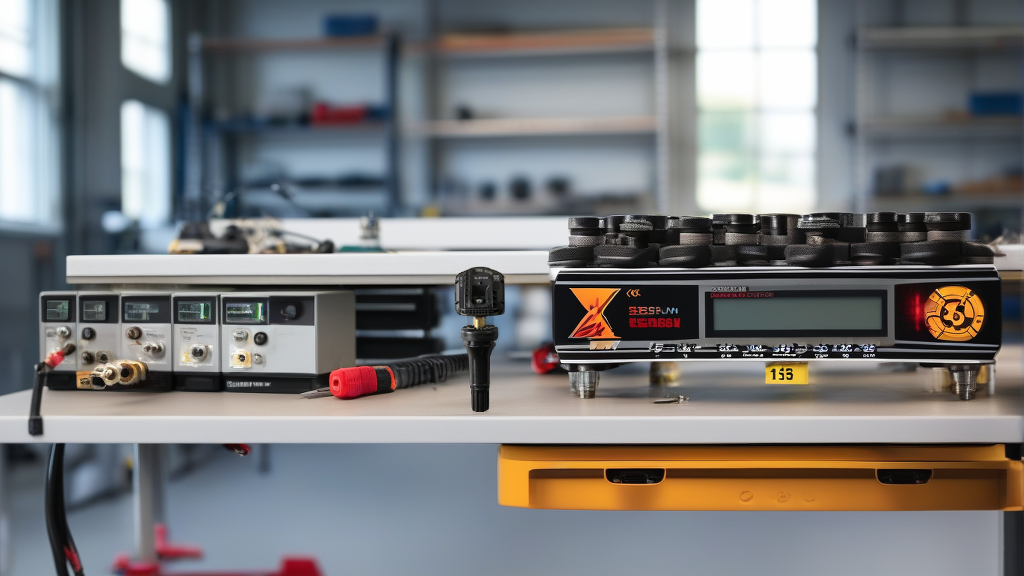
If you drive a MEGA and the TPMS (Tire Pressure Monitoring System) light has decided to stay on, you are not alone. This is one of the most common dashboard complaints we see across the brand’s lineup — from the MEGA Sedan to the MEGA SUV and pickup variants. The orange exclamation mark inside a horseshoe (or the “TIRE PRESSURE” text) can mean more than just under-inflated tires. In this article, we’ll walk through the three main culprits: actual low tire pressure (the easy fix), a dead TPMS sensor battery (the common failure), and signal interference (the sneaky one). We’ll also cover how to tell them apart and what part to grab if a sensor needs replacing.
Why the TPMS Light Comes On in a MEGA
The MEGA TPMS system uses direct sensors mounted inside each tire (usually at the valve stem). These sensors measure pressure and temperature, then broadcast data via a 433MHz radio signal to a receiver module inside the vehicle. When the system detects a problem, it lights up the warning lamp. The behavior of the light matters:
- Solid light – usually indicates low tire pressure or a single sensor reporting a pressure below the threshold (typically 25% below placard pressure).
- Flashing light for 60–90 seconds then staying solid – indicates a system fault, i.e., a missing or malfunctioning sensor, dead battery, or interference preventing signal reception.
On MEGA vehicles model years roughly 2010 and newer, the TPMS sensors are powered by a sealed 3V lithium battery. That battery is not replaceable — when it dies, you replace the entire sensor. Typical life span is 5–7 years, but cold climates and heavy driving can reduce that.
Dead TPMS Sensor Battery Symptoms
A failing or dead sensor battery does not always trigger an immediate “low pressure” warning. Instead, the sensor stops transmitting. Here’s what you might notice:
- Intermittent warning light that comes and goes, especially in cold weather when battery voltage drops.
- Flashing light at startup that then stays solid — classic “sensor not communicating” pattern.
- One tire consistently showing “–“ or “0” on the dash pressure display (if your MEGA has individual tire readouts).
- Multiple sensors fail around the same time — if your MEGA is 6+ years old, you may get two or three dead sensors within months.
- No pressure change has occurred — the tire is properly inflated, but the light remains on.
Unlike a low-pressure situation where adding air immediately turns off the light (after driving a few minutes), a dead sensor will not respond to inflation. You need a TPMS scan tool to read the sensor IDs. If no signal is received from a specific wheel position, that sensor is likely dead.
Signal Interference Diagnosis
Less common, but increasingly frequent on modern MEGA vehicles, is radio frequency interference. The TPMS receiver operates at 433MHz, and certain aftermarket modifications can block or disrupt that signal.
Common Interference Sources
| Interference Source | How It Affects TPMS | Typical MEGA Symptom |
|---|---|---|
| LED license plate or interior lights | Generates electrical noise on 433MHz band | Intermittent flashing light, random sensor dropout |
| Metallic or ceramic window tint | Blocks RF signal from sensors to receiver | All sensors show “–“ after tint installation |
| Aftermarket dash cameras or radar detectors | Emit broad-spectrum RF | One or more sensors stop reporting, especially when device is powered |
| CB radios or ham radio antennas near receiver | Overpower weak sensor signals | Warning light after installing antenna, resolved by moving antenna |
| Metal valve stem caps (rare) | Can detune sensor antenna | Only occurs on one wheel, intermittent |
How to diagnose interference:
- Check if the problem started right after installing an electronic accessory or window tint.
- Temporarily remove the suspect device (turn off dash cam, unplug USB chargers, remove tint in a small patch near the windshield if possible).
- If the light goes out and sensor data returns, you’ve found the culprit.
For MEGA vehicles with integrated TPMS receivers behind the dash or in the B-pillar area, even a metallic phone mount placed over the receiver zone can cause signal loss. Try relocating the mount.
Step-by-Step Troubleshooting for MEGA
Here’s the practical procedure I use when a MEGA rolls in with a TPMS light:
- Check and adjust tire pressures – inflate all four tires to the placard value (on the driver’s door jamb). Drive the vehicle above 20 mph for 10 minutes. If the light goes out, you’re done.
- If the light remains or flashes, use a TPMS diagnostic tool (such as an Autel or Bartec) to trigger each sensor. Note which sensors respond.
- If one or more sensors do not respond, replace those sensors. For MEGA vehicles, the BL-ST-048 | BH-Sens 433MHz TPMS Tire Pressure Sensor | Fits Buick, Cadillac, Chevrolet, Nevo | OE# 13530661, 13533166, 13538565 is a direct pre-programmed replacement for many models. It is a clamp-in sensor tuned to 433MHz, matching the OE frequencies used by MEGA.
- If all sensors respond but the light stays on, check for interference. Scan the vehicle for aftermarket electronics. Also confirm that the TPMS receiver module is not faulty (rare, but possible on older MEGAs).
- If the light flashes and then goes solid with all sensors reading normal pressures, you may have a “stored fault” that needs clearing with a scan tool. A simple OBD-II scanner with TPMS capability can reset the system.
Important: Pre-Programmed vs. Relearn
The BH-Sens BL-ST-048 is a pre-programmed sensor. That means it already contains the correct protocol and ID for your MEGA — no need for a separate programming tool. However, after installation, the vehicle’s TPMS module must still learn the new sensor ID. On most MEGA models, this learn process is either automatic after driving a few miles or requires a TPMS relearn tool (a magnet or low-frequency trigger, depending on year). Check your owner’s manual. If you have a 2015–2020 MEGA, the vehicle typically auto-learns within 10–15 minutes of driving above 25 mph.
When to Replace All Four Sensors
If your MEGA is approaching 7 years old and one sensor has died, the others are not far behind. Replacing all four at once saves labor and the hassle of repeated warning lights. The BL-ST-048 is a popular choice because it fits not only MEGA but also Buick, Cadillac, Chevrolet, and Nevo — making it a stock item for many repair shops.
Recommended Part
For a reliable, direct-fit replacement on your MEGA, consider the BH-Sens BL-ST-048 433MHz TPMS Sensor. It matches OE numbers 13530661, 13533166, 13538565, and others. It is clamp-in and pre-programmed, so installation is straightforward. You can find it at longweiparts.com under SKU BL-ST-048: BL-ST-048 | BH-Sens 433MHz TPMS Tire Pressure Sensor | Fits Buick, Cadillac, Chevrolet, Nevo | OE# 13530661, 13533166, 13538565
FAQ
How do I know if my MEGA’s TPMS sensor battery is dead vs. low tire pressure?
If the light flashes at startup for about a minute then stays solid, it is almost certainly a dead sensor or system fault — not low pressure. Low pressure usually causes a solid light that turns off soon after you inflate the tire and drive. If adding air does nothing after 10 minutes of driving, scan the sensors with a TPMS tool to see which one is not communicating.
Can I replace just the battery in a MEGA TPMS sensor?
No. The battery is sealed inside the sensor housing with plastic, and opening it destroys the sensor. The only practical option is to replace the entire sensor unit. Pre-programmed sensors like the BL-ST-048 are the easiest route.
Will aftermarket LED bulbs cause my TPMS light to come on?
Yes, in some cases. Low-quality LED bulbs (especially for license plate, interior dome, or brake lights) can emit radio noise on the 433MHz band that interferes with the TPMS receiver. Symptoms include intermittent warning lights that seem random. Swapping back to incandescent bulbs or using higher-quality shielded LEDs often solves it.
What year MEGA models are compatible with the BL-ST-048 sensor?
This sensor fits many MEGA vehicles from approximately 2007 to 2018 that use a 433MHz TPMS system. However, compatibility depends on the specific model and TPMS generation. Always verify your vehicle’s TPMS frequency and sensor part number against the OE numbers listed (13530661, 13533166, 13538565, etc.) or consult your MEGA dealer for the correct sensor for your year and trim.